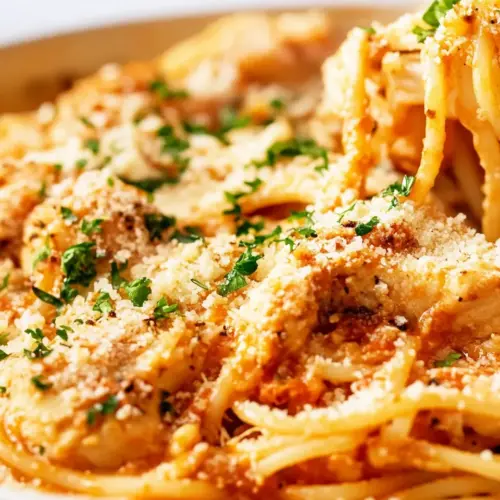
Chicken Spaghetti
Chicken Spaghetti delivers creamy, comforting layers of tender chicken, al dente spaghetti, and melty cheese in a flavorful, easy weeknight dinner casserole. With savory broth, diced tomatoes and green chilies for brightness, and a crunchy breadcrumb topping, this recipe is a reliable crowd pleaser and perfect for leftover friendly meals. Make it when you want a simple, satisfying family favorite.
Equipment
- 9×13 baking pan
- Dutch Oven
Ingredients
- 2 cups breadcrumbs or crushed crackers Provide a crisp, crunchy topping when combined with melted butter and seasonings; contributes texture contrast to the creamy casserole and browns attractively under heat.
- 2 tablespoons unsalted butter melted (1/4 stick) Melted to bind breadcrumbs and create a golden crust; adds richness and helps browning for a flavorful finishing layer.
- 1/4 teaspoon dried basil Add a warm, slightly sweet herbal note to the dish; pairs well with tomatoes and cheese to enhance Mediterranean flavors.
- 1/4 teaspoon kosher salt Season to balance and elevate savory components; enhances overall flavor depth without overpowering delicate chicken and pasta.
- 3/4 cups shredded cheese such as cheddar, Mexican, Gruyere, or a blend Contribute a creamy, melty richness and savory sharpness; helps bind the casserole and creates a gooey, satisfying cheese pull when baked.
- 2 tablespoons olive oil Sauté aromatics and onions with a subtle fruity earthiness; provides a healthy fat base that prevents sticking and adds flavor.
- 1/2 yellow onion finely diced Soften and sweeten when cooked, building the aromatic foundation; releases natural sugars that blend with garlic and broth for depth.
- 2 cloves garlic minced Release pungent, aromatic compounds when minced and cooked; provides a savory backbone and enhances overall umami and fragrance.
- 32 ounces chicken broth or stock (1 carton) Create a flavorful cooking liquid and infuse the pasta with savory depth; supplies salt and gelatinous mouthfeel depending on stock quality.
- 1 3/4 cups water Dilute and adjust the cooking liquid to ensure pasta cooks through; helps achieve the correct sauce consistency without becoming too salty.
- 1 1/2 teaspoons kosher salt Season the entire dish for balanced taste; ensures the pasta, chicken, and sauce are properly seasoned when combined.
- 1/2 teaspoon ground black pepper Add a mild heat and earthy bite to highlight other flavors; balances richness and brightens the overall palate.
- 16 ounces dry spaghetti broken into thirds (1 box), white, whole wheat or gluten free Provide the main carbohydrate body and structure; breaks into manageable pieces so the pasta fits and soaks up sauce evenly.
- 2 tablespoons chopped fresh basil plus more for garnish Introduce fresh, bright herbaceousness and a burst of color; finish the dish with an aromatic lift and complement richer flavors.
- 10 ounces diced tomatoes and green chilies (1 can) Bring acidity, sweetness, and a gentle piquant flavor from diced tomatoes and chiles; add texture and a subtle zippy note to the casserole.
- 10 ounces cream of mushroom soup (1 can) Contribute creaminess, savory umami, and comforting body; helps thicken the sauce and bind ingredients for a cohesive casserole texture.
- 4 cups shredded cooked chicken rotisserie is fine Supply tender protein and savory flavor that makes the dish hearty; shredded chicken adds texture and soaks up sauce and seasonings.
- 1 1/4 cups shredded cheese such as cheddar, Mexican, Gruyere, or a blend Top the casserole with additional melted cheese for richness; creates a golden, bubbly finish and reinforces the creamy, savory profile.
Instructions
- Adjust oven rack to middle position and preheat oven to 350°F. Spray a 9×13-inch baking pan with nonstick cooking spray.: The warm scent of the oven as it comes to temperature sets the stage, and preheating ensures even baking so the casserole heats through consistently. You want the rack centered so the top browns without burning, and spraying the pan prevents sticking. A common mistake is turning on the oven too late, which can lead to underbaked centers and over browned edges. If you notice uneven browning, rotate the pan halfway through baking for a more uniform finish.
- Add the oil and onion to a large Dutch oven. Set the pot over medium heat and sauté, stirring occasionally, until the onion is translucent and has softened.: As the olive oil warms, it will smell fruity and the diced onion will begin to soften and release a gentle sweetness, filling the kitchen with savory aroma. Stir occasionally so the pieces cook uniformly and do not stick to the bottom. This step builds a flavorful base, because softened onion brings sweet undertones that mesh with the broth. Avoid cooking over too high heat, which can brown the onion unevenly and change the intended flavor profile.
- Add the minced garlic and cook for an additional 30 seconds, stirring often.: The moment you add minced garlic , you will catch its immediate fragrant burst, a bright punch that complements the sweet onion . Keep stirring so it softens quickly without sticking, and watch closely because garlic cooks fast and can turn bitter if it burns. The quick cook enhances aromatic complexity and primes the pot for deglazing. If the garlic begins to brown, remove the pot from heat briefly to cool and recover the intended flavor.
- Add the chicken broth and deglaze the pan.: Pouring in the warm chicken broth loosens any flavorful browned bits clinging to the bottom, releasing a rich savory base into the liquid. You will hear tiny sizzles as the broth hits the hot surface, and the smell becomes deeper and more complex. Deglazing captures those concentrated flavors so nothing is wasted, which is essential for a robust finished dish. If you skip this, the casserole may lack depth and complexity.
- Add the water, salt, and pepper. Stir and bring to a boil.: Adding measured water balances the broth concentration and allows the spaghetti to cook in the right ratio of liquid. As it comes to a boil, steam will rise and the pot will smell invitingly savory. Stirring prevents salt pockets and evenly distributes the seasoning. A common misstep is not bringing the liquid to a full boil before adding pasta, which can lead to uneven cooking and gummy texture.
- Add the dry spaghetti (broken into thirds), reduce the heat to medium-low, and cook the spaghetti to al dente (according to package directions).: Dropping the broken spaghetti into the simmering liquid releases a faint pasta fragrance, and you will see the water return to a lively simmer. Reducing to medium low lets the pasta cook through gently while absorbing the seasoned broth. Aim for al dente so the noodles keep structure during baking. Overcooking here results in mushy strands after the oven time, so test a piece a minute or two before the package time ends.
- Add the basil, tomatoes, cream of mushroom soup, chicken, and 1 1/4 cups cheese.: When you fold in chopped fresh basil , diced tomatoes with green chilies, canned cream of mushroom soup, shredded chicken , and the initial portion of shredded cheese , the pot fills with layers of aroma and texture. The tomatoes bring brightness, the soup adds creaminess and body, and the cheese begins to melt into the sauce. Combining these elements off heat prevents the cheese from clumping and helps flavors marry. If you add everything to a boiling pot, textures can become uneven and the cheese might separate.
- Bring the mixture just to a low boil and remove it from the heat.: Returning the pot to a low boil for a brief moment activates the soup and melds flavors, but you do not want a prolonged vigorous boil which can reduce liquid too much. The bubbling will look gentle, and the aroma will concentrate. Turning off the heat preserves a creamy consistency and readies the mixture for transfer. A common mistake is over reducing the liquid here, which could make the casserole dry after baking.
- Pour the chicken spaghetti into the prepared baking pan and sprinkle the topping ingredients evenly over the top.: As you transfer, the mixture should flow smoothly into the greased 9 by 13 pan, steaming lightly. Evenly distributing the breadcrumb and melted butter topping ensures consistent crisping across the surface. Press gently to level but avoid compacting, which can inhibit browning. An uneven topping will result in spots that are too crunchy and spots that are soft, so take time to spread it.
- Bake at 350°F for 30-40 minutes, or until hot throughout and cheese is melted. If the cheese is browning too quickly, tent with sprayed aluminum foil.: During baking the casserole will bubble at the edges and the top will take on a golden color, releasing an irresistible baked aroma. Check after 30 minutes for even melt and internal heat, and tent with sprayed foil if the surface is darkening too much. Baking finishes the melding of flavors and crisps the topping. A typical error is removing it immediately from the oven; letting it rest allows the sauce to settle and hold together when portioned.
- Transfer the pan to a cooling rack and let rest for 5 minutes before serving. Garnish with fresh chopped basil if desired.: Resting on a cooling rack helps steam escape so the casserole firms slightly and is easier to portion. The 5 minute pause also lets flavors settle and keeps plates clean when serving. Adding fresh chopped basil right before serving imparts a fresh green scent and a bright visual finish. Cutting into it too soon can cause the dish to fall apart and release hot liquid, so patience pays off here.
Notes
- Make it creamier Add an extra quarter cup of shredded cheese to the mix before baking and stir in two tablespoons of reserved pasta cooking liquid to create a silkier sauce.
- Boost the herbs Stir in an extra tablespoon of chopped fresh basil right after baking for a fresher green lift that balances the rich elements.
- Adjust the heat If you like more spice, add a bit more diced tomatoes with green chilies or a sprinkle of black pepper to taste during the final seasoning stage.
- Crunchier topping Mix the breadcrumbs with the melted butter before sprinkling so they brown more evenly and form a cohesive crisp crust.
- Swap the cheese Try Gruyere for a nuttier profile or a Mexican blend for a slightly smoky, spiced finish; both alter the character without breaking the formula.
- Vegetable add ins If adding sturdier vegetables, sauté them with the onion early on so they soften fully before the liquid is added, ensuring even texture.