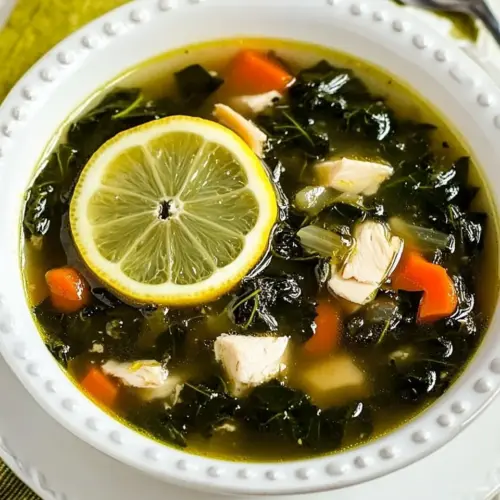
Chicken Soup with Collards and Lemon
Chicken Soup with Collards and Lemon is a bright, comforting bowl of savory broth, tender collards, and diced chicken with a pop of fresh lemon. It’s a nourishing, easy weeknight dinner that feels both restorative and flavorful, with a light body from cauliflower rice and a warm finish from poultry seasoning. Make it for a quick, wholesome meal that warms you from the inside out.
Equipment
- Large soup pot
- Knife
- Cutting Board
- Measuring Cup
- Salad spinner
Ingredients
- 2 or 3 T chicken soup base (see notes) Enhances savory depth by providing concentrated chicken flavor; dissolve into hot liquid to build the soup’s base and control saltiness, tasting as you go.
- 12 cups chicken broth (see notes) Forms the primary cooking liquid that simmers and melds flavors; use a rich low-sodium broth for better control and simmer to cook vegetables and chicken evenly.
- one medium onion, chopped small Adds aromatic sweetness and savory foundation when sautéed until translucent; chop small so it softens quickly and releases natural sugars into the broth.
- 1/4 cup chopped carrots (or more if you don't mind a few more carbs) Contributes mild sweetness and texture when finely chopped; cook until tender to add subtle body without greatly increasing carbs.
- 1 tsp Poultry Seasoning (see notes) Imparts warm, herbaceous notes typical of poultry dishes; sprinkle in early to allow the flavors to bloom while the soup simmers.
- 1 bunch fresh collards, washed, trimmed, and chopped small (about 6 cups chopped collards) Provides hearty, leafy greens that add fiber and earthiness; wash, trim, and chop small so the collards wilt and integrate smoothly into the soup.
- 4 -5 cups diced chicken or turkey Supplies protein and satisfying bite; add diced cooked chicken or turkey to warm through and contribute richness to the broth.
- 1 cup frozen cauliflower rice (or use a 10 ounce package if that's what you have) Offers low-carb bulk and a rice-like texture; stir in frozen cauliflower rice near the end to heat through without becoming mushy.
- small pinch red pepper flakes (the kind that's sprinkled on pizza) Adds a touch of heat and brightness in small amounts; use a small pinch to give subtle spice without overpowering the lemon and greens.
- 1/4 cup fresh-squeezed lemon juice Brightens and balances the broth with acidic freshness; squeeze in freshly strained juice to lift and harmonize the soup’s flavors.
- salt and fresh-ground black pepper to taste Allows final seasoning adjustments for savory balance; add salt and freshly ground black pepper to taste after tasting the finished soup.
- lemon wedges for serving to squeeze into the soup (optional) Provides optional extra citrus for finishing; serve lemon wedges so diners can add more acidity to individual bowls if desired.
Instructions
- Combine chicken soup base and chicken stock in large soup pot and start to simmer over very low heat.: The pot will give off a soft steam as the stock warms, releasing the concentrated aroma of the chicken base into the liquid. You'll notice tiny bubbles forming at the edges rather than a rolling boil, which is exactly what you want because a vigorous boil will concentrate and toughen flavors. Keep the heat very low so the savory tones bloom slowly into the broth, and stir once to dissolve the base. A typical mistake here is turning the heat too high, which can evaporate water and make the broth overly salty, so resist the urge to speed things up.
- Chop onion and carrots and add to the soup with the Poultry Seasoning.: As you add the small chopped onion and diced carrots , listen for a soft hiss as they hit the warm liquid and begin to release their aromatics. The broth will start to smell gently sweet and layered, with the onion mellowing into a savory base. Stir in the teaspoon of Poultry Seasoning so its herbal notes disperse evenly. If you add the seasoning too late you will miss out on the chance for those dried herbs to hydrate and integrate, so add it now. Avoid over chopping to a puree, because distinct little pieces create texture in every spoonful.
- Wash collard greens if needed, and spin dry in a salad spinner. Trim away thick ribs, and coarsely chop the collards.: Handling the collards properly matters. After washing, spinning them dry helps them wilt predictably in the broth instead of releasing extra water. Remove the thick central ribs because they take longer to cook and can feel fibrous. Coarsely chopping the leaves gives tender ribbons that wilt into the soup and offer a pleasant chew. A common mistake is leaving ribs in, which leads to unevenly cooked greens, so take the extra minute to trim.
- Add collard greens to soup pot and continue to simmer over very low heat, for a total of 20-30 minutes simmering time.: As the collards simmer, you'll see their color shift to a softer, olive green and the leaves will collapse into the broth. The pot will give off an earthy aroma that melds with the chicken notes. This simmering step softens the greens and infuses the liquid with body. Keep the heat gentle so the greens become tender instead of falling apart. Overcooking at a high boil will make them mushy and strip brightness, so aim for patient simmering.
- While soup simmers, cut up enough leftover chicken or leftover turkey to make 4-5 cups diced chicken or turkey.: Preparing the diced chicken while the soup simmers is efficient and keeps the rhythm going in the kitchen. Dice into bite sized pieces so each spoonful gets a balanced amount of protein. If the chicken is cold from the fridge, let the timing account for gently reheating it later in the pot; adding very cold meat can temporarily drop the pot temperature and extend reheating time. Avoid leaving large chunks that will remain cool in the finished soup.
- Measure out one cup frozen cauliflower rice (or just use the whole package if you have a 10 oz. package).: The frozen cauliflower rice adds body without starch. Measure one cup if you want a lighter texture, or use the full ten ounce package for a heartier, thicker finish. If you add the full package be prepared for a slightly cloudier broth as the cauliflower releases more starch and moisture. A misstep is thawing and then discarding all the liquid because some of that moisture helps the mouthfeel, so simply incorporate as directed.
- Add diced chicken and frozen cauliflower rice to the soup, stir, let soup come back to a simmer and then simmer about 20 minutes more.: When you add the diced chicken and frozen cauliflower , stir gently so the pieces distribute evenly. You will hear a soft return to simmer, with small, steady bubbles, and the aroma will brighten as the chicken warms and the cauliflower integrates. This simmer finishes tenderizing and melding flavors. If you rush to a boil you risk breaking down the greens too quickly, so maintain a moderate simmer. A frequent error is underestimating the time needed for the frozen cauliflower to fully heat through, so allow the full twenty minutes for even texture.
- After 20 minutes, add red pepper flakes and lemon juice, and season with salt and fresh-ground black pepper to taste; then simmer the soup about 5 minutes more.: Adding the small pinch of red pepper flakes and the quarter cup of fresh-squeezed lemon juice at this stage creates a bright, layered finish. The citrus aroma will be lively and the pepper will add a warmth that rounds the savory elements. Taste carefully and adjust salt and freshly ground black pepper, because the concentrated flavors have had time to develop. Letting the soup rest in a gentle simmer for five more minutes melds the acidity so it lifts without tasting sharp. Over-acidifying is a common mistake, so add the lemon incrementally and taste between additions.
- Serve hot, with wedges of lemon to squeeze on at the table.: The finished soup should steam gently as you ladle it into bowls, with visible ribbons of tender collards and pieces of warm chicken . Serve with optional lemon wedges so each person can add brightness to taste. The sensory payoff is a mix of warm, savory broth, tender greens, and a citrus pop. Avoid letting bowls sit too long before serving, because the heat amplifies the aromatics and you want guests to experience them at their peak.
Notes
- Balance salt at the end, because concentrated bases and commercial broths have unpredictable sodium levels. Taste before you add extra salt and adjust in small increments after the final simmer to avoid an overly salty soup.
- Trim collards properly, removing thick ribs to ensure even cooking and a tender texture. If you leave the ribs in, they can remain chewy and distract from the overall mouthfeel.
- Use leftover cooked chicken when possible, it reheats beautifully and speeds preparation. If using fresh raw chicken, ensure it is cooked through before serving and adjust simmer time accordingly.
- Add lemon last to preserve its aromatic brightness, and always use fresh-squeezed if you can for the cleanest flavor. Bottled lemon juice lacks the volatile oils that make the finish sing.
- Control the simmer at very low heat to let flavors meld without reducing too quickly. A gentle simmer produces a clearer broth and tender greens, while a vigorous boil can make things cloudy and overly concentrated.