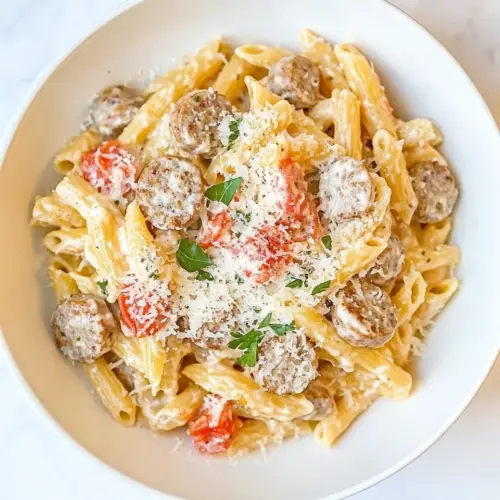
Chicken Sausage Pasta
Chicken Sausage Pasta brings creamy, savory comfort with tender bow tie pasta, sliced Italian style chicken sausage, and a rich Parmesan cream sauce. This easy weeknight dinner comes together fast, offering comforting textures and bold flavor in about 20 minutes, perfect for busy evenings when you want something satisfying to feed the family.
Equipment
- Large Pot
- Large Skillet
- Colander
- Knife
- Cutting Board
Ingredients
- 12 oz bow tie pasta 1 1/2 cups Cooked to al dente in boiling salted water, provides the primary carbohydrate and body for the dish while holding sauce in its creases and texture.
- 2 tablespoons olive oil Used to lightly sauté and add a fruity, aromatic fat that helps prevent sticking and carries flavors from garlic and spices into the sauce.
- 21 2 oz Italian style chicken sausage sliced into rounds Sliced and browned to release savory, seasoned meatiness and Italian seasoning elements that add protein and a robust, smoky flavor profile.
- 2 teaspoons minced garlic Minced and sautéed briefly to release pungent, aromatic compounds that form the flavor base and enhance overall savory depth.
- 1 1/2 -2 14.5 oz cans Italian stewed tomatoes drained and chopped Drained and chopped to contribute bright, acidic tomato pieces with herbs and juices that create texture and balanced acidity in the sauce.
- 1 teaspoon salt Added to enhance overall seasoning, balance sweetness and acidity, and bring out other flavors while seasoning the pasta and sauce properly.
- 1/2 teaspoon dried basil Sprinkled in dried form to lend an earthy, slightly sweet herbal note consistent with Italian seasoning and to complement tomato flavors.
- 1/2 teaspoon crushed red pepper flakes optional Used sparingly to introduce heat and a subtle, lingering spice that can be adjusted or omitted according to taste preferences.
- 1 1/2 cups heavy whipping cream Stirred in to create a rich, creamy texture and to mellow acidity while producing a silky mouthfeel that binds sauce ingredients together.
- 1 cup shredded parmesan cheese divided Folded into the finished sauce to add umami, salty creaminess and a nutty finish; part reserved to sprinkle on top for garnish and extra flavor.
Instructions
- Cook pasta according to package directions.: The pot will smell faintly starchy as the water boils, and you want the pasta texture to be al dente, with a slight resistance when you bite. This matters because the pasta will finish cooking in the sauce and absorb flavors, so starting slightly underdone prevents a mushy final dish. A common mistake is overcrowding the pot, which drops the water temperature and leads to uneven cooking. Stir occasionally to keep the pieces from sticking and taste a minute or two before the package time is up to check doneness.
- Heat a large skillet to medium heat and add olive oil. Once warm, add sliced chicken sausage and garlic and cook for 2-3 minutes. Remove from heat and set aside on a plate.: When the oil shimmers but is not smoking, you will see a faint ripple on the surface and smell a delicate fruitiness. Proper temperature ensures the sausage sizzles on contact instead of stewing. If the oil smokes, lower the heat, as too-hot oil can char the garlic later. Wipe the skillet dry if there is moisture, or the oil will splatter and prevent browning.
- Add the tomatoes, salt, basil, and pepper flakes to the large skillet and cook over medium heat for 2-3 minutes.: You should hear a steady sizzle and watch the edges of the sausage caramelize to a light golden brown, which concentrates savory flavors and creates textural contrast. The garlic should become fragrant, releasing a warm, roasted aroma without turning brown. Avoid crowding the pan; if pieces steam, they will lack that toasty flavor. If garlic browns too quickly, reduce the heat and push the sausage to the side while the garlic finishes gently.
- Stir in the cream and 1/2 cup shredded Parmesan cheese. Bring to a boil over medium heat.: The residual heat will keep the sausage warm while you make the sauce, and removing it prevents overcooking during the simmer. This pause lets you control texture, preserving seared edges. A common oversight is leaving the sausage in the pan where it will continue to cook and toughen, so transfer it promptly.
- Reduce heat; simmer, uncovered, for 6-8 minutes or until thickened, stirring occasionally.: You'll hear a gentle bubbling as the tomatoes release aroma, and the mixture will steam slightly while the herbs bloom. This brief cook concentrates the tomato flavor and marries the spices with the oil. If the tomatoes release too much liquid, increase the heat briefly to evaporate excess moisture, but avoid splattering. Taste and adjust seasoning sparingly since sausage and cheese will add salt later.
- Drain the pasta and toss them into the cream mixture. Mix in sliced chicken sausage or top pasta with sausage and serve warm.: As the cream hits the pan, it will steam and thinly coat the tomatoes, and the cheese starts to melt into a silky emulsion. This is where the sauce gains body and richness, smelling like warm dairy and tomato combined. If you add cold cream straight from the fridge, the temperature drop can slow the simmer, so allow it to heat through. Avoid boiling vigorously, as that can cause separation; maintain a gentle, steady simmer.
- Garnish with the remaining 1/2 cup of parmesan cheese.: The sauce will bubble and thicken visually, creating a glossy sheen and a thicker consistency that clings to a spoon. This stage helps reduce and concentrate the flavors, so watch for small, even bubbles rather than a rolling boil. Overly aggressive boiling risks breaking the emulsion and thinning the texture once cooled, so reduce the heat if the bubbling becomes too vigorous. The aroma will deepen, and you should smell a rich, creamy tomato scent.
- Reduce heat; simmer, uncovered, for 6 to 8 minutes or until thickened, stirring occasionally.: During the simmer you will notice the sauce darken slightly and coat the back of a spoon, indicating it is ready. This slow reduction intensifies the taste and improves mouthfeel. Stirring helps prevent sticking and ensures even thickening. A common mistake is covering the pan, which traps moisture and prevents concentration, resulting in a watery sauce. Keep an eye on texture and stop when the sauce leaves a clear trail on the spoon.
- Drain the pasta and toss them into the cream mixture.: The hot pasta will steam as it meets the sauce, and the starch on the pasta surface helps the sauce cling. Toss gently so each piece is coated, and if the sauce seems tight, add a splash of reserved pasta water to loosen it and create a glossy finish. Avoid dumping everything in and stirring violently, which can break the pasta shapes; gentle folding preserves structure and appearance.
- Mix in sliced chicken sausage or top pasta with sausage and serve warm.: As the sausage meets the sauce and pasta, their flavors meld and the dish becomes cohesive. Taste and adjust seasoning at this point, since cheese and sausage may contribute extra salt. Serving immediately ensures the cream remains silky; letting it sit long will thicken it further. A typical error is delaying service, which can leave the sauce clumpy; rewarm gently with a splash of water if needed.
- Garnish with the remaining 1/2 cup of parmesan cheese.: The fresh cheese on top melts slightly from the residual heat, adding bright, savory highlights and a pleasing textural contrast. It also brings a slight nuttiness that rounds out the cream. Add cheese just before serving to maintain that fresh, melty finish. Over-grating and adding too early will allow the cheese to fully melt into the sauce rather than provide a final flourish.
Notes
- Swap proteins: Use turkey sausage or spicy sausage for a different spice level and fat profile; adjust salt accordingly.
- Cheese blend: Replace or combine Parmesan with provolone, fontina, Romano, or Asiago to create a creamier or tangier finish.
- Add vegetables: Sauté zucchini, bell peppers, mushrooms, or spinach in Step 2 for color, nutrition, and extra texture without overpowering the sauce.
- Spice level: Increase crushed red pepper flakes for more heat, or omit entirely for a milder family friendly version.
- Sauce texture: For a lighter sauce, use a bit less cream and finish with reserved pasta water for sheen and a looser consistency.
- Make it ahead: Prepare components separately, then combine and gently rewarm; add a splash of water if the sauce tightens after refrigeration.