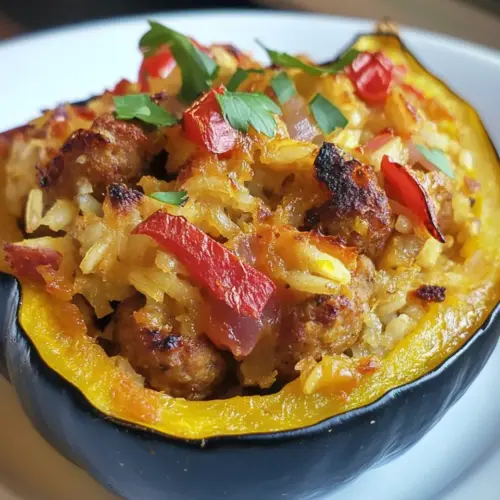
Chicken Sausage and Brown Rice Stuffed Acorn Squash
Chicken Sausage and Brown Rice Stuffed Acorn Squash is a cozy, savory meal with nutty acorn squash, hearty brown rice, and flavorful chicken sausage. This easy weeknight dinner offers warm roasted notes, satisfying textures, and simple ingredients, perfect for fall entertaining or meal prep. Try it when you want a wholesome, comforting dish that feels a little festive.
Equipment
- Large Skillet
- 9 x 13 glass dish
- Microwave
- Spoon
Ingredients
- 2 Acorn Squash 1 package precooked chicken sausage (12 oz) 2 cups brown rice - precooked 1 small yellow onion - chopped 1/2 red pepper - chopped Salt and Pepper - to taste Olive Oil Roast until tender to form sturdy edible bowls that concentrate natural sweetness and lend a slightly nutty flavor; halve and scoop seeds before filling to maximize space. Retain the skin for presentation and to hold the warm sausage and rice filling while serving.
Instructions
- Preheat oven to 350 degrees.: The kitchen should smell neutral and warm when the oven hits 350 degrees . This moderate heat allows the squash to finish cooking through without collapsing. You'll want the oven to be fully preheated so the baking time is accurate. A common mistake is placing the squash into an oven that is still warming, which can lengthen cooking and affect texture.
- Cut acorn squash in half and scoop out seeds. Gently rub inside with olive oil. Turn cut side down on a plate and soften in microwave for 6 minutes.: When you slice the acorn squash open, you'll hear a clean snap as the rind parts, and the cavity will reveal seeds and stringy bits. Removing them creates a tidy hollow for stuffing. If you leave seeds in, they can roast unevenly and add a gritty texture, so take your time scooping with a sturdy spoon.
- Scoop out flesh and save outer shell. Set aside both.: Rubbing the cavity with olive oil adds sheen and encourages the interior to caramelize slightly rather than dry out. The oil should shimmer but not pool. Skipping this step can leave the flesh dull and dry after baking, so be thorough but not excessive.
- In large skillet drizzle some olive oil and saute onion, red pepper and precooked chicken sausage. If your sausage or meat is not precooked I would recommend cooking it first and then adding in the onion and red pepper.: Microwaving the squash cut side down traps steam and speeds softening, which helps the shell stay intact during stuffing. You should hear a soft hiss and feel the squash give when pressed after six minutes. Microwaves vary, so if the skin still resists, add increments of 1 to 2 minutes; under softening often leads to cracks when stuffing, so err on the side of slightly more time.
- After sausage mixture is browned add in precooked brown rice and scooped out acorn squash flesh. Remove from heat and stir together. Add salt and pepper to taste.: As you remove the flesh, you will notice the texture change from firm to tender, with a slightly sweet aroma. Reserve the shell for filling, and set the scooped flesh aside for mixing. If you cut too deeply and thin the shell, it may lose structure when baking, so aim to leave about a quarter inch of flesh attached to the skin.
- Scoop into hollowed out acorn squash shells and cook inside a 9 x 13 glass dish for approximately 20 minutes. Take out of oven and enjoy!: Place the hollowed shells on a tray and the scooped flesh in a bowl. Keeping them separate helps you assemble quickly. If the bowl cools too much, the filling may not meld as well when mixed, so try to work steadily to maintain warmth.
- In large skillet drizzle some olive oil and saute onion, red pepper and precooked chicken sausage: As the onion and red pepper hit the warm oil, you'll hear a soft sizzle and smell a sweet, vegetal fragrance. Browning the edges creates caramelized notes that deepen the filling. The chicken sausage will pick up those browned bits and release savory fat, enhancing aroma. A frequent error here is keeping the heat too low which yields limp vegetables rather than the gently caramelized pieces you want.
- If your sausage or meat is not precooked I would recommend cooking it first and then adding in the onion and red pepper: Raw meat needs careful handling to ensure safety and flavor. Cooking the meat first allows you to render fat and develop browning before introducing vegetables, which prevents the veggies from becoming greasy. Under cooking the meat is a health risk, so if you ever have doubt, cook the protein fully before proceeding.
- After sausage mixture is browned add in precooked brown rice and scooped out acorn squash flesh: When you fold in the brown rice and reserved acorn squash flesh, the skillet will produce a comforting steam and the mixture will bind together. The rice soaks up the pan fond from the sausage, and the squash adds moisture and sweetness. Stir gently to combine, ensuring the mixture is evenly coated. If it seems dry, a splash of water or a teaspoon of olive oil can help; dryness at this stage leads to a crumbly filling after baking.
- Remove from heat and stir together: Pulling the pan off the burner keeps residual heat from over cooking the vegetables. Stirring helps the flavors marry while preserving texture. Taste now and adjust seasoning so the final dish is balanced. A common oversight is adding all the salt too early; always taste after mixing since ingredients like sausage may already provide seasoning.
- Add salt and pepper to taste: Seasoning will brighten the whole dish, and you should find a balance between savory and sweet. Add salt in small increments, taste, then add pepper to finish. Over seasoning is easier to do than fix, so proceed carefully, especially if the pre cooked chicken sausage is already salty.
- Scoop into hollowed out acorn squash shells: As you spoon the filling into each acorn squash shell, press lightly so the mixture nests and there are no large air pockets. The visual contrast of the golden filling against the deep orange squash is appealing. Overfilling can cause spillage in the oven, so leave a little headspace for bubbling.
- Cook inside a 9 x 13 glass dish for approximately 20 minutes: Placing the stuffed squash in a 9 x 13 glass dish lets heat circulate and the edges of the filling thicken. In the oven you will hear a quiet bubbling and see the top gain a light golden hue. The shells will be tender but still hold shape. If you skip this oven finish, the filling may remain cool and flavors won't meld as nicely.
- Take out of oven and enjoy!: After baking you'll notice a warm, savory steam and a lightly roasted scent from the squash. Let them rest for a couple of minutes so the filling settles before serving. Cutting into a piping hot shell can cause juices to run, so a brief rest improves presentation. The most common mistake is serving immediately and burning mouths, so allow a short pause.
Notes
- Warm the rice: Using warm precooked brown rice helps the filling come together quickly and prevents the grains from clumping into a cold mass when combined with the hot skillet ingredients.
- Control salt: Since the pre cooked chicken sausage may be seasoned, always taste the filling before adding more salt to avoid over seasoning the dish.
- Savor the texture: Keep some small chunks of acorn squash in the filling for textural contrast rather than puréeing everything smooth.
- Even baking: Arrange the stuffed squash in a snug 9 x 13 dish so they support one another and roast evenly during the final bake.
- Holding for later: If you want to reheat, cover tightly with foil and warm at a low oven temperature until just heated through, this keeps the shells from drying out.