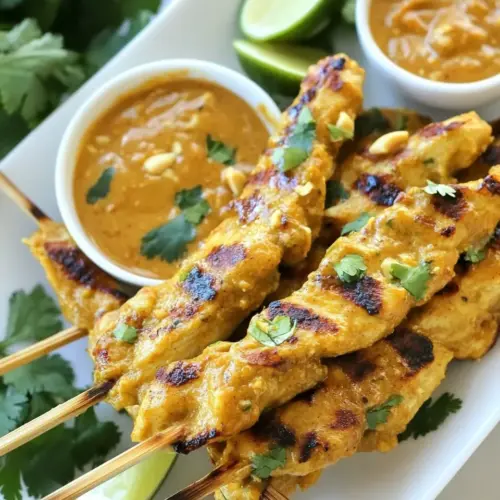
Chicken Satay with Spicy Peanut Sauce
Chicken Satay with Spicy Peanut Sauce is a creamy and slightly spicy grilled favorite, combining tender chicken marinated in coconut milk and curry paste with a rich peanut sauce. This easy weeknight dinner delivers smoky char, silky sauce, and bright lime finishes for a memorable meal that is quick to prepare and perfect for sharing.
Equipment
- Grill
- Saucepan
- Bamboo skewers
- Whisk
Ingredients
- 1/2 cup light coconut milk Adds creaminess and a subtle coconut aroma to the marinade, helping to tenderize the chicken while balancing spicy flavors; stir until evenly combined for a smooth base.
- 1 tablespoon Asian fish sauce Provides a salty, umami depth that enhances savory notes and contributes authentic Southeast Asian character to the satay marinade; incorporate sparingly for balance.
- 2 teaspoons red curry paste Delivers concentrated chili, aromatics, and lemongrass-like notes to build heat and complexity in the marinade; dissolve fully into the coconut milk for even distribution.
- 1 teaspoon brown sugar Imparts gentle sweetness and acidity that rounds out the curry paste and fish sauce, helping to balance the overall flavor; dissolve into liquids to avoid grittiness.
- 1 tablespoon chopped cilantro Adds a bright, herbal finish with fresh citrusy notes to the marinade or as garnish; chop finely and fold in just before serving to preserve freshness.
- 1/2 teaspoon ground turmeric Introduces warm, earthy color and a mild bitterness that complements the curry and peanut sauce, while contributing anti-inflammatory properties; measure carefully to avoid overpowering.
- 1/2 tsp kosher salt Contributes essential seasoning to enhance the other flavors and ensure the chicken is properly seasoned; dissolve into wet ingredients for even coverage.
- freshly ground black pepper, to taste Provides adjustable spicy warmth and aromatic pungency to taste, finishing the dish with a pop of heat; grind just before serving for maximum freshness.
- 1/4 pounds thin-sliced boneless chicken breast, cutlets Supplies the primary protein for the satay, slicing thinly so it absorbs the marinade quickly and cooks evenly on skewers; handle gently to maintain tenderness.
- 16 large bamboo skewers, soaked in cold water Allows safe handling and even cooking of skewered chicken by preventing burning and ensuring even heat exposure; soak adequately beforehand to avoid charring.
- lime wedges, for garnish Brightens the finished dish with zesty acidity and a fresh pop of flavor that complements the rich peanut sauce; serve on the side for diners to squeeze as desired.
- 1 tbsp chopped cilantro, for garnish Garnishes the finished satay with fresh herbaceous notes and visual contrast, reinforcing cilantro used in the marinade; sprinkle just before serving.
- 1 tbsp chopped peanuts, for garnish (optional) Adds crunchy texture and nutty flavor as an optional finishing touch, enhancing the peanut theme and providing contrast to the creamy sauce; toast lightly if desired.
- 1/3 cup low sodium chicken broth Supplies a savory, low-sodium liquid base for thinning sauces or adjusting consistency without overpowering other flavors; warm slightly to incorporate smoothly.
- 2 tbsp creamy peanut butter Contributes rich, creamy peanut flavor and body to the sauce, delivering the characteristic satay profile and helping bind the sauce ingredients together.
- 1 tbsp reduced sodium soy sauce, Tamari for gluten-free Offers salty umami and a slightly sweet soy profile that deepens the sauce while providing a gluten-free option when using Tamari; add to taste.
- 2 tsp honey Adds natural sweetness and a glossy finish to the peanut sauce, balancing savory and spicy elements while aiding in caramelization if grilling.
- 1 tsp Sriracha chili sauce Provides bright concentrated heat and tang to the sauce, allowing control over spicy intensity and contributing a fermented chile flavor profile.
- 1 tsp freshly grated ginger Lends sharp, aromatic warmth and citrusy undertones that brighten the peanut sauce and help cut through richness when freshly grated into the mix.
- 1 small clove garlic, minced Imparts pungent aromatic depth and savory bite to the sauce when minced, marrying with ginger and curry to create a layered flavor foundation.
Instructions
- In a bowl, mix the marinade ingredients except the chicken. Slice the chicken into long, thin strips, about 3 inches long by 1 inch wide, and add to marinade. Turn chicken to coat, cover and refrigerate at least 4 hours or longer.: The aroma will be fragrant and a little sharp as the fish sauce and red curry paste mingle with the coconut milk. You will notice the coconut loosening the paste into a luscious base, and the turmeric lending a warm color. Why this matters, the marinade is the vehicle that transmits flavor into the center of each piece of chicken , ensuring depth beyond surface seasoning. Sensory cues include a glossy, evenly colored liquid with no dry pockets of curry paste. A common mistake is not whisking thoroughly, which leaves concentrated pockets of paste that can burn or taste uneven. If the mixture seems separated, whisk hard until smooth, and smell for a balanced salty sweet spice profile before proceeding.
- Meanwhile, prepare the peanut sauce. Combine all the ingredients in a small saucepan and whisk well. Bring to a boil, reduce heat and cook until smooth, stirring constantly, about 5 minutes. Set aside to cool to room temperature.: As you slice, the chicken should feel cool and slightly springy, and cutting into uniform strips helps them cook evenly on the skewers. When the meat hits the marinade, you will hear a slight splash and see the surface become coated, the color deepening as spices cling. This technique matters because thin strips absorb marinade quickly and grill in a short, intense burst, keeping them juicy. Common mistakes include cutting pieces unevenly or too thick, which leads to uneven cooking. Ensure you turn pieces in the bowl so every strip is coated, and press gently so the marinade adheres to the grain of the meat.
- Prepare grill to high heat and thread marinated chicken onto soaked bamboo skewers. Place on grill and cook 2 to 3 minutes per side, or until cooked through. Serve with lime wedges and peanut sauce and garnish with cilantro and peanuts.: The chill in the refrigerator slows bacterial growth while allowing flavors to penetrate. You will notice the marinade slightly darkens the chicken over time and the texture becomes more tender as the acids and salts work. The reason for the wait is flavor infusion and mild tenderizing, which makes the finished bite more flavorful and less chewy. A typical pitfall is marinating too briefly, which results in under flavored meat, or marinating excessively long, which can make texture mushy. Four hours is a sweet spot, but overnight is fine for deeper flavor. Cover tightly to avoid absorbing fridge odors.
- Meanwhile, prepare the peanut sauce: When you combine the peanut butter, chicken broth, soy sauce, honey, Sriracha, ginger, and garlic in a saucepan, the mixture will start thick and slightly grainy, then smooth as heat melts the fats and integrates the elements. You should whisk constantly so the sauce becomes glossy and free of lumps, and smell a balance of sweet, salty, and warm spice. This technique is important because a silky sauce coats the chicken cleanly and creates a cohesive bite. Avoid heating too rapidly, which can scorch the peanut butter and make the sauce gritty. Stir with a steady motion until it reaches a pourable consistency, then remove from heat to cool slightly.
- Combine all the ingredients in a small saucepan and whisk well: As the sauce warms, aromas of toasted peanut and ginger will come forward, and you will see tiny bubbles forming at the edges when it reaches a simmer. Whisking continuously encourages an even emulsion and prevents separation of oils. The why here is texture and flavor integration, which ensures every spoonful is consistent. A frequent mistake is walking away while it cooks, which risks burning. Keep your heat moderate and your attention steady so the sauce finishes smooth and glossy.
- Bring to a boil, reduce heat and cook until smooth, stirring constantly, about 5 minutes: When the sauce arrives at a gentle boil, it will brighten in color and thicken slightly, smelling rich and nutty. Reducing the heat allows for controlled thickening; you should see the sauce coat the whisk and leave a trail briefly. This step matters because cooking briefly mellows raw garlic and ginger and melds the flavors, producing depth. The most common error is over reducing, which yields a gluey texture. Keep stirring and test consistency by dipping a spoon to see if it coats adequately, then set it aside to cool.
- Set aside to cool to room temperature: Cooling allows the sauce to settle and thicken to a spreadable texture, and its aroma will soften, with sweet and salty notes balancing out. Room temperature sauce clings to the chicken without running off, which is ideal for dipping and serving. Why this matters, hot sauce will alter the finished bite and may overwhelm the palate. A common oversight is serving it piping hot, which can scald and mask the nuanced flavors. Let it cool covered so no skin forms and flavors remain focused.
- Prepare grill to high heat and thread marinated chicken onto soaked bamboo skewers: At the fire prep stage you will see smoke rise and feel the heat radiate when you hover your hand above the grates. Threaded chicken strips should sit snugly without overlapping too much so each piece gets direct contact with heat. Properly soaking skewers reduces flare ups and prevents sticks from burning. This matters because high heat delivers quick caramelization and controlled charring, creating flavor without drying the meat. Avoid crowding the grill or leaving thick gaps, which leads to uneven cooking and inconsistent char. Arrange pieces evenly and have tongs at hand for turning.
- Place on grill and cook 2 to 3 minutes per side, or until cooked through: As the chicken hits the grill you will hear the satisfying sizzle and see edges tighten and color deepen to golden brown with flecks of char. The quick cooking time seals juices while developing the surface crust that provides delicious texture contrast. The reason timing is short is to preserve tenderness in thin strips and avoid dryness. A common mistake is overcooking; remove skewers at the first sign of translucency loss and test an inner piece to ensure juiciness. Let the skewers rest briefly off the heat before serving.
- Serve with lime wedges and peanut sauce and garnish with cilantro and peanuts: When plated, the bright green lime and chopped cilantro create visual contrast and a fresh aroma that cuts through the richness. The creamy sauce, when spooned nearby, invites dipping and adds a luscious coating to each bite. This finishing assembly matters because acids and herbs elevate the whole experience. Avoid garnishing too early, as herbs can wilt and nuts can lose crunch. Serve immediately so textures and temperatures are at their peak.
Notes
- Marinate for depth Allow at least four hours, or overnight if possible, so the flavors of the coconut milk, red curry paste, and fish sauce fully infuse the chicken, resulting in meat that tastes seasoned through rather than just on the surface.
- Uniform strips for even cooking Cut the chicken into consistent pieces roughly three inches by one inch so they cook at the same rate; uneven pieces lead to dry or underdone sections.
- Control your heat Use high heat for quick searing but watch for flare ups from any residual marinade; move skewers to a cooler part of the grill if flames spike to avoid charring too quickly.
- Whisk the sauce carefully Stir the peanut sauce continuously over moderate heat to achieve a silky texture, and remove it from the heat before it becomes too thick, since it will thicken further as it cools.
- Garnish at the last minute Add chopped cilantro and peanuts right before serving to keep herbs vibrant and nuts crunchy, which enhances both aroma and texture on the plate.