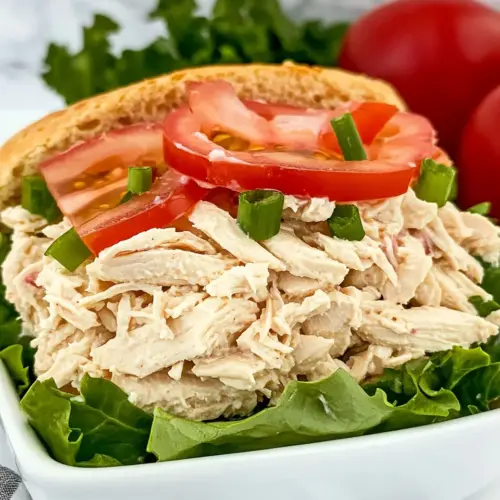
Chicken Salad Chick Barbie Q
Chicken Salad Chick Barbie Q mixes creamy mayonnaise with smoky barbecue sauce and tender shredded chicken for a creamy savory salad that is perfect for easy weeknight dinner or lunch. The tang from dry ranch salad dressing mix brightens each bite, while poaching in low sodium chicken stock keeps the meat exceptionally moist. Make it for sandwiches or salads, it is a crowd pleasing, quick recipe worth trying.
Equipment
- Pot
- Forks
- Stand mixer
- Bowl
Ingredients
- 1 1/2 pounds chicken tenders Provide tender, lean protein that shreds easily after poaching and forms the hearty base of the salad. Poach gently in seasoned liquid until cooked through, then cool and dice or shred to absorb dressings and flavors.
- 32 ounces low sodium chicken stock Create a flavorful poaching liquid that cooks the chicken gently while imparting savory depth and moisture. Simmer until chicken reaches safe temperature, reserving some stock if desired to moisten the finished salad.
- 3/4 cup mayonnaise Bind the chicken and seasonings together while adding creaminess and a subtle tang to the salad’s texture. Adjust quantity to achieve desired moisture level without making the mixture soupy.
- 1/4 cup barbecue sauce Add a sweet-smoky layer and bold flavor accent that complements the creamy dressing and savory chicken. Stir in gradually and taste, balancing the amount to avoid overpowering the overall flavor profile.
- 2 teaspoons dry ranch salad dressing mix Introduce concentrated ranch seasoning notes—dill, garlic, onion and herbs—to bring classic tang and savory depth to the salad. Sprinkle in and mix thoroughly to ensure even distribution without clumping.
- 1/2 teaspoon salt Enhance overall seasoning with a controlled salty backbone that elevates other flavors in the dish. Use measured amounts and taste as you combine to avoid oversalting, especially if using salted stock or condiments.
- 1/2 teaspoon ground black pepper Contribute warm, earthy spice and slight heat that rounds out the savory profile and lifts the creamy dressing. Add sparingly and adjust to preference since black pepper can become prominent in chilled salads.
Instructions
- Place chicken tenders in a pot and cover with chicken stock. Poach over medium heat until the chicken is fully cooked and no longer pink inside, about 15 to 20 minutes.: The first sensory cue here is the gentle steam rising as the pot warms, and the low hum of the liquid just starting to ripple. Use a pot large enough that the chicken pieces sit in a single layer so they cook evenly. The reason we poach instead of boiling is to gently firm the proteins without tightening them, which helps the meat shred tenderly. A common mistake is turning the heat too high, which makes the surface seize and the interior dry. Keep the liquid at a gentle simmer and you will notice the stock remain clear rather than frothy, a sign of gentle cooking.
- Remove the chicken from the pot and shred using two forks or a stand mixer with a paddle attachment.: As the chicken approaches doneness, you will see tiny bubbles forming at the edges and the meat will turn uniformly opaque. Use a thermometer if you like, aiming for an internal temperature that indicates safety while preserving moisture. This timing ensures the fibers relax instead of tightening up, which preserves that shreddable texture. Avoid leaving the chicken in vigorously boiling stock, because that accelerates overcooking and yields dryness.
- In a medium bowl, combine the mayonnaise, barbecue sauce, dry ranch mix, salt, and pepper. Mix well. Add the shredded chicken to the bowl and mix thoroughly.: The sound here is quiet and satisfying as the meat separates into ribbons, and the look is soft, pale strands ready to absorb sauce. Shredding warm produces slightly different texture than shredding cold, so handle gently to keep pieces tender. The why is simple, shredded meat exposes more surface area to sauce, making each bite uniformly flavored. Be careful not to overwork the meat, which can create gluey texture if broken down too finely.
- For best flavor, refrigerate the chicken salad for a few hours before serving as a sandwich filling, on crackers, or over a bed of lettuce.: When you whisk these, you will notice a glossy, cohesive sauce forming, and the aroma will shift to tangy and smoky notes. Combining these elements in a separate bowl lets you taste and adjust before committing to the whole batch. This step matters because it creates a balanced binder where each seasoning plays a role. Avoid adding everything directly to the shredded chicken without tasting, as you might end up with an unbalanced final mix.
- Mix well Add the shredded chicken to the bowl and mix thoroughly: As you fold the warm shreds into the sauce, the textures marry and the salad gains a cohesive sheen. The sound is the soft scrape of spoon on bowl and the sight is evenly coated ribbons of chicken . Thorough mixing ensures the dressing clings to each strand so every bite delivers consistent flavor. One common pitfall is under mixing which leaves dry pockets, or over mixing which can break the shreds into mush, so aim for even coverage while preserving structure.
- For best flavor refrigerate the chicken salad for a few hours before serving as a sandwich filling on crackers or over a bed of lettuce: Chilling is when the flavors settle and harmonize, and you will notice the sauce tighten slightly around the chicken , making it easier to spread. The fridge also helps textures firm so sandwiches hold together. I recommend at least a couple hours, because immediate serving can taste less cohesive. Do not freeze this salad, as the mayonnaise based mixture may separate when thawed, changing the texture noticeably.
Notes
- Swap the mayonnaise for a lighter mayonnaise if you want a less rich salad, but know the texture will be slightly thinner and less creamy, so reduce added liquid elsewhere.
- Adjust barbecue intensity by starting with less barbecue sauce and adding more to taste, because brands vary widely in sweetness and smoke level.
- Control salt by using low sodium chicken stock as instructed and then seasoning at the end after chilling, which prevents oversalting.
- Shredding options include using two forks or a stand mixer with a paddle; the mixer works faster but keep pulses short to avoid a mushy texture.
- Make ahead by preparing the salad up to two days in advance and refrigerating, the resting time often improves flavor as long as it is tightly covered.