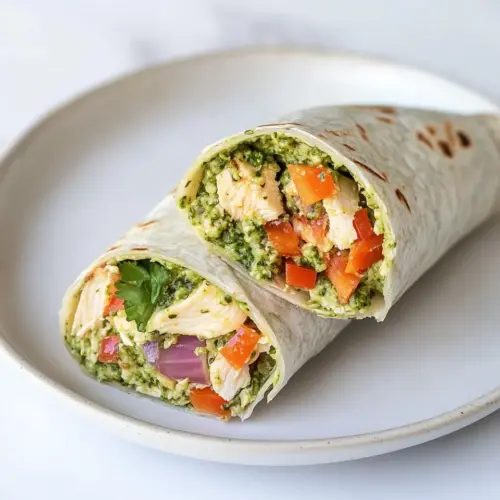
Chicken Pesto Wraps
Chicken Pesto Wraps are a creamy, herb forward handheld featuring tender chicken, bright pesto, and crisp vegetables. This easy weeknight lunch or light dinner feels fresh and satisfying, with a crunchy, colorful bite in every mouthful. Make them for meal prep or a quick office lunch, they are quick to assemble and endlessly adaptable.
Equipment
- Mixing Bowl
- Knife
- Cutting Board
- Skillet
Ingredients
- 1 cup cooked and cubed chicken Tenderly provides cooked protein and texture to the wraps, supplying savory flavor and satiety. Perfectly cubed chicken blends with pesto to create a cohesive filling, while also contributing lean protein and essential nutrients. Works well at room temperature for easy assembly and portable lunches.
- 4 tablespoons pesto Aromatic binds and seasons the filling with concentrated basil, garlic, and olive oil flavors. Richness from the pesto adds moisture and umami that helps marry the chicken and vegetables into a cohesive wrap. Also contributes healthy fats that improve mouthfeel and flavor depth.
- 4 whole wheat tortilla wraps Softly serves as the handheld vessel for all components, offering whole-grain fiber and a slightly nutty flavor. Whole wheat tortillas keep the wrap structurally intact when rolled and toasted, and add chewiness that complements the fillings. Suitable for folding and packing for on-the-go meals.
- 1 cup fresh baby spinach leaves Freshly adds bright, leafy greens that contribute a mild, slightly sweet flavor and crisp texture. Baby spinach supplies vitamins, minerals, and a tender mouthfeel that contrasts with the heartier chicken and crunchy vegetables. Wilts slightly from contact with warm ingredients, integrating into the wrap.
- 1 red bell pepper, sliced into thin sticks Crisply introduces sweet, juicy crunch and vibrant color when sliced into thin sticks. Red bell pepper contributes high vitamin C content and a pleasant snap that balances softer ingredients. Thin slicing ensures even distribution and easy biting within each wrap.
- 1 medium carrot, sliced into thin sticks Crunchily provides sweet, earthy texture when cut into thin sticks, adding color and a mild bite. Carrot strips supply beta-carotene and fiber while enhancing contrast with softer components like pesto-coated chicken. Thin slicing keeps the wraps easy to chew and eat without overwhelming the filling.
Instructions
- In a small bowl toss chicken with pesto just to coat.: The aroma of fresh basil and garlic will become noticeable as you work the pesto into the chicken , a light sheen forming on the cubes. Use a wooden spoon to fold gently so the pieces stay intact, and aim for a glossy, even coating rather than a heavy paste. You will hear soft tapping as the spoon moves, and you may feel slightly tacky pesto on your fingers if you get close. This step ensures the flavors distribute without making the filling wet. Common mistakes include overmixing which can break down the chicken into mush, or using too much pesto which overwhelms the vegetables, so start with the measured amount and add cautiously if needed.
- Place 1 tortilla on a flat surface in front of you. Place 1/4 of the spinach onto the center of a tortilla and top with 1/4 of the peppers and carrots.: Lay the tortilla on a clean board and notice its warm, pliable texture if you have toasted it briefly. A gently warmed tortilla will have a soft, slightly fragrant smell and bend without cracking. The surface should be dry, so if you previously warmed it and it feels damp, blot it quickly. This setup gives you control for even layering. Avoid stacking wet fillings directly on the tortilla, as that often causes sogginess and tearing when rolling.
- Place 1/4 of the chicken on top of the vegetables.: The cool spinach leaves will form a green bed, their fresh scent subtle against the herbaceous pesto . Arrange the thin red bell pepper and carrot sticks so they run lengthwise, which helps the wrap roll cleanly. You will notice a slight rustle as leaves settle and a crisp snap from the vegetable sticks. This layering prevents the wetter elements from soaking the tortilla directly. A frequent error is piling too much filling toward the center, which makes rolling bulky and causes the wrap to burst, so keep the distribution balanced.
- Create a secure wrap by folding the sides inward, then folding the bottom up over the filling. Tuck it in tightly and roll it up snugly. Repeat with the remaining tortillas and ingredients.: Gently nestle the pesto coated chicken atop the vegetables, noticing the contrast between warm or room temperature chicken and cool greens. The slight gloss of the pesto will glisten against the vegetables, and the combined aroma should be inviting. Space the pieces evenly to avoid clusters that can create lumps while rolling. If the chicken is too warm, it can wilt the spinach , so let it cool slightly if needed. Avoid dropping large chunks in one spot, because that will make the wrap uneven and harder to close.
- Create a secure wrap by folding the sides inward, then folding the bottom up over the filling: As you bring the sides toward the center, feel the tortilla gently conform around the contents, and notice a slight resistance as the layers settle. Fold the bottom edge up and over, pressing lightly to compact the ingredients before the final roll. This sequence helps trap the filling and prevents it from escaping the ends. A helpful sensory cue is that the wrap will feel uniformly snug, not loose or bulging. Beware of folding too forcefully which can tear the tortilla, and do not leave the ends open, because that often results in spillage when you bite.
- Tuck it in tightly and roll it up snugly: When you begin rolling, maintain even pressure so the layers glide into a compact cylinder, and listen for a soft sliding sound as ingredients shift. The exterior should look smooth without large bumps, and the edges should remain sealed. If the tortilla spring back and loosens, a brief squeeze along the seam helps secure it. Rolling tightly preserves the shape and makes the wrap easier to eat without falling apart. Common pitfalls include rolling with uneven tension which creates gaps, or overstuffing so the seam cannot close, so adjust filling distribution if necessary. Repeat with the remaining tortillas and ingredients, keeping the same technique for consistent results.
Notes
- Leftover Chicken Hack: Save time by using leftover cooked chicken, trimming it into small cubes so it layers neatly in the wrap. This reduces hands on time and makes the chicken more comfortable to bite through. If your chicken is very cold, let it sit a few minutes at room temperature for better mouthfeel.
- Meal Prep: Assemble wraps ahead and store individually wrapped in foil or parchment for up to three days in the fridge. When you are ready to eat, cut in half on the diagonal for a presentable lunch. Avoid storing with extra wet ingredients, because that can lead to sogginess over time.
- Warm the Tortillas: If the tortillas crack, warm them briefly on a dry skillet for a few seconds each side or microwave under a damp paper towel for five to seven seconds to make them pliable. This step prevents tearing and makes rolling easier. Don’t overheat, which leads to limp tortillas that do not hold shape.
- Freeze Your Pesto: Keep small portions of homemade pesto frozen in containers so you can defrost a spoonful for quick assembly. Frozen pesto thaws quickly and retains most flavor. Label containers with the date and use within a few months for best taste.
- Even Slicing: Cut vegetables into consistent thin sticks for comfortable bites and easier rolling, which improves the overall eating experience. Use a sharp knife or mandoline for uniform pieces, but be careful to protect your fingers.