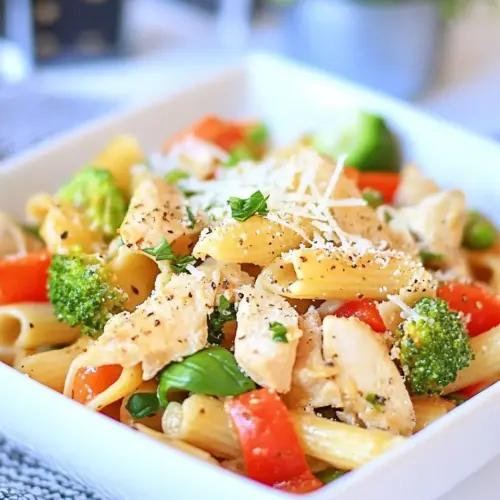
Chicken Pasta Primavera
Chicken Pasta Primavera is a creamy crisp and easy weeknight dinner that pairs tender chicken with bright vegetables and pasta for a balanced, flavorful meal. The combination of broccoli, tomato, and grated Parmesan cheese creates a comforting yet fresh plate that comes together quickly, making it perfect for busy evenings and casual entertaining.
Equipment
- Large Skillet
- Pot for Pasta
- Colander
Ingredients
- 2 tablespoons olive oil Enhance flavor and assist in sautéing vegetables and chicken; provides healthy monounsaturated fats and helps distribute heat evenly while cooking. Use at the beginning of preparation to prevent sticking and to bloom aromatics for a balanced base in the dish.
- 2 cups fresh broccoli florets Add bright color, texture, and a tender-crisp bite to the pasta; supplies fiber, vitamins, and visual appeal. Steam or sauté briefly to retain nutrients and ensure even cooking with other vegetables.
- 1/2 cup chopped onions Provide aromatic sweetness and savory depth when softened; helps form the flavor foundation for the sauce. Cook until translucent to release sugars and meld with garlic and other vegetables.
- 2 medium garlic cloves, chopped Supply pungent, aromatic heat and a savory backbone to the dish; promotes browning and fragrant oil infusion. Mince and add early in the sauté process to release essential oils without burning.
- 1 medium carrot, peeled and julienned Contribute natural sweetness, color, and a slightly firm texture when julienned; balance acidity from tomatoes and richness from cheese. Sauté until slightly tender so the carrot maintains structure in the pasta.
- 2 cups cooked chicken, cut into bite-sized pieces Deliver protein, savory richness, and satisfying bite to make the pasta a complete meal; adds texture contrast with vegetables. Warm through gently to avoid drying and to meld flavors with the sauce and pasta.
- salt, to taste Season and enhance all flavors; helps balance acidity, sweetness, and richness in the dish. Add gradually and taste as you go to achieve a well-rounded final seasoning.
- 3 medium tomatoes, chopped Provide juicy acidity, freshness, and a natural sauce component when chopped; brighten the overall flavor profile. Cook lightly or add near the end to preserve texture and fresh tomato brightness.
- 1 pound pasta, cooked according to package directions Form the starchy base and hearty component of the dish; binds with sauce and ingredients to create a cohesive meal. Cook to al dente according to package directions and combine promptly with other components.
- 1/2 cup grated Parmesan cheese Impart savory umami and creamy nuttiness when grated over the pasta; helps finish and thicken the sauce slightly. Sprinkle or stir in at the end to add a rich, cohesive mouthfeel and flavor boost.
- 2 tablespoons chopped fresh parsley Add fresh herbal brightness and a clean finish to the dish; provides color contrast and a light aromatic lift. Chop finely and sprinkle over the assembled pasta just before serving for maximum fragrance.
Instructions
- Heat the oil in a large skillet over medium heat. Add the broccoli, onion, garlic and carrot. Stir frequently, until the broccoli is crisp and tender (about 10 minutes.): Warmth on the tongue starts with the aroma that rises when the oil first shimmers, releasing a faint fruity scent. The oil should coat the pan evenly, and when you add a piece of onion it should sizzle gently, not spit violently. This moderate heat allows the onion and garlic to release sweetness without burning. If the oil smokes, lower the heat and wipe out the pan, because scorched oil will impart bitterness. One common mistake is using too high heat, which cooks the outsides too quickly while leaving interiors raw.
- Stir in the chicken, salt and tomatoes. Heat for 3 minutes or until the chicken is heated.: As these ingredients hit the skillet you should hear a steady sizzle and see edges beginning to take on a golden hue. Stir frequently so the pieces cook evenly, and tilt the pan to let any fond loosen and coat the vegetables. The visual cue you want is bright green broccoli with tender stems, translucent onions, softened carrots, and fragrant garlic . Overcrowding will trap steam and make everything soggy, so use a large skillet or work in batches to avoid that mistake.
- Spoon the chicken mixture over the drained pasta. Sprinkle with Parmesan cheese and parsley.: During this phase the aroma becomes vegetal and slightly sweet, and you may notice the vegetables developing small browned spots. These little caramelized bits boost flavor significantly, so I encourage gentle agitation rather than constant stirring, allowing brief contact for browning. The fork test is useful here, aim for a fork to meet slight resistance. A pitfall is mistaking limp green for done; the color should stay vivid, not faded.
- Stir in the chicken, salt and tomatoes: When you fold in the precooked chicken , it should warm through quickly and absorb the pan flavors, carried by the juices from the chopped tomatoes . Expect a mingled aroma of roasted vegetable sweetness and savory chicken . Salt at this point helps coax out flavors, but remember the Parmesan cheese will add saltiness later. A frequent oversight is adding too much salt early; taste after combining with the pasta before adjusting further.
- Heat for 3 minutes or until the chicken is heated: In these few minutes, steam rises and the dish tightens, with the tomato juices loosening any fond and creating a glossy coating. The temperature is enough to marry flavors without breaking down textures. If pieces of chicken are still cold in the center, cover the skillet briefly to trap heat and finish warming, but avoid long covers that steam the vegetables into softness. Overheating here can dry the chicken and make it fibrous.
- Spoon the chicken mixture over the drained pasta: When you transfer the warm vegetable and chicken mixture onto the hot, drained pasta , you should hear a soft mixing sound and see the pasta glisten as it picks up the juices. Toss gently so the strands and pieces are evenly coated, and use a splash of reserved pasta water if the mixture feels dry, which helps the sauce cling and creates silkiness. A common error is dumping everything together and stirring aggressively, which can break the pasta and mash the tomatoes.
- Sprinkle with Parmesan cheese and parsley: Dust the grated Parmesan cheese over the hot pasta to create small pockets of umami richness that melt into the surface. The chopped fresh parsley should be scattered last to keep its bright color and herbaceous lift. Watch the balance between cheese and salt, tasting before adding more. One mistake to avoid is adding the Parmesan cheese too early on the heat, causing it to clump rather than melt evenly.
Notes
- Save pasta water, a few tablespoons helps the sauce cling to the pasta and creates a silky finish without adding fat.
- Don’t overcrowd the pan, giving the vegetables space ensures they brown rather than steam, which preserves texture and flavor.
- Use freshly grated Parmesan for better melting and more nuanced savory notes than pre grated cheese.
- Warm chicken gently, because rapid reheating can make cooked chicken stringy and dry.
- Adjust salt last, since the Parmesan cheese and any pre seasoned chicken will contribute saltiness at the end.