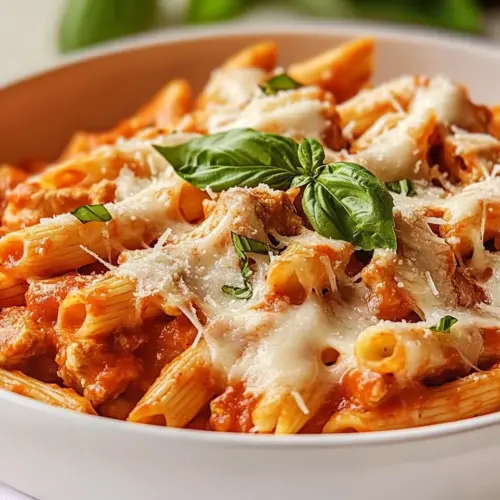
Chicken Parmesan Pasta
Chicken Parmesan Pasta is a creamy, cheesy one pan meal with tender chicken, saucy rigatoni, and a golden cheese top, perfect for an easy weeknight dinner. The method is fast and forgiving, delivering crispy edges and gooey melt in under an hour. Make it when you want comfort food without fuss, a crowd pleaser that reheats beautifully and satisfies everyone at the table.
Equipment
- Cast-Iron Skillet
Ingredients
- 3 boneless, skinless chicken breasts cut into cubes Cut into bite-sized cubes to ensure even cooking and easy incorporation into the pasta; provides lean protein and hearty texture that soaks up sauce flavors. Lightly sear or cook until golden to add savory browning and keep pieces tender inside. Season well during cooking to build a savory base for the dish.
- 2 tablespoons Italian dressing (not the creamy kind) Use to marinate the chicken briefly or toss with the cubed pieces for a bright, herbaceous coating; adds acidity and Italian herb notes without creaminess. Helps tenderize and season the chicken while complementing the marinara and cheeses. Choose a vinaigrette-style Italian dressing to avoid overpowering the other flavors.
- Kosher salt and freshly ground black pepper to taste Season to taste and use to balance and enhance the overall flavor; adds essential seasoning that brings out the natural taste of chicken and pasta. Apply during chicken prep and adjust at the end to suit preference. Freshly ground black pepper provides a subtle heat and aromatic finish.
- 16 ounces dry rigatoni pasta (1 box) Cook until al dente according to package directions so the pasta holds up when combined with sauce and chicken; provides the starchy base that carries sauce and cheese. Rigatoni’s ridges and tube shape are ideal for trapping bits of meat and melted cheese inside for balanced bites. Reserve some pasta cooking water to adjust sauce consistency if needed.
- 24 ounces Marinara sauce store-bought or homemade Heat and combine with cooked chicken and pasta to create the flavorful tomato base; provides acidity, sweetness, and savory depth. Use a good-quality store-bought or homemade marinara to determine the dish’s overall character and texture. Simmer briefly with the chicken to meld flavors before adding cheeses.
- 1/2 cup freshly grated Parmesan cheese Grate freshly to add a nutty, salty umami lift that enriches the sauce and finished dish; Parmesan provides depth and a subtle granular texture. Stir into the hot pasta mixture to melt slightly and thicken the sauce. Use fresh grating for the best flavor impact.
- 1/2 cup freshly shredded mozzarella cheese Shred freshly to provide creamy, melty texture and a mild milky flavor when combined and broiled or stirred into the pasta; mozzarella creates that classic gooey finish. Scatter over the assembled dish and warm until melted and slightly golden for an appealing presentation. Combine with Parmesan to balance richness and saltiness.
- Chopped fresh basil optional, for garnish Chop and sprinkle as an optional fresh herbal garnish to brighten flavors and add color contrast; basil contributes aromatic, slightly sweet notes that complement tomato-based sauces. Add just before serving to preserve its fresh fragrance and vivid appearance. Use sparingly to avoid overpowering the cheeses.
Instructions
- Heat the chicken and Italian dressing in a 12-inch cast iron skillet set over medium high heat. Season chicken with salt and pepper to taste.: Steam rises immediately and you will hear an encouraging sizzle as the chicken hits the hot skillet, carrying dressing flavors into the meat. The aroma of toasted herbs and oil will develop quickly, signaling good contact between meat and pan. This initial sear seals juices and creates Maillard browning which deepens flavor, so resist constant stirring. A common mistake is using low heat which prevents proper browning, leaving the chicken pale and less flavorful. If your pan seems crowded, remove a few pieces to keep the surface temperature high and achieve that crisp edge.
- Cook chicken until browned and just cooked through, about 5 minutes depending on thickness of chicken.: As the chicken cooks you will notice the edges turn golden and the center lose its raw translucence, producing a concentrated, savory smell. Touch a piece to check firmness, or use a thermometer for precision. Browning provides depth that the sauce will amplify, so aim for color without overcooking which causes dryness. A frequent oversight is letting the chicken sit too long and become chalky, so remove it the moment it is opaque with a small center spring.
- Add the box of pasta and the entire jar of marinara. Fill the empty marinara jar with water and add to the skillet. If using a stockpot, use 2 cups water. Lightly stir the mixture to combine.: When you add the pasta and marinara the skillet fills with a rich tomato fragrance and the surface begins to shimmer. The water released from the jar helps the pasta hydrate evenly, while the sauce clings to the ridges of the rigatoni. Stir gently so the pieces are submerged and evenly distributed. Avoid pouring excessive water which will thin the sauce and flatten flavor; aim for enough to just cover the pasta. A mistake here is skipping the rinsing of the jar or mismeasuring water, which can change cooking time and texture.
- Bring mixture to a boil and then reduce to a simmer. Cover and cook for 15 minutes or until pasta is tender to your liking.: The pot will sing with rolling bubbles at first, then settle into a quieter simmer once covered. Steam will fog the skillet and aromas intensify. Simmering lets the pasta absorb tomato flavor slowly, and the starch released helps thicken the sauce, creating a cohesive finish. Check for tenderness around 12 minutes to avoid over softening; the centers should be just chewy. A typical misstep is keeping a vigorous boil which can break down pasta and burn the sauce around the edges.
- Cover with grated Parmesan and then shredded mozzarella. No need to stir. Continue to cook for 2-3 more minutes or until cheese is fully melted. You can also broil the entire skillet for about 4 minutes to make the cheese extra melty!: The moment you add the cheeses the kitchen fills with a rich, milky scent as they begin to melt into glossy ribbons. Parmesan will melt into savory pockets while mozzarella forms a stretchy blanket on top. Leaving the cheese undisturbed allows pockets of steam to soften it evenly into a luscious layer. If you choose to broil, watch closely so the top turns golden rather than black. A common error is stirring in the cheese at high heat which can make it oily and break the desired texture.
- Top with chopped basil (optional) and serve! Enjoy!: The fresh basil adds a bright herbal perfume and visual contrast, releasing citrusy notes when scattered over hot cheese. The sizzling of the skillet will soften the leaves slightly while preserving color. Serve directly from the pan for a rustic presentation, allowing diners to spoon portions with both saucy and crisp edges. One mistake to avoid is adding the basil too early, which wilts it into anonymity; add just before serving for maximum freshness.
Notes
- Swap pasta shapes: Try short tubular pastas similar to rigatoni, they hold sauce in their cavities for the same textural experience.
- Use homemade marinara: A simple homemade sauce gives you control over sweetness and acidity, elevating the overall balance without changing the method.
- Double the cheese: Increasing the Parmesan and mozzarella yields a richer mouthfeel, ideal for feeding a crowd or making leftovers feel indulgent.
- Broil for topping: A quick broil after the cheese melts creates golden, blistered spots that add texture and visual appeal, watch closely to avoid burning.
- Adjust seasoning early: Season the chicken and taste the sauce midway, a little extra salt or pepper can brighten the final dish significantly.
- Garnish with fresh herbs: Finishing with chopped basil brings contrast and fragrance, added just before serving for maximum impact.