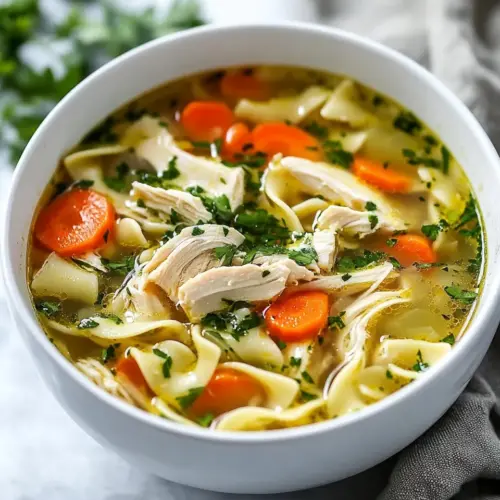
Chicken Noodle Soup
Chicken Noodle Soup offers warm, savory broth, tender shredded chicken, and springy noodles for a classic easy weeknight dinner. Creamy mouthfeel from a touch of butter and bright vegetable notes make each spoonful comforting and satisfying. Perfect for chilly evenings or when you need a nourishing bowl that comes together quickly, this recipe is a reliable kitchen favorite.
Equipment
- Enameled Pot
Ingredients
- 1/2 tablespoon butter Melted to provide a rich, silky base and help sauté aromatics; contributes subtle richness and helps coat vegetables for even cooking.
- 2 ribs celery, diced Diced to add crunchy texture and aromatic, slightly bitter flavors that balance sweetness from carrots; softens while simmering and imparts savory depth.
- 3 -4 large carrots diced Diced to offer natural sweetness, color, and body to the broth; breaks down slightly during simmering to thicken and enrich the soup.
- 1 clove garlic, minced Minced to deliver pungent, savory aromatic notes that brighten the broth; releases flavor quickly when sautéed in butter.
- 10 cups chicken stock, or broth Simmered as the primary liquid component to build a savory, well-seasoned base; carries aromas and dissolves seasonings and proteins for a cohesive soup.
- 1 teaspoon salt, to taste Added to enhance overall seasoning and bring out the flavors of vegetables and chicken; adjust amount at the end to taste.
- 1/2 teaspoon freshly ground black pepper, to taste Ground to mildly season and add warm, slightly sharp undertones; used to balance salt and herbs for fuller flavor.
- 1/8 teaspoon dried rosemary, or more, to taste Sprinkled sparingly to introduce resinous, piney notes that complement chicken and herbs; can be adjusted to personal preference for aroma intensity.
- 1/8 teaspoon dried thyme Stirred in to contribute earthy, slightly floral herbal flavors that support other seasonings; holds up well during simmering without overpowering.
- 1/8 teaspoon crushed red pepper flakes Pinched to inject a subtle heat and complexity that livens the broth; use sparingly to avoid dominating the delicate flavors.
- 1 batch homemade egg noodles, or 4 cups dry egg noodles, farfalle or other bite-size pasta Cooked to provide tender, comforting noodles that make the soup hearty; choice of homemade or dried affects texture and cooking time.
- 3 cups rotisserie chicken Shredded to supply ready-cooked protein and savory richness; adds body and meaty flavor while keeping the soup quick to finish.
- 1 teaspoon better than bouillon chicken flavor, (or more, as needed), or chicken bouillon granules Dissolved to boost chicken flavor intensity and deepen the broth; used sparingly to enhance savory notes without adding excess salt.
Instructions
- Add butter, diced celery and carrots to a large stock pot over medium-high heat. Saute for 3 minutes. Add garlic and cook for another 30 seconds.: Right away you will notice the sizzle as the butter melts and the diced celery and carrots hit the hot pot, releasing a bright, savory scent that sets the foundation. The vegetables should begin to soften and edge toward translucence in those first few minutes, and the flicker of caramelization along the pieces creates a subtle sweetness that lifts the final broth. When you add the minced garlic , it should perfume the air almost instantly, but be careful, because garlic browns quickly and can turn bitter; keep the heat moderate and stir continually during that thirty second window. If the vegetables begin to stick or the pan smokes, lower the heat and add a splash of stock to deglaze, scraping the fond into the pot. A common mistake is overcrowding the pot which causes steaming instead of gentle sautéing, so give the vegetables room and a steady medium high heat for the best flavor extraction.
- Add chicken stock and season the broth with rosemary, thyme, crushed red pepper, and salt (definitely TASTE the broth before adding more salt), and pepper. Taste and add a spoonful of 'better than bouillon' chicken or chicken bouillon cubes or granules as needed.: As you pour the warm chicken stock in, the scent will deepen into something full and savory, with the herb aromas floating up as the liquid warms. The dried rosemary and thyme will rehydrate and release aromatic oils, while the crushed red pepper adds faint warmth that balances the profile. Tasting is crucial here because different stocks have varying salt levels, so add the salt incrementally and revisit the bowl after the flavors mingle for a few moments. If your stock tastes flat, a dab of better than bouillon chicken flavor will layer in concentrated umami, but go slowly to avoid oversalting. One error I often see is adding too much herb early on; if the rosemary seems overpowering, a short simmer will mellow it, but you can always add more later. Stir gently and let the pot come together before moving on.
- Bring broth to a boil. Add noodles (either uncooked homemade egg noodles, or dry store-bought pasta) and cook just until noodles are al dente.: When the broth reaches a rolling boil you will see lively bubbles and steam, and the aroma will intensify into a full savory promise. Adding the noodles at this stage means they cook evenly, absorbing some of the broth while maintaining structure. Aim for al dente, where each noodle still has a slight chew to it, because they will continue to soften when combined with the hot liquid and shredded chicken . Keep the boil steady but not furious, since an aggressive boil can agitate the ingredients and turn noodles gummy. A common pitfall is overcooking the pasta; follow package times as a guideline and taste a noodle a minute or two early to judge readiness.
- If using store-bought noodles, be cautious not to overcook them! Remove pot from heat as soon as they are just barely tender. The noodles will continue to cook once you remove the pot from the heat, and you don’t want them mushy.: Right when the noodles are just tender, pull the pot from the heat and notice how the movement in the pot slows and the steam carries the savory scent upward. The carryover cooking is real, and the residual heat will finish the noodles gently. This pause helps preserve a springy texture and prevents the soup from turning into a gluey mass. If your noodles look swollen and soft but the broth is still simmering, transfer the pot to a cool burner or reduce heat further to avoid oversoftening. Avoid stirring aggressively at this point, since the noodles can break apart and cloud the broth.
- Add chicken meat from the rotisserie chicken. Taste the broth again and add more seasonings, if needed.: Dropping the shredded rotisserie chicken in will immediately warm the meat and release roasted notes into the broth, adding depth and a meaty texture that makes the soup heartier. After the meat is incorporated, take a spoonful and taste for seasoning balance, because the added chicken and any bouillon used can shift the salt and umami levels. Adjust with a touch more salt , black pepper , or a pinch of herbs if the broth needs brightness. One frequent oversight is failing to taste after adding the meat, which can lead to either underseasoned or overly salty results; tasting at this stage ensures the final bowl sings.
- Store leftovers in an airtight container in the refrigerator for 4-5 days, depending on the freshness of the chicken you used.: As the soup cools, its flavors continue to meld and deepen, creating a richer profile the next day, but the texture of the noodles will change over time, often softening more with each reheating. Transfer portions to shallow, airtight containers to cool quickly and refrigerate promptly to preserve freshness. When reheating, warm gently over medium heat to avoid breaking down the noodles further, and taste again to correct any lost seasoning. A common mistake is leaving soup at room temperature too long before refrigerating, which can compromise safety and quality, so aim to chill it within two hours of cooking.
Notes
- Boost store bought stock: If your chicken stock tastes flat, stir in a teaspoon of concentrated chicken flavor gradually, tasting after each addition to avoid oversalting.
- Noodle timing matters: For fresh egg noodles, add them near the end and watch closely, while dry pasta can be added to a boiling broth but remove a touch early to prevent sogginess.
- Leftover strategy: Store the broth and noodles separately when possible if you expect to keep leftovers more than a day, this preserves noodle texture.
- Vegetable prep: Dice carrots and celery uniformly so they cook at the same rate and give a consistent bite in every spoonful.
- Herb control: Use dried herbs sparingly at first and finish with fresh herbs if you have them, to brighten the bowl right before serving.