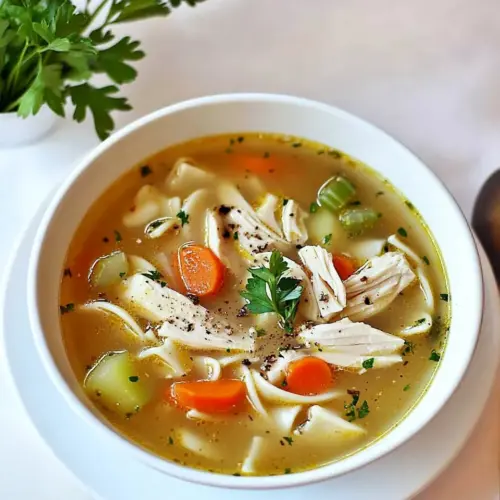
Chicken Noodle Soup
Chicken Noodle Soup is a warm, savory bowl of comfort with tender chicken, aromatic vegetables, and whole wheat egg noodles. This easy weeknight dinner delivers a clean broth, earthy herbs, and satisfying texture, perfect for cold evenings or when someone needs a soothing meal. Make a big pot to share, it reheats beautifully and comforts everyone who digs in.
Equipment
- Large Pot
- Spoon
- Knife
- Cutting Board
Ingredients
- 1 tablespoon olive oil Sauté gently in the pot to develop a fragrant base and help release flavors for the soup, providing a subtle fruity richness and healthy fats that carry aromatics.
- 2 carrots medium, chopped Add chopped pieces to simmering stock to lend natural sweetness, body, and texture to the broth while softening and melding with other vegetables over cooking time.
- 3 celery stalks medium, trimmed and diced Sweat until tender to contribute savory, slightly bitter notes and a crisp-tender bite that complements the carrots and onion, adding aromatic depth and mouthfeel.
- 1 white onion medium, diced Cook until translucent to release aromatic sulfur compounds that form the savory backbone of the soup, balancing sweetness and enhancing overall complexity.
- 4 cups chicken stock high quality, organic, and low sodium or homemade Simmer as the liquid foundation to concentrate flavors and create a nourishing base; using low-sodium or homemade stock allows control over salt and depth of taste.
- 1 teaspoon black pepper Season evenly to provide gentle heat and aromatic complexity; distribute throughout the soup to enhance other seasonings without overpowering delicate flavors.
- 1 teaspoon garlic powder or 2 cloves crushed Infuse for garlicky warmth and savory dimension, whether using powder for convenience or crushed cloves for a brighter fresh garlic punch; adds depth without dominating.
- 1 teaspoon dill weed Sprinkle in during simmering to impart a subtle, herby brightness with a slightly sweet, grassy flavor that pairs well with chicken and vegetables.
- 1 rotisserie chicken Shred or chop and stir into the broth to supply tender protein, savory richness, and a comforting texture; rotisserie chicken offers convenience and concentrated roasted flavor.
- 1 cup whole wheat egg noodles Cook until al dente within the soup to provide comforting chew and bulk; whole wheat egg noodles add a nutty flavor and more fiber than refined varieties.
- 3 tablespoons fresh parsley minced Garnish at the end to introduce fresh, leafy brightness and a mild peppery-herb finish that lifts the soup visually and flavor-wise while adding a hint of freshness.
Instructions
- In a pot that is able to hold at least 3 quarts, heat the olive oil over medium-high heat. Add the mirepoix and saute for about 4 minutes, until the onion has softened.: When the olive oil shimmers but is not smoking, you should hear a gentle whisper of movement as it coats the bottom of the pot, and it will smell faintly fruity; this indicates the pan is hot enough to begin building flavor. The immediate reason we do this is to create a warm environment for the vegetables, allowing them to release their natural sugars quickly without burning. Listen for a light sizzle when vegetables hit the pan. A common mistake is overheating the oil so vegetables brown too fast, which introduces bitterness, so keep the heat steady and give the pan a quick swirl to distribute the oil evenly.
- While the vegetables are in the pot, disassemble the chicken: Remove the skin from the entire bird, save half and throw the other half away. Pull as much meat off of the bones that you can, set aside. Throw away all of the bones and large pieces of fat.: As the onion , carrots , and celery mingle in the pot you will notice a sweet, almost caramel-like scent rising and the vegetables will begin to look translucent at the edges; this visual cue tells you they are releasing moisture and mellowing. The why is that softened vegetables create a sweeter, rounded broth rather than a sharp, raw-tasting one. Stir occasionally so nothing sticks. Avoid rushing by cranking the heat, because rapid browning will change the flavor profile too dramatically.
- After the onion has softened, add the chicken stock, black pepper, garlic and dill weed. Bring back to a simmer over medium heat and simmer for 5-6 minutes.: When you start pulling meat from the rotisserie chicken , the skin and juices have a rich aroma that hints at the flavor they will give the soup. Remove the skin from the entire bird, save half and throw the other half away, then pull as much meat off the bones as you can and set it aside. This process matters because the meat will add texture and protein, while the skin temporarily adds richness to the broth; you'll remove it later to avoid excess grease. A frequent error is leaving too much bone or fat in the bowl, which can make the broth cloudy or overly fatty, so be deliberate in trimming and discarding large bones and fat pieces.
- Add in the reserved chicken skin, 1 cup of chicken meat and the noodles. Simmer for about 10 minutes until a light foam forms. Skim this foam with a spoon. Remove and discard the skin once the 10 minutes are up.: As you pour in the chicken stock , it should ripple into the pot, carrying with it the browned bits from the base which dissolve and enrich the liquid; this is where the soup gains depth. The aroma will shift from vegetal to savory and herbaceous when the black pepper , garlic , and dill weed join the pot. Bring back to a simmer over medium heat and allow it to sing softly for a few minutes; simmering extracts flavor without reducing the liquid too aggressively. Do not let it boil hard, because that can break down delicate flavors and make the broth cloudy.
- Taste now and determine if you need to add any salt or additional pepper. The rotisserie chicken should impart some salt, so you may not want to add any. I added 3 pinches to mine. Stir in the minced parsley.: The gentle simmer is when the flavors begin to marry, the stock taking on the sweetness of the vegetables and the herb notes. You will see small, steady bubbles and smell a unified, savory aroma. This phase develops the base so the final soup tastes cohesive. A mistake here is rushing the simmer, turning up the heat to speed things along; you will lose clarity of flavor and risk over reducing the liquid.
- Serve hot with crackers.: Adding the reserved skin and meat releases further savory oils and concentrated chicken flavor, which is comforting in the broth; you will notice a richer mouthfeel. When you add the noodles , they will initially look stiff and pale, then hydrate and plump as they absorb the liquid; listen for a gentle bubble and watch the broth thicken slightly. The timing matters so the noodles cook through without becoming gluey. The common misstep is adding too many noodles at once, which can cause them to clump; stir gently to separate them as they begin to soften.
- Simmer for about 10 minutes until a light foam forms: During this simmer you will see tiny foam forming on the surface, sometimes carrying small particles of protein and impurities; its appearance is normal and even expected. That light foam indicates proteins are releasing from the chicken , and skimming it keeps the broth clearer and cleaner in flavor. Use a spoon to skim the surface periodically. Avoid letting the foam build up and boil back into the soup, because it can create a bitter, cloudy finish.
- Skim this foam with a spoon: As you skim, the action should feel smooth, and you'll notice the surface becomes noticeably clearer and the aroma more focused. The why is clarity and a cleaner taste, which matters when you want a bright bowl rather than a muddied one. One troubleshooting tip is to use a shallow spoon that can reach the edges, where foam tends to collect; failing to skim leaves the broth dull and slightly off tasting.
- Remove and discard the skin once the 10 minutes are up: When you pull out the reserved skin it will have relaxed and released additional oils, but removing it prevents the soup from becoming greasy. The broth will smell rounder and the texture will be lighter once the skin is out. If you leave the skin in, the mouthfeel can become heavy and the surface oily, which many find unappealing.
- Taste now and determine if you need to add any salt or additional pepper: Tasting at this point is crucial because the rotisserie chicken and stock may already provide enough seasoning; I often find just a few pinches of salt are needed. Notice how the salt elevates the flavors and how the pepper adds subtle warmth. A common error is over salting prematurely, so add sparingly and adjust gradually.
- Stir in the minced parsley: When you add the parsley , the bowl will take on a fresh, green lift and a faint herbaceous perfume that brightens the broth. This final flourish gives each spoonful a clean finish and balances the savory base. Avoid adding the parsley too early, because prolonged cooking will dull its brightness.
- Serve hot with crackers: The soup should be steaming, with the broth shimmering and the noodles tender but intact, offering a comforting contrast to crisp crackers. Serving hot ensures the aroma carries and the texture of the noodles and chicken is at its best. A mistake to avoid is reheating too aggressively later, which can break down the noodles and dry out the meat.
Notes
- To keep gluten free: replace the noodles with rice, quinoa, or another grain free alternative; this keeps the broth light and prevents the texture of the dish from becoming gummy when served or stored.
- To keep low carb: skip the noodles entirely; the resulting bowl still delivers satisfying chicken and flavored broth, especially when you increase the vegetable dice slightly for more bulk.
- Adjust noodle timing: if you prefer firmer noodles, add them later and cook for a shorter time; if you like them soft, add earlier, but be cautious since they will continue softening as the soup cools and stores.
- Stock saltiness test: always taste the chicken stock before adding salt, because a low sodium stock allows you to calibrate final seasoning more precisely without over salting.
- Herb swaps: if dill is not to your taste, you can emphasize the fresh parsley and add a touch more to give the bowl a lively finish while keeping the original herb balance intact.