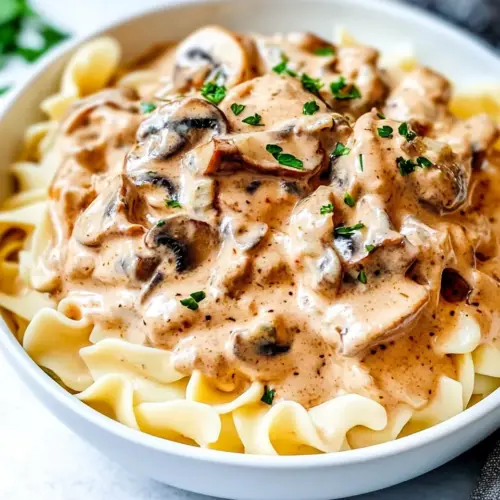
Chicken Mushroom Stroganoff
Chicken Mushroom Stroganoff is a creamy, savory, and easy weeknight dinner that combines tender chicken and browned mushrooms in a rich, tangy sauce. This comforting recipe yields a luscious texture that clings to egg noodles, making it perfect for cozy family meals or casual entertaining. Try it for a fuss free, satisfying plate you will want to make again and again.
Equipment
- Large Skillet
- Whisk
- Spoon
- Knife
Ingredients
- 1 1/4 lbs boneless skinless chicken breasts or thighs cut into 1/4” thin strips then 2” piece Cut into 1/4" thin strips then into 2" pieces to provide tender, evenly cooking protein; browns quickly and soaks up sauce flavors while remaining juicy when not overcooked. Use breasts or thighs depending on preferred fat content and texture for the finished stroganoff.
- 3 tablespoons olive oil divided Divide across searing and sauce steps to create a flavorful fond and to sauté vegetables; olive oil helps prevent sticking and promotes even browning without overpowering other flavors. Use divided portions to control cooking temperatures for chicken and mushrooms separately.
- 1/2 teaspoons salt divided Season and draw moisture from the chicken and vegetables during cooking; dividing salt helps layer savory flavor without over-salting at the start. Use measured amounts to balance broth and umami components in the final sauce.
- 1/2 teaspoon pepper divided Season and balance savory elements while controlling peppery heat; dividing pepper allows initial seasoning of protein and final adjustment of the sauce. Freshly cracked gives brighter, more pronounced heat.
- 2 tablespoons butter Melt for sautéing aromatics and mushrooms, contributing rich mouthfeel and depth; butter helps develop a glossy sauce and rounds out sharp flavors. Add with oil to increase smoke point and enhance browning.
- 1 small onion chopped Chop finely to form the flavor base, providing sweetness and aromatic depth when caramelized; onion softens into the sauce and helps thicken slightly as it breaks down. Cook until translucent to release sugars and meld with other savory components.
- 4 garlic cloves minced Mince thoroughly to distribute pungent, aromatic flavor throughout the dish; garlic adds a warm, savory note that complements mushrooms and beefy elements. Add toward the end of sautéing to avoid burning and bitterness.
- 10 oz . baby bella/cremini mushrooms sliced 1/4″ thick Slice about 1/4" thick to maximize surface browning and yield a meaty texture that soaks up sauce; mushrooms provide earthy umami and body to the stroganoff. Sauté until golden to concentrate flavor and release moisture for the sauce.
- 1/4 cup flour Dust over cooked aromatics or toss with chicken to create a roux-like base that thickens the sauce; flour stabilizes the broth into a silky coating for noodles and protein. Cook briefly to eliminate raw flour taste before adding liquid.
- 3 cups low sodium beef broth Add gradually as the main liquid to deglaze the pan and form the sauce base; low sodium allows better control of overall saltiness while contributing deep, savory character. Simmer to concentrate flavors and meld with seasonings.
- 2 tablespoons Worcestershire sauce Stir in to introduce tangy, savory complexity and a hint of sweetness that enhances beefy notes; Worcestershire sauce boosts umami and rounds the sauce. Add during simmering so its flavors integrate fully with the broth.
- 1 1/2 teaspoons beef bouillon powder (or base) Sprinkle to intensify beefy, savory depth without adding extra liquid; bouillon powder adds concentrated meaty flavor that complements the Worcestershire and broth. Dissolve into the liquid so it incorporates evenly.
- 1 teaspoon dried parsley Crumble or sprinkle to add subtle herbaceous brightness and color to the sauce; dried parsley refreshes the palate and lifts richer elements. Add toward the end of cooking to preserve aromatic quality.
- 1/2 tsp EACH paprika, ground mustard Include equal small amounts to impart smoky warmth and gentle tang; paprika and ground mustard add color and a subtle backbone to the spice profile. Balance these to avoid overpowering the creamy sauce.
- 1/4 tsp EACH dried oregano, dried thyme, red pepper flakes Add tiny pinches to introduce Mediterranean herbal notes and a hint of heat; oregano, thyme, and red pepper flakes provide complexity and subtle warmth. Use sparingly so the delicate herbs support rather than dominate the stroganoff.
- 2 oz . cream cheese, very soft (full fat melts better) Soften thoroughly to blend into the hot sauce, contributing richness and stability; cream cheese adds a silky texture and slight tang that helps thicken the sauce. Bring to room temperature to prevent lumps and ensure smooth incorporation.
- 1/2 cups sour cream (full fat is less likely to curdle) Fold in near the end to create creamy tang and prevent curdling, adding a smooth, slightly tart finish; full-fat sour cream ensures a stable emulsion and richer mouthfeel. Stir gently over low heat until just warmed through.
- 16 oz . egg noodles for serving Cook according to package instructions and serve as the starch that soaks up the sauce; egg noodles provide a tender, springy base that pairs perfectly with the creamy stroganoff. Reserve some sauce to toss with noodles for even coating.
Instructions
- Heat 1 tablespoon olive oil in a large skillet over medium high heat. Add chicken and season with 1/4 teaspoon salt and 1/4 teaspoon pepper. Cook just until cooked through. Remove to a plate.: The pan will hiss as the oil meets heat, and you should hear a steady sizzle when the chicken hits the surface, indicating the Maillard reaction is happening. You want small golden browning rather than gray steamed meat, so do not overcrowd the pan. The aroma will shift from raw to toasty and savory as proteins brown, which signals proper searing. A common mistake is moving pieces too soon; let them form a golden crust so they retain juices. If the chicken looks pale, increase heat slightly for a minute, then lower it to finish. Transfer to a warm plate to rest, which locks in juices and prevents overcooking when it returns to the sauce.
- To the now empty skillet, melt 2 tablespoons butter with 2 tablespoons olive oil over medium high heat. Add onions and cook 2 minutes then add the mushrooms and cook until they turn golden, about 6 minutes.: You will smell the sweetness of softened onion quickly, then the air will fill with rich, savory mushroom aroma as they release moisture and then brown. Listen for a gentle sputter that becomes quieter as the water evaporates and the mushrooms begin to caramelize. This color change to golden is crucial, because those browned bits build the base flavor for the sauce. Avoid stirring constantly; give the mushrooms space to brown. A typical error is crowding the pan which causes steaming instead of browning, so if the pan is watery, raise the heat briefly to evaporate liquid.
- Add flour and garlic and cook, while stirring for 1 minute.: The flour will toast slightly, losing its raw edge and developing a faint nutty scent, which prevents a floury aftertaste in the sauce. The minced garlic will bloom, releasing fragrant oils and a warm, aromatic quality. Stir continuously so the flour cooks evenly and does not clump. You may notice the mixture darken a touch, which is fine, but do not let the garlic brown or burn, because a bitter note will carry through the sauce. If the pan seems too dry, add a splash of broth, whisking to incorporate.
- Turn heat to low and slowly stir in beef broth followed by all of the seasonings and 1/4 teaspoon additional pepper.: As the beef broth hits the roux, you will hear a soft simmer and see the mixture smooth out. Adding the liquid slowly prevents lumps and allows the flour to hydrate evenly, creating a silky texture. The blend of bouillon, Worcestershire sauce , herbs, and spices will immediately enhance the aroma and deepen the sauce color. Keep the heat low to avoid a rapid boil that can separate dairy later. A frequent mistake is pouring the broth too fast, creating lumps, so pour in a thin stream while whisking or stirring thoroughly.
- Bring to a boil then reduce to a gentle simmer until thickened (but not too thick), about 5 minutes.: You will see small bubbles across the surface as it reaches a boil, then calming into a gentle simmer, at which point the sauce will visibly thicken and coat the back of a spoon. The smell will concentrate, with savory notes becoming more forward. This reduction is where flavors concentrate, so tasting and adjusting seasoning is key. Avoid over reducing, which can make the sauce gluey and overly salty; if it becomes too thick, loosen with a splash of broth or water.
- Reduce to low and whisk in cream cheese until melted (it will take about 5 minutes if you really want it all melted – it will still taste good if it's spotty). Add sour cream and stir until combined. Add chicken back to pot and warm through, about 1 minute.: As you whisk in softened cream cheese , the sauce will become glossy and velvety, releasing a rich aromatic cream note. The whisking motion breaks down small pieces and blends them into the sauce, smoothing texture. You will want to keep the heat low to avoid curdling the sour cream , and when it blends in the sauce should have a gentle tang that balances richness. Return the chicken to warm through briefly, maintaining tenderness. A common error is overheating after adding dairy, which causes separation, so keep the flame low and stir gently until combined.
- Serve over egg noodles/pasta of choice or mashed potatoes, rice, etc. Garnish with fresh parsley if desired.: The final plate will present a glossy, creamy sauce ladled over egg noodles , where the sauce clings to each strand, offering a comforting mouthfeel. You will notice a final aroma of herbs and a gentle tang from the sour cream. If you like a fresh contrast, sprinkle chopped parsley for brightness. Avoid leaving the dish sitting in a hot pan, which can tighten the sauce and dry the chicken ; instead, serve promptly so textures stay ideal.
Notes
- Prep first: Have the chicken, mushrooms, and dairy measured and ready because the sauce comes together quickly once you start adding liquids.
- Temperature matters: Use medium high to sear chicken, then lower heat when simmering the sauce to preserve a velvety finish without breaking the dairy.
- Softened cream cheese: Cut the cream cheese into small pieces or warm briefly so it incorporates smoothly and doesn't leave hard pockets.
- Low sodium broth: Start with low sodium beef broth so you can control salt levels, especially after adding bouillon and Worcestershire.
- Layer flavors: Toast the flour briefly with garlic and onion to remove raw taste, then simmer to let seasonings bloom and meld.
- Gentle reheating: If reheating leftovers, warm slowly on low and stir frequently to bring back creaminess without splitting.