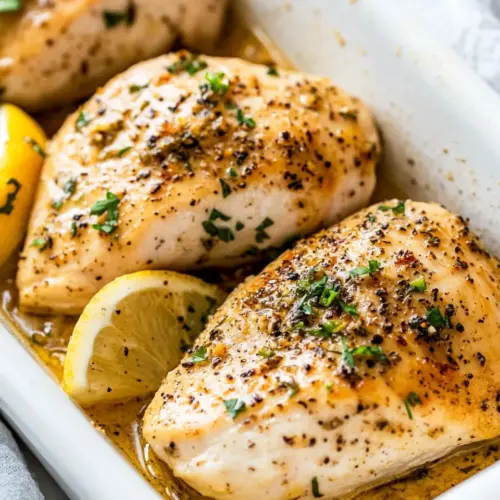
Chicken Marinade
Chicken Marinade brings together bright lemon zest, savory soy, and fragrant garlic to create a juicy easy weeknight dinner. This versatile blend works on breasts thighs or tenders and yields tender flavorful results whether you grill or bake. Quick to prepare and full of balanced flavor, it is perfect when you want a reliable protein that appeals to a crowd.
Equipment
- Ziptop bag
- Instant read thermometer
- Grill or Oven
- meat mallet or rolling pin
Ingredients
- 1 3/4 pounds boneless skinless chicken breasts, thighs, or tenders Provide tender, lean protein that soaks up the marinade flavors and cooks quickly; choose breasts, thighs, or tenders based on desired texture and fat content, and trim any excess fat before marinating for best results.
- 6 garlic cloves minced or grated (about 2 tablespoons) Add intense garlic flavor and aromatic depth when minced or grated; distribute evenly through the marinade to infuse the chicken with savory, slightly spicy notes and complement the citrus and herbs.
- Juice and zest of 1 medium lemon about 1 teaspoon zest and 1/4 cup juice Bring bright acidity and fragrant citrus oils from juice and zest to balance richness; lemon juice tenderizes the meat while zest provides concentrated lemon aroma without added liquid.
- 2 tablespoons extra virgin olive oil Contribute a silky mouthfeel and help carry fat-soluble flavors into the chicken; extra virgin olive oil also aids in browning and creates a smooth marinade emulsion when whisked with soy and Worcestershire sauce.
- 2 tablespoons low sodium soy sauce Deliver umami and salty complexity while keeping sodium lower than regular soy sauce; low sodium soy sauce enhances savory depth and helps with gentle meat seasoning.
- 1 tablespoon Worcestershire sauce Provide deep savory notes and a slightly tangy-sweet complexity that layers with soy sauce; Worcestershire sauce adds richness and a subtle fermented character that boosts overall flavor.
- 1 teaspoon dried thyme Offer earthy, slightly floral flavor and Mediterranean herb character; dried thyme withstands longer marinating times and pairs well with lemon and garlic for a classic poultry profile.
- 1 teaspoon dried oregano Impart warm, slightly bitter herbaceousness and a savory Mediterranean accent; dried oregano supports the thyme and lemon, enhancing the marinade’s herbal backbone.
- 1 teaspoon kosher salt Season the marinade to enhance all flavors and help brine the chicken for tenderness; kosher salt dissolves easily to penetrate the meat without overpowering when measured carefully.
- 1/4 teaspoon ground black pepper Add mild pungency and subtle heat to round out the seasoning; ground black pepper brightens the marinade and complements the herbs and citrus without masking other flavors.
Instructions
- If making chicken breasts, place them on a cutting board, cover with plastic wrap, and with a meat mallet or rolling pin, pound into an even thickness. (If using tenders or thighs, you can skip the pounding).: The surface of the chicken will flatten and you will feel the fibers loosen as you gently pound, which helps the pieces cook evenly and avoid rubbery edges. Smell the fresh chicken as you go, it should be neutral and not off putting. One reason we even out thickness is to prevent the thinner parts from overcooking while the thicker center reaches temperature. A common mistake here is pounding too hard and tearing the meat, so use controlled, even strikes and check thickness visually. If you are using tenders or thighs you can skip this pounding, since they are naturally more uniform or forgiving.
- With a fork, poke holes all over the chicken (this will allow the marinade to absorb).: When you poke the surface you will notice tiny perforations that let the marinade penetrate deeper, carrying flavor into the meat rather than just coating the surface. The mild metallic scent of the fork is irrelevant compared to the garlic and lemon that will follow, but the visual cue of tiny holes is reassuring. This technique matters because it speeds flavor absorption, especially for thicker cuts. Avoid stabbing so aggressively that juices escape excessively, which can dry the surface during cooking.
- In a large ziptop bag, combine the garlic, lemon zest and juice, olive oil, soy sauce, Worcestershire sauce, thyme, oregano, salt, and pepper.: As you assemble the marinade the aromas will become pronounced, with citrus and garlic leading and soy sauce adding a savory base note. Mixing in a bag allows everything to emulsify slightly and cling to the chicken . This matters because an evenly mixed marinade ensures each piece is seasoned consistently. A troubleshooting tip is to taste a tiny amount on the back of a spoon to check balance, but remember it will be diluted on the meat. Do not over salt at this stage, since the soy sauce contributes sodium.
- Add the chicken. Seal the bag, removing as much excess air as possible.: When you add the chicken into the bag you will see it nestle into the liquid, and the marinade should coat the surface. This visual check confirms coverage, and if needed you can press out extra air so the marinade wraps around the pieces. The technique matters because direct contact helps ensure uniform flavor distribution. One mistake to avoid is overcrowding the bag, which prevents full contact and leads to patchy seasoning.
- “Squish” the bag to coat the chicken, then place the bag on a plate or inside a shallow baking dish to guard against leaks.: Sealing and pressing out air helps the marinade touch more surface area and prevents leaks. You will feel the bag tighten as you remove air, and the contents will shift easily when you gently press. This step matters for practical reasons and to make the massage step more effective. Avoid sealing with a lot of air inside because the marinade will not cling as well and you risk spills when moving the bag.
- Marinate the chicken at room temperature for 15 to 30 minutes (the longer the better), or refrigerate for up to 12 hours (I find about 5 to 6 hours is ideal—since this is a small amount of lemon juice, you can push to 24 hours if absolutely necessary). Do not let marinade for longer, or the meat will start to break down. Let the chicken stand at room temperature for 15 minutes prior to cooking.: As you squish the bag you will hear a soft sloshing and see the marinade move, ensuring that juices and aromatics contact all surfaces. Placing the bag on a plate is a simple safety step to catch any accidental drips. This technique matters because even contact reduces the need for flipping and guarantees flavor. A common oversight is skipping the plate which can lead to a messy refrigerator or countertop if the bag leaks.
- When ready to cook: Preheat your grill to medium high (425 to 450 degrees F) or preheat your oven to 425 degrees F. Remove the chicken from the marinade, shaking off any excess.: During this resting period the acid and aromatics begin to penetrate, and you may notice the marinade darkening slightly as it mingles. Allowing a short room temperature period for 15 minutes helps flavors awaken, while refrigeration for several hours deepens taste. This timing matters to avoid over tenderizing; too long with acid heavy marinades can cause a mushy texture. The common mistake is leaving citrus heavy marinades for excessively long periods, which can break down the proteins.
- To grill: cook chicken over high heat until charred in spots and the internal temperature reaches 160 to 165 degrees F on an instant read thermometer, flipping halfway through, about 8 to 12 minutes total for breasts or thighs or 4 to 8 minutes for tenders. Do not overcook!: Bringing the chicken closer to room temperature reduces the thermal shock when it hits a hot grill or oven, which helps achieve even cooking. You may notice the surface is slick from the marinade and fragrant with garlic and lemon. This step matters because it shortens cooking time and helps produce a juicier interior. Avoid skipping this step on very cold cuts, because starting from fridge temperature can lead to overcooked exteriors before the center reaches safe temperature.
- To bake: Arrange the chicken in a single layer in a foil- or parchment-lined baking dish large enough to hold it comfortably without the chicken touching. Bake the chicken until it reaches 160 F to 165 degrees F on an instant read thermometer inserted at the thickest part. Don't overcook! For breasts you will need about 14 to 16 minutes (for small/medium breasts that are about 6 to 7 ounces), 16 to 20 minutes (for medium/large breasts that are 8 to 10 ounces), or 20 to 25 minutes (for larger breasts). Bake thighs or tenders for 15 to 20 minutes.: Preheating creates the proper cooking environment so you get color and proper searing when grilling, or efficient browning in the oven. Shaking off excess marinade stops flare ups on the grill and prevents steaming in the oven. Visual cues are key, look for a shimmering surface but not puddles of liquid. A common error is cooking with too much leftover marinade on the surface which can cause burning or prevent crust formation.
- Remove the chicken to a plate and cover. Let rest for at least 5 minutes. Serve!: On the grill you will hear sizzling and see small charred patches form, giving a smoky aroma. The sound and sight are important cues that the sugars and proteins are caramelizing. Use an instant read thermometer to confirm the thickest part is between 160 and 165 degrees F, since carryover will raise it slightly while resting. A common mistake is flipping too often which prevents a good sear, and overcooking which dries the meat.
- To bake arrange the chicken in a single layer in a foil or parchment lined baking dish large enough to hold it comfortably without the chicken touching Bake the chicken until it reaches 160 F to 165 degrees F on an instant read thermometer inserted at the thickest part: In the oven you will notice the surface take on a pale golden color and the aroma will intensify. Spacing the pieces prevents steaming and promotes even browning. Timing varies with size, so trust the thermometer; for breasts expect roughly 14 to 25 minutes depending on weight. A troubleshooting tip is to tent loosely with foil if the exterior browns too quickly while the center is still underdone.
- Remove the chicken to a plate and cover Let rest for at least 5 minutes Serve: Resting lets the juices redistribute so each bite is moist, and you will see the surface relax slightly and the juices settle. Resting also allows the temperature to rise a few degrees for safe doneness. Avoid cutting too early, which releases juices and leaves drier meat. After resting you can slice or serve whole as desired.
Notes
- Use different cuts - Swap between boneless skinless chicken breasts thighs or tenders depending on how much time you have and the texture you prefer, adjusting cook times accordingly to maintain juiciness.
- Adjust the acid - If you want a gentler tang reduce the lemon juice slightly and increase zest to keep brightness without over tenderizing, which helps when marinating overnight.
- Boost garlic aroma - For a more pronounced garlic profile grate the garlic with a microplane so it integrates into the marinade and clings to the surface during cooking.
- Control salt - Use low sodium soy sauce as listed and then finish with a pinch of kosher salt if needed after cooking, this prevents over salting during marinating.
- Make it ahead - Marinate in the morning and refrigerate for up to 12 hours for deeper flavor, then bring to room temperature before cooking to ensure even results.