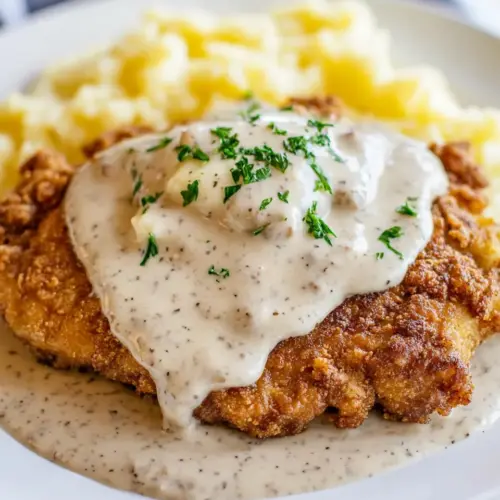
Chicken Fried Steak
Chicken Fried Steak delivers crispy golden crust and creamy pan gravy, a comforting and easy weeknight dinner. Tenderized cube steak is coated in a seasoned flour dredge and fried to a perfect crunch, then topped with a velvety milk gravy. This satisfying dish is perfect for family meals and casual gatherings, and it rewards attention to technique with reliably delicious results.
Equipment
- 12-inch Cast Iron Skillet
- White Shallow Bowls 6 Set of 6
- Black Cooling Rack
Ingredients
- 4 cube steak (tenderized round steak) Tenderized and thin to ensure quick, even cooking; provides the hearty protein base and classic texture of chicken fried steak, absorbing seasonings and the frying batter well.
- 1 1/2 cups all-purpose flour All-purpose and used for the dry dredge; forms the primary coating that crisps in hot oil and helps bind seasonings to the meat for a golden crust.
- 2 teaspoons salt (divided) Divided for seasoning both the flour and the milk-egg mixture; enhances overall flavor balance and helps bring out savory notes while seasoning the meat through and through.
- 1 teaspoon pepper (freshly ground) Freshly ground and added to the flour mixture for a sharp, aromatic heat; complements the salt and other spices to create a well-rounded savory profile in the crust.
- 1/2 teaspoon garlic powder Ground and mixed into the flour to add subtle savory depth and a hint of garlic flavor; helps round out the seasoning blend without overwhelming the other spices.
- 1/2 teaspoon onion powder Powdered and incorporated into the dry mix to lend a sweet, savory onion character; supports overall flavor complexity in the coating without adding moisture.
- 1/2 teaspoon smoked paprika Smoked and added sparingly to the seasoning mix for a warm, mildly smoky flavor; helps mimic the charred, rich notes often found in fried comfort foods.
- 1/2 teaspoon baking soda Fine and used in the batter to provide slight alkalinity; contributes to tenderizing the crust and helping it brown evenly during frying.
- 1/2 teaspoon baking powder Leavening and combined with baking soda to create lightness in the coating; produces a crisp, airy texture in the fried crust when reacting with the wet ingredients.
- 1 cup buttermilk Cultured and used in the wet batter to tenderize and add tang; its acidity reacts with leaveners and enriches the flavor while keeping the coating moist.
- 2 large eggs Beaten and mixed into the buttermilk to create the wet dipping mixture; helps emulsify and bind the flour coating while adding structure and richness to the crust.
- 1 cup vegetable oil (for frying) Neutral and heated for shallow frying; provides the high smoke point needed to achieve a crisp, evenly browned crust without imparting strong flavors.
- 2 cups milk Whole and used to make the traditional gravy after frying; combined with pan drippings to create a creamy, comforting sauce that accompanies the steak.
- salt and pepper (to taste) To taste and used at the end for final seasoning; adjusted as needed to enhance the gravy and finished steaks without overpowering the balanced flavors.
Instructions
- Prep dredge and batter: Set up an assembly line of dishes. In one dish combine the flour with 1 tsp of salt. In another dish add the remaining salt, pepper, garlic and onion powder, smoked paprika, baking soda, baking powder, buttermilk and eggs. Whisk well. Place a cooling rack next to the plates.: The kitchen fills with a faint flour dustiness and a faint tang from the buttermilk , signaling that you are starting right. As you whisk the wet mixture, notice the smooth thickness and the slight aroma of spices merging, which indicates even flavor distribution. This stage matters because a well mixed batter clings evenly, preventing bare spots on the cube steak . A common pitfall to avoid is under whisking, which can leave lumps and cause uneven coating.
- Dredge the steaks: Working with one steak at a time, dredge the steak through the flour mixture, then dip into the buttermilk mixture, and finally back into the flour mixture. Place the steak on the cooling rack. Repeat with remaining steaks. Reserve 1/4 cup of the flour mixture.: As you move each cut through the flour then the batter and back into the flour, you will hear light whispering motions of coating meeting meat and see the steaks take on a matte, floury layer. That tactile feedback tells you the crust is forming properly, which leads to consistent browning. This method helps the breading adhere through frying, and a typical mistake is crowding the plates which can cause pockets of wet batter to form.
- Prepare oil and fry the steaks: Heat the cup of vegetable oil in a large cast iron skillet over medium-high heat until it reaches 350°F. Using tongs, add 1 or 2 steaks to the skillet, depending on how big your steaks are and how many can fit and fry for 3 to 4 minutes or until browned. Flip the steaks and fry for another 2 to 3 minutes or until browned. Transfer steaks to a paper lined plate. Repeat with remaining steaks.: When the oil reaches a steady 350°F, it gives a clean, steady shimmer and a faint scent of warmth, promising crisping rather than soaking. Adding steaks slowly prevents the temperature from plunging, so you get an immediate sizzle that seals the crust. Look for a deep golden brown and a steady, energetic sizzle, which indicate Maillard reactions creating flavor. If the oil smokes or you see rapid darkening, it is too hot, so lower the heat to avoid burning the crust while leaving the interior underdone.
- Make the gravy: Carefully pour the frying oil into a heatproof bowl, making sure to not scrape any of the brown bits left in the skillet. Return 1/4 cup of the grease back to the skillet over medium-high heat. Whisk in the reserved 1/4 cup of flour mixture. Whisk continuously until it starts to brown, about 2 to 3 minutes. Add the 2 cups of milk and whisk to combine. Bring to a simmer and continue whisking until thickened, about 5 minutes. Taste for seasoning and adjust with salt and pepper as necessary.: Pouring off excess oil leaves a glossy sheen and browned bits that smell intensely savory, almost nutty, in the skillet. Returning a measured amount of that fat and whisking in the reserved flour mixture forms a bubbling paste that browns to the color of caramel, which signals flavour development. Adding the milk slowly while whisking yields a velvety texture and a steady simmer will thicken the sauce to coat a spoon. A frequent error is adding cold milk too quickly, which can result in lumps, so temper gradually and keep the whisk moving.
- Serve: Serve the steaks drizzled with the gravy.: The final plate should look inviting with the crisp edges contrasting the creamy gravy cascading across the surface. The first bite combines crunchy texture, savory meat, and the smooth sauce, a harmony you built step by step. Resting briefly on a rack prevents steam from softening the crust, so serve promptly to preserve texture. Avoid stacking the steaks, which causes sogginess from trapped steam.
Notes
- Make it spicier by adding a pinch more freshly ground pepper and an extra 1/4 teaspoon of smoked paprika to the flour mix for a warmer kick.
- Extra crispy technique involves double dredging and letting each steak rest on the rack for 10 to 15 minutes before frying so the coating sets firmly.
- Thicker gravy can be achieved by whisking in an additional tablespoon of reserved flour if you prefer a richer, stickier sauce.
- Lighter crust option uses less flour in the final dredge and a slightly thinner batter made by adding a splash more buttermilk, giving a delicate crunch.
- Make ahead tip: You can assemble the dredged steaks up to one hour in advance and refrigerate them on the cooling rack, then fry when ready for minimal last minute prep.