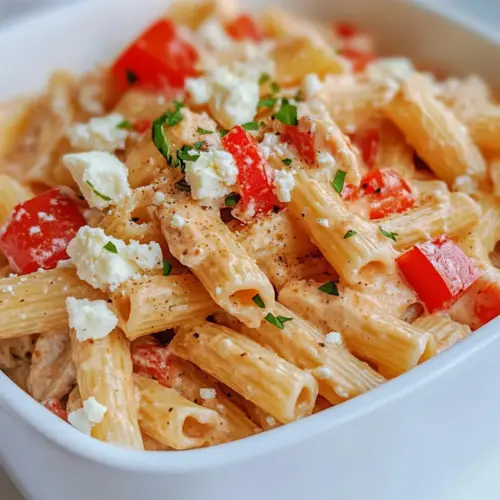
Chicken Feta Pasta
Chicken Feta Pasta blends creamy broken down feta, roasted cherry tomatoes, and tender chicken with al dente pasta for a creamy, tangy, and easy weeknight dinner. The oven does most of the work so you get deep roasted flavors with minimal hands on time, making it perfect for busy evenings when you still want an impressive, comforting meal.
Equipment
- 9x13-inch Baking Dish
Ingredients
- 1/2 pound boneless, skinless chicken breast (diced*) Dice and cook to provide the primary lean protein for the dish, absorbing seasonings and pairing well with pasta textures; ensures a substantial, savory component that complements the creamy feta.
- 1 teaspoon garlic powder Season generously to impart a concentrated garlic flavor throughout the chicken and sauce; helps build depth and aromatic warmth without introducing moisture.
- 1/2 teaspoon onion powder Season lightly to add a subtle sweet-onion background that enhances overall savory balance; blends into the dish without overpowering fresher tomato and herb notes.
- 1 teaspoon Italian seasoning Season evenly to contribute an herby, Mediterranean flavor profile that ties together tomatoes, cheese, and pasta; adds complexity with oregano, basil, and thyme-like notes.
- Freshly ground black pepper (to taste) Season to adjust and balance the overall taste, enhancing other seasonings and rounding out flavors; used sparingly to bring out natural savory elements.
- 1/4 cup olive oil Heat and use as the cooking medium to sauté chicken and blister tomatoes, contributing fruitiness and richness while preventing sticking and promoting even browning.
- 2 cups cherry tomatoes Roast or blister to release natural sweetness and acidity, forming the base of the sauce that melds with melted feta; provides bright bursts of juiciness and color.
- 8 ounces feta cheese (**) Crumble and melt into a creamy, tangy sauce when baked with tomatoes, delivering rich saltiness and a smooth texture that binds the pasta and chicken together.
- 2 cups dry pasta (***) Boil until al dente to serve as the carbohydrate base that soaks up sauce and carries flavors; provides bulk and a satisfying bite to the assembled dish.
- fresh basil (optional, for garnish) Garnish sparingly to add fresh herbal aroma, a burst of green color, and a slightly sweet, peppery finish that elevates the finished plate visually and flavor-wise.
Instructions
- Preheat the oven to 400 ℉.: You will smell a faint warm metallic scent as the oven climbs, and the interior will glow a little when it reaches temperature. Preheating matters because it ensures the cherry tomatoes and feta begin roasting immediately, encouraging caramelization instead of slow stewing. A frequent error is sliding the dish into a cold oven which delays browning and yields less vibrant roasted flavors.
- In a bowl, season the chicken with the garlic powder, onion powder, Italian seasoning, and black pepper.: The aroma of dried herbs and spices should bloom as you toss them with the diced chicken , creating a fragrant coating that will crisp slightly at the edges when roasted. This seasoning step builds the savory foundation for each bite, so take a moment to massage the mixture into the meat. A common slip is uneven seasoning, which leads to bland pockets, so distribute the spices evenly.
- Add the olive oil, cherry tomatoes, feta cheese, and seasoned chicken to a 9×13-inch baking dish, and toss to evenly coat. Sprinkle with more pepper if desired, and place in the oven.: When you combine everything, you should see glossy olive oil sheen over the tomatoes and feta , and hear a soft clap as the pieces move together. Tossing helps the oil and seasoning cling to the ingredients so they roast uniformly. If items are crowded unevenly in the dish, some pieces will steam rather than roast, so spread them out for best results.
- Bake for 30 minutes, or until the top of the feta cheese is golden and the tomatoes are roasted.: During baking you will notice the kitchen fill with a sweet, acidic perfume as the tomatoes soften, and the feta will puff and take on tiny golden spots. These visual cues tell you the Maillard reactions and caramelization are happening, which deepen flavor. Avoid opening the oven repeatedly, which cools the cavity and prolongs cooking, yielding a less concentrated sauce.
- While the tomatoes and feta are baking, prepare the pasta according to package directions. Drain and reserve 1/2 cup of pasta water.: As the water comes to a boil you will hear steady rolling bubbles, and the pasta will release faint starch into the water. Reserving half a cup of that starchy water is crucial because it helps bind the roasted tomato and feta juices into a silky emulsion when you toss them with the pasta . A typical misstep is pouring away all the water, which makes it harder to loosen and coat the pasta evenly.
- Remove the feta and tomatoes from the oven and stir to combine, breaking down the tomatoes to create a creamy sauce.: When you stir, you should see softened cherry tomatoes collapse and the feta begin to smear into a creamy mass. The sound is gentle bubbling and the aroma becomes richer. This is when the sauce forms, so press the tomatoes with the spatula to release juices. If you under stir, you may end up with whole tomatoes and a patchy sauce rather than a cohesive coating.
- Add the pasta and the reserved cooking water to the tomato feta mixture, and stir until everything is well coated.: Once combined, steam will rise and the sauce should cling to each strand or shape of pasta , with the reserved water loosening the mixture to a glossy finish. You should see a silky sheen and hear a soft sizzle if the pan is still warm. This step matters because the starchy water helps the sauce bind, ensuring no dry pockets. Adding too little water can leave the dish dry, while too much will dilute flavor, so add gradually.
- Serve with basil if desired.: Finished bowls should look glossy with sauce, dotted with roasted tomato pieces and flecks of pepper, and the optional fresh basil will give a bright green contrast. The aroma will be a blend of roasted tomato, tangy feta , and warmed herbs. A final mistake to avoid is adding the basil too early, which causes it to wilt and lose its aromatic punch, so add it just before serving.
Notes
- Salt awareness: The feta cheese is already salty, so skip adding extra salt until after you combine the pasta and sauce. Taste a small forkful and adjust cautiously to avoid oversalting, which is a common disappointment.
- Preheat the baking dish: If you like extra caramelization, warm the empty dish in the oven briefly before adding ingredients. This jumpstarts browning of the chicken and tomatoes, but use oven mitts because a hot dish can cause splattering when the oil hits it.
- Thicken on the stove: If the sauce seems loose after combining, transfer everything to a large pot and cook over medium heat while stirring until it reduces to your preferred thickness. This technique concentrates flavor and avoids watery results.
- Use pasta water wisely: Add the reserved starchy water in small amounts to reach a glossy, clingy sauce. Too much water dilutes flavor, while too little prevents proper emulsification, so add gradually and stop when the sauce coats the pasta.
- Serve immediately: This dish tastes best right away when the sauce is warm and the textures are distinct. Letting it sit can soften the pasta further and mute the bright tomato notes, so plan plating for prompt enjoyment.