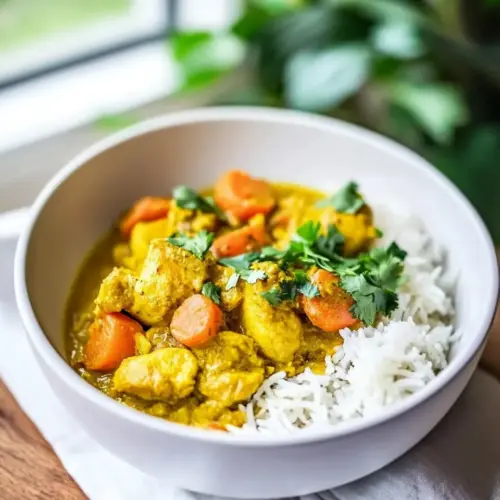
Chicken Curry
Chicken Curry is a comforting, easy weeknight dinner with a creamy aromatic lift from curry powder and cumin, tender chicken, and a surprising touch of apple for sweetness. This quick, flavorful one pot meal delivers balanced savory and bright notes, making it ideal for cozy family dinners or casual gatherings, and it's worth making whenever you want a simple, satisfying pot of comfort.
Equipment
- Large skillet or pot
- Mixing Bowl
- Wooden Spoon
Ingredients
- 2 tablespoons curry powder Combine into a paste to form the aromatic base that brings warm, complex curry flavor to the dish and helps coat the other ingredients evenly.
- 2 tablespoons water Add to loosen the spice paste and create a smooth consistency while helping deglaze the pan so flavors meld during cooking.
- 1 teaspoon cumin Sprinkle to introduce earthy, slightly bitter notes that enhance the curry's depth and complement the other warm spices.
- 3 Garlic cloves, minced Mince finely and sauté to release pungent, savory aromas that build foundational flavor and brighten the overall profile of the curry.
- 1 teaspoon tomato paste Stir in concentrated amounts to provide tangy, umami-rich tomato depth and help bind the spice mixture into a cohesive sauce.
- 3/4 teaspoon kosher salt Season to enhance and balance the savory components, drawing out natural flavors from the vegetables and protein while controlling overall saltiness.
- 1/4 teaspoon Fresh Ground Black Pepper Grind freshly to add a sharp, mildly spicy finish that heightens flavor contrast and rounds out the savory seasoning.
- 1 tablespoon olive oil Heat gently to carry flavors, provide a cooking medium for onions and aromatics, and contribute a subtle fruity richness to the oil-based sauce.
- 1 large onion, chopped Chop and sauté until softened to build sweetness and savory complexity, forming the base that absorbs and distributes the curry spices.
- 1 apple, cored, skin-on and cut into 1/2-1 inch cubes Core and cube to add a tender, mildly sweet fruit element that offers texture contrast and subtle natural sugars to balance savory spices.
- 1 cup Carrots, cut into 1/2-1 inch pieces Cut into uniform pieces to provide a sweet, earthy crunch that softens with simmering and complements the other vegetables’ textures.
- 1 cup Celery, cut into 1/2-1 inch pieces Slice evenly to supply aromatic freshness and a light crunch that mellows during cooking, contributing to the overall savory balance.
- 1 1/2 pounds Chicken, boneless/skinless breast and/or thighs, cut into 1/2-1 inch cubes (about the size of your apples, carrots and celery) Cube and brown to supply the main protein, absorbing the curry flavors and offering hearty texture while releasing juices into the sauce.
- 1 cup chicken broth Pour in to create the simmering liquid that melds flavors, provides cooking moisture for the ingredients, and forms the curry's final broth.
Instructions
- Place the first 7 ingredients in a bowl, combine and set aside.: Right away you will notice the perfume of curry powder and cumin as they mingle with minced Garlic and tomato paste , creating a fragrant paste when the small amount of water is added. This pre-mix lets the spices hydrate and prevents clumping, which ensures even coating later on. It also reduces the chance of gritty pockets of spice in the finished curry. A common mistake here is not fully combining the paste, which leads to uneven flavor distribution, so rub the mixture with the back of a spoon until uniform and set it where it won’t get cold.
- In a large skillet or pot over medium heat add 1 tbsp of oil and onions and sauté for 3-4 minutes until tender.: As the olive oil warms, it will shimmer and carry the sweet aromas of the chopped onion . You should hear a gentle sizzle as the onion softens and see them turn translucent, their edges losing sharpness. This step is essential because softened onion becomes the silky foundation of the sauce, releasing sugars that balance the spices. Watch the color and lower the heat slightly if browning happens too fast; burnt onion will introduce bitterness.
- Add spice mixture to the onions and sauté another 30 seconds.: When you fold the spice paste into the hot onions, you will smell a sudden burst of warmth as the spice oils bloom. Thirty seconds is just enough to deepen flavor without scorching the garlic or spices. The brief contact with heat transforms raw, dusty spices into aromatic, rounded notes that coat the onion. Be attentive because spices can go from fragrant to burnt quickly; if the pan smokes, remove it from the heat and let it cool for a moment.
- Add apples, carrots, celery and chicken and stir to combine to coat with the spice mixture and onions.: At this point, the pot becomes very colorful and you will see juices glistening on the surfaces of the apple , carrots , celery , and chicken . Stirring ensures each piece is kissed by the spiced oil and onion, which builds consistent flavor in every bite. The contrast of textures is important, so aim for even coating rather than crowding, which can cause uneven cooking. Avoid stirring so vigorously that the apple breaks down too much, because delicate pieces should retain some shape.
- Add chicken broth, bring to a boil then reduce to a simmer and cover.: When the chicken broth hits the pan you will see steam and perhaps a gentle bubble as the heat rises. Bringing the mixture briefly to a boil helps the liquid wake up and integrate flavors, but reducing to a simmer is where tenderness is achieved without toughening the chicken . Covering traps steam and cooks the vegetables evenly. A common error is maintaining a full boil, which can toughen lean proteins and evaporate too much liquid, concentrating saltiness, so lower the heat until the surface shows small, gentle bubbles.
- Simmer for 30 minutes until vegetables are tender and chicken is cooked through. Stir every couple of minutes to prevent the curry from sticking to the bottom of the pot/skillet.: Over a gentle simmer, you will hear a soft, steady whisper from the pot and see the sauce lightly moving. After about 30 minutes, the carrots should be fork tender, the apple slightly softened but intact, and the chicken opaque through the center. Stirring occasionally prevents scorching and ensures the spices continue to infuse. One thing to watch is liquid level; if it drops too low, add a touch more broth to keep things glossy and prevent sticking. Avoid constant stirring, which can break down vegetables prematurely.
- Cool and serve over Jasmine or Basmati rice.: After removing the pot from heat, let it rest for a few minutes so the steam settles and the sauce thickens slightly, yielding a silkier mouthfeel. Spoon the curry over warm rice and notice how the grains cradle the sauce and absorb aromatic juices. Resting also allows flavors to meld further. A frequent misstep is serving immediately straight off high heat; the dish benefits from a short pause so flavors sharpen and textures settle.
Notes
- Adjust spice level: Add more or less curry powder or increase black pepper gradually to dial heat. Taste during simmer to reach the right warmth for your palate.
- Choose your chicken cut: Use thighs for juicier results or breasts for a leaner version, keeping pieces uniform in size to ensure even doneness.
- Swap vegetables: Keep the size consistent if you change the carrots or celery, as different cook times can unbalance the dish; quick cooking vegetables should be added later.
- Enhance sweetness: If you want more sweetness, pick a firmer, sweeter apple variety and add at the beginning so it softens while keeping shape.
- Finish with fresh brightness: A short rest before serving concentrates flavors; add a tiny splash of water if the sauce reduces too much while resting.