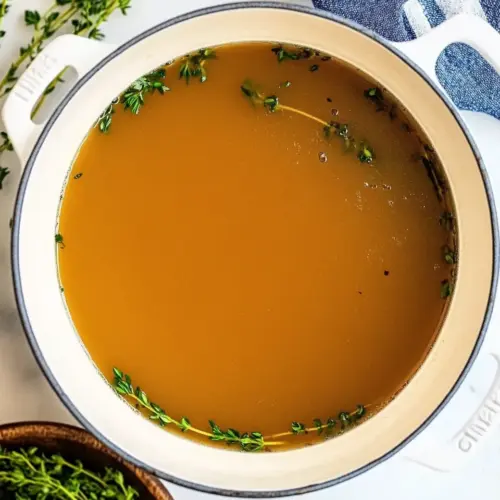
Chicken Broth
Chicken Broth offers a rich, savory base with deep, gelatinous texture and bright aromatic notes. This easy to make, slow simmered broth yields a versatile, comforting stock perfect for soups, sauces, and weeknight dinners. Make a big pot to freeze portions and transform simple meals with homemade depth and warmth.
Equipment
- 16 to 20 quart stockpot
- Colander
- Large bowls
- Ladle
Ingredients
- 2 (5-pound) whole young roasting chickens (*) Roasting whole chickens provide the rich gelatin and savory backbone for a deeply flavored broth; cook slowly to extract collagen from bones and connective tissue. Remove excess fat after chilling to clarify the liquid and intensify mouthfeel. Use young chickens for tender, clean-tasting stock that gels when cooled.
- 3 large yellow onions (unpeeled and quartered **) Quartered unpeeled yellow onions add natural sweetness, depth, and a caramelized aroma when simmered; the skins contribute color and additional savory compounds. Leave skins on to deepen the broth's hue and complexity without overpowering other aromatics. Cut into large pieces to allow easy straining later.
- 1 head garlic (unpeeled and halved, optional) Halved unpeeled garlic cloves contribute subtler, roasted garlic undertones rather than sharp raw garlic heat; optional use lets you tailor the broth's aromatic profile. Keeping the papery skins on softens the flavor and adds slight color. Smash or halve to expose more surface area for infusion.
- 6 large carrots (washed, unpeeled and quartered) Washed unpeeled large carrots introduce natural sweetness, balancing savory and herbal flavors while adding body and pigment to the broth. Quartering increases surface area for faster flavor release during simmering. Leave skins intact for easier prep and additional nutrients.
- 4 ribs celery with leaves (washed and halved) Washed and halved celery ribs with leaves supply a vegetal, slightly bitter note that rounds out the mirepoix base and enhances overall savory complexity. Celery leaves contribute concentrated herbaceous aroma, elevating background flavors. Halving keeps pieces large for easy removal during straining.
- 2 tablespoons herbes de Provence Herbes de Provence impart a fragrant bouquet of dried herbs like thyme, rosemary, and savory that infuse the broth with Mediterranean warmth and aromatic depth. Use measured tablespoons to avoid overpowering subtle chicken flavors. Add early in cooking to fully release essential oils.
- 4 dried bay leaves Dried bay leaves introduce a slightly floral, savory bitterness that sharpens and balances richness while contributing subtle herbal complexity. Use whole leaves so they can be easily removed before serving. Add at the start of simmering to integrate their flavor into the stock.
- 12 whole cloves Whole cloves lend a warm, slightly sweet and aromatic concentration that complements savory notes when used sparingly in a broth. Keep cloves whole to prevent overpowering bitterness and facilitate removal. Add only a few to avoid dominating the delicate chicken base.
- 2 teaspoons whole black peppercorns Whole black peppercorns provide bright, peppery heat and aromatic lift that permeate the broth without clouding clarity; they round flavors and add subtle warmth. Use whole for a cleaner, controlled spice release and easy straining. Adjust quantity to taste for gentle background spice.
- 1 tablespoon kosher salt Kosher salt enhances natural flavors, balances sweetness and bitterness, and helps extract proteins and aromas from bones and vegetables during simmering. Use measured amounts to avoid over-salting, keeping in mind reduction will concentrate saltiness. Add gradually and taste toward the end.
- 1 tablespoon low-sodium soy sauce Low-sodium soy sauce contributes umami depth and a mild savory boost without overwhelming salt content, enriching the broth's savory profile and color. Choose low-sodium to maintain control over final seasoning as the stock reduces. Stir in early to meld with other aromatics.
- 6 quarts cold water Cold water serves as the solvent medium that slowly extracts gelatin, flavors, and nutrients from chickens and aromatics when brought to a gentle simmer. Start cold to draw proteins out evenly and produce a clearer stock. Measure the volume to achieve desired concentration after long simmering.
Instructions
- Place all ingredients in a 16-20 quart stockpot, and cover with 6 quarts of water.: As the cold water settles over the ingredients you will notice the colors floating and mingling, with onion skins darkening and the chicken sinking. Starting with cold water is essential because it draws out proteins and collagen steadily, which gives you a clearer, richer broth. One common mistake here is using water that s too hot, which can coagulate proteins on the surface and trap impurities, so always begin cold and give the pot a gentle swirl to settle everything evenly.
- Bring to a boil, reduce heat to low, and simmer uncovered for 2 1/2 hours.: You will hear a low, steady bubble and see gentle movement across the surface as the aromatics soften and the bones release flavor. The smell will transition from raw to savory and slightly sweet, and small scum may rise; skim it occasionally for clarity and cleaner taste. Simmering at too high a heat will churn the liquid and make it cloudy, so keep it just below a boil to extract flavor slowly.
- Carefully transfer the chickens to two large bowls. Remove the chicken meat from the bones and set aside.: Use tongs or a slotted spoon, feeling the skin and bones for tenderness. The transferred birds should be warm and yielding, and the bowls will collect some of the loose broth and juices. Take care to avoid splashing hot liquid; a common error is rushing this step and burning hands or losing liquid back into the pot.
- After removing the meat from the bones, place the bones and the excess broth (from the bones) back into the stockpot. Season to taste – the broth should taste lightly salted.: The meat will pull away easily when the bird is cooked properly, and you should feel large pieces of white meat come off in whole segments. This reserved meat is perfect for salads, sandwiches, or future soups. Avoid overhandling it under hot water which can make it stringy; instead let it cool just enough to shred comfortably.
- Continue cooking the chicken broth another 1 1/2 hours.: Returning the bones concentrates flavor as the pot continues to simmer, and tasting now helps you decide if more salt is needed. You want a gentle saltiness because the broth will reduce further. A common mistake is overseasoning at this stage, which makes final dishes too salty after reduction.
- While the broth reduces, cut or shred the chicken meat and save for other meals. (It freezes beautifully.): During this phase the stock will deepen in color and develop more body, with faint steam carrying a roasted aroma. You may hear a softer simmer and notice the liquid reducing, which intensifies flavor. Watch for excessive reduction which can overconcentrate salt and fat; add a splash of water if it is dropping too quickly.
- After the broth is finished cooking, strain it through a colander, and discard the remaining solids.: The meat s texture will be tender and fragrant, and handling it while the broth cooks lets you keep busy without rushing the pot. Shredded chicken will be moist and ready to use in many dishes, and freezing portions is a great way to preserve it. A mistake people make is shredding the meat too finely, which can make it dry when reheated, so keep pieces reasonably sized.
- Refrigerate the broth overnight, then remove the surface fat the next day.: Pouring the broth through a colander will separate the liquid from bones and vegetables, leaving you with a clear, aromatic stock. You will notice a golden clarity and concentrated aroma after straining. Be careful when pouring to avoid splashes; using a ladle and working in batches helps maintain control.
- The broth will be slightly gelatinous, but it will liquefy and add a rich, lovely flavor when heated.: As the liquid cools it will set slightly and fat will rise to the top, allowing you to skim it off cleanly with a spoon. The chilled broth also lets flavors settle and the texture become slightly gelatinous, which is a great quality indicator. A common oversight is trying to remove the fat while still hot, which is messy and less effective, so patience here makes for a cleaner final product.
- The broth will be slightly gelatinous, but it will liquefy and add a rich, lovely flavor when heated: When you reheat a chilled portion you will see it melt and the aroma will return with renewed intensity, showing the broth s concentration of collagen and flavor. That gelatinous quality signals success; it adds mouthfeel and body to soups and sauces. Don t mistake the unset gelatin for spoilage; it s a sign of a well made stock, not a problem.
Notes
- Herbal boost: Add fresh herbs toward the end of simmering for a brighter finish. Try a sprig of thyme or parsley in the last 15 to 20 minutes so the flavors stay vibrant. Avoid adding fresh herbs at the start because long cooking can turn them bitter.
- Longer simmer for deeper flavor: Simmering the bones for up to 8 hours concentrates flavor and yields more collagen, resulting in a richer, more gelatinous stock. Keep the heat low and replenish water as needed to prevent over reduction. Overcooking at high heat will make the broth cloudy and overly intense.
- Reduced sodium approach: Use less salt and soy sauce if you plan to reduce the broth later or serve it to salt sensitive eaters. You can always salt to taste in the final dish, which prevents overseasoning. A pitfall is underseasoning to the point where the broth tastes flat, so find a gentle middle ground.
- Concentrated stock for freezing: Reduce the broth further to concentrate flavor, cool, then freeze in small portions for future use as a flavor enhancer. Concentrated stock thaws quickly and boosts sauces or saut s with a small splash. Watch the reduction so it does not become overly salty.
- Use of aromatics: Keep onion skins and celery leaves for extra color and depth, but remove garlic if you want a cleaner finish. These scraps add subtle roasted notes when simmered gently. Using too many strong aromatics can mask the delicate chicken flavor, so balance is key.