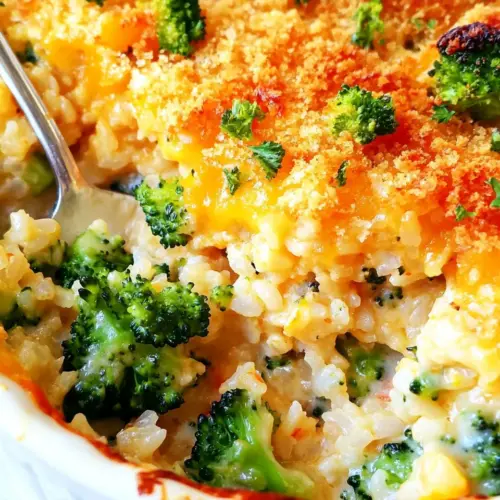
Chicken Broccoli Rice Casserole
Chicken Broccoli Rice Casserole is a creamy, comforting one dish meal with tender chicken, bright broccoli, and fluffy basmati rice finished with a crunchy panko topping. This easy weeknight dinner is family friendly and freezer friendly, delivering creamy cheese and savory sauce in every bite. Make it for a crowd or for cozy leftovers that reheat beautifully.
Equipment
- Large Skillet
- Medium skillet
- 9×13 baking dish
- Whisk
Ingredients
- 1 lb chicken breasts chopped into large bite size pieces Chop and sauté to add hearty protein and texture that anchors the casserole and soaks up flavors from the sauce.
- salt and pepper Season generously to enhance and balance flavors throughout the dish while drawing out natural tastes from the chicken and vegetables.
- 1/4 teaspoon paprika Sprinkle sparingly to impart a warm, smoky note and subtle color that complements the savory profile of the casserole.
- 4 tablespoon olive oil divided Measure and divide for cooking and finishing; use for browning the chicken and vegetables and for enriching the sauce.
- 3 tablespoons unsalted butter divided Melt and divide to build a roux, enrich the sauce, and add a rich, silky mouthfeel to the casserole.
- 1 yellow onion chopped Chop finely to provide a sweet, aromatic base that softens and melds with other vegetables during sautéing.
- 1 red bell pepper chopped Chop and sauté to contribute crisp-sweet flavor and vibrant color that balances richness in the casserole.
- 1 cup chopped carrots Chop and simmer or sauté to add natural sweetness, body, and tender vegetable texture that complements the broccoli.
- 1 1/2 lb (about 8 cups) broccoli florets Trim and cut into florets to provide bulk, vibrant color, and a contrasting texture that pairs well with the creamy rice.
- 1/3 cup all-purpose flour Whisk in to thicken sauces and create a smooth, velvety base that helps bind the casserole components together.
- 2 1/2 cups low sodium chicken broth divided Use divided to cook rice or deglaze and to adjust sauce consistency, contributing savory depth and moisture.
- 2 cups milk Stir in to contribute creaminess and a tender, milky backdrop that softens flavors and enriches the sauce.
- 1 tablespoon cornstarch Dissolve to tighten and stabilize the sauce, preventing separation and giving a glossy, clingy consistency.
- 2 teaspoons chicken bouillon Dissolve to intensify savory, meaty undertones and deepen the overall flavor of the casserole without excess salt.
- 1 1/2 teaspoons Dijon mustard Whisk in for a sharp, tangy lift that brightens the creamy sauce and balances richness.
- 1 1/2 teaspoons Worcestershire sauce Add for a fermented-savory umami boost and slight acidity that enhances depth and complexity of the sauce.
- 1 tsp EACH garlic powder, dried parsley Sprinkle evenly to add gentle garlic warmth and herbaceous color that supports the overall seasoning profile.
- 1/2 teaspoon ground cumin Add sparingly to introduce earthy warmth and a subtle aromatic layer that rounds the seasoning blend.
- 1 1/2 cups freshly grated sharp cheddar cheese divided Stir in divided to provide sharp, melty cheesiness that both flavors the filling and creates a creamy texture.
- 1/2 cup freshly grated Parmesan cheese Fold in to lend nutty, salty complexity and a granular texture that complements melted cheddar in the casserole.
- 1/2 cup sour cream Stir in to add tangy richness and a silky, creamy element that heightens moisture and body in the finished dish.
- 3 cups cooked basmati rice (measure cooked) Measure cooked to provide a fluffy, absorbent starch base that soaks up sauce and binds the ingredients.
- 3/4 cup panko breadcrumbs preferably Italian panko Toss with butter to create a crunchy, golden topping with added savory seasoning and pleasant textural contrast.
- 2 tablespoons melted butter Drizzle to moisten breadcrumbs and help them brown evenly, contributing crisp topping and buttery flavor.
- 1 tablespoon olive oil Measure and add to the topping for a glossy finish and extra richness that aids in achieving a golden crust.
Instructions
- Preheat oven to 350 degrees F. Lightly spray a 9×13 pan with nonstick cooking spray.: You will notice the oven warming and a faint dry heat in the air, which sets the stage for even baking and bubbling. Preheating ensures the casserole begins cooking immediately when it hits the oven, preventing soggy bottoms that occur when a cold dish is introduced. A common mistake is skipping preheat, which lengthens bake time and yields uneven heat distribution; allow the oven to reach full temperature before sliding the casserole in.
- While the chicken is still on the cutting board, dab it with paper towels and season with 1/2 teaspoon salt, 1/4 teaspoon pepper and 1/4 teaspoon paprika; set aside.: Patting the chicken dry helps the seasonings adhere and promotes a pleasant sear when it hits the skillet, you will sense a faint salt aroma and the paprika will lend an earthy scent. Seasoning early layers flavor into the protein so it complements the sauce later. Avoid overcrowding flavors with too much salt up front, because additional seasoning will be added in the sauce stage.
- Melt 1 tablespoon butter in 2 tablespoons olive oil in a large skillet. Add onions, carrots and bell peppers and sauté for 5 minutes. Add chicken and cook just until the outsides are opaque.: The vegetables will soften and release a sweet, toasty scent as their edges turn translucent, while the butter and oil create a glossy pan surface. When you add the chicken , listen for a gentle sizzle, and watch for opaque edges but not complete doneness, which ensures the pieces remain tender in the final bake. A typical error is cooking the chicken fully here, which results in dry meat after baking.
- Layer broccoli on top of chicken/vegetables. Add 1/2 cup chicken broth, cover pan, and lower heat to medium. Steam broccoli until tender but not limp, about 3 minutes (cook longer if you like softer broccoli). Transfer vegetables (and any excess liquid) to a large bowl.: Steam releases a bright vegetal aroma and the broccoli will shift to a vivid green as it softens; this is your visual cue. The brief steaming retains a pleasant bite that will yield to oven heat. A common slip is oversteaming, which turns broccoli dull and mushy, so check texture early and stop when it is still slightly firm.
- To the same skillet (don’t wipe out), melt 2 tablespoons butter with 2 tablespoons olive oil over medium heat. Whisk in flour then cook, while stirring, for 1 minute. Turn heat to low then gradually whisk in remaining 2 cups chicken broth and 1 cup of milk. Whisk cornstarch with remaining 1 cup milk and add to skillet followed by Dijon, Worcestershire sauce, chicken bouillon and all spices/seasonings. Season with an additional 1/2 teaspoon salt and 1/4 teaspoon pepper.: The pan will smell rich as the butter and oil mingle, and whisking the flour briefly takes away raw flour notes, producing a nutty scent. Adding liquids slowly while whisking creates a silky, lump free sauce. If you pour too fast, lumps form and the sauce becomes grainy, so add liquid in a steady stream while whisking constantly.
- Bring the sauce to a boil, whisking constantly then reduce heat to a simmer, whisking often until thickened. Remove from heat and whisk in 1/2 cup cheddar until melted followed by Parmesan cheese until melted. Whisk in sour cream until blended.: The sauce will bubble and release a warm, savory steam; watch for it to thicken noticeably and coat the back of a spoon, which is the proper consistency. Off the heat, the cheeses melt into a glossy, aromatic union and the sour cream adds a pleasant tang that rounds the sauce. Overboiling after adding dairy can separate the sauce, so remove from heat when it reaches the right thickness.
- Add veggies/chicken to the sauce if your pan is large enough, otherwise pour sauce over the veggies/chicken in the bowl and stir to combine. Fold in rice. Transfer to the prepared baking dish and spread into an even layer. Top with remaining 1 cup cheddar cheese.: At this stage you will smell the combined savory notes and see steam rising as the hot sauce marries with the rice and broccoli . Folding gently preserves the texture of the grains and vegetables while ensuring even distribution. A frequent mistake is overmixing, which breaks up the rice and creates a denser casserole; fold just until everything is coated and evenly distributed.
- Panko topping: Melt butter in olive oil over medium heat in a medium skillet. Add panko and stir to coat. Continue cooking until crumbs become golden brown. Evenly sprinkle over cheese.: Melt butter in olive oil over medium heat in a medium skillet. Add panko and stir to coat. Continue cooking until crumbs become golden brown. Evenly sprinkle over cheese. : Toasting the panko releases a toasty, nutty aroma and gives the topping a satisfying crunch. Stirring constantly encourages even browning and prevents burning, and the butter imparts richness. If the crumbs burn, they will taste bitter and ruin the topping, so remove from heat once they are a warm golden color.
- Cover casserole with foil and bake at 350 degrees for 30 minutes or until hot and bubbly and cheese is melted.: In the oven you will hear a gentle bubble from the sauce and smell a warm, inviting aroma as the cheeses melt and flavors meld. Baking covered traps steam, allowing the interior to heat through while the top remains protected until you remove the foil for any desired browning. A mistake is leaving it uncovered the whole time, which can dry the filling before it heats through evenly; covering helps maintain moisture.
Notes
- Rotisserie chicken option Use about 3 cups shredded rotisserie chicken when combining the vegetables with the sauce, and skip the raw chicken seasoning step since rotisserie is often pre seasoned.
- Rice choices Use long grain white rice, brown rice, wild rice, or basmati for distinct grains; avoid overcooked rice which can make the casserole mushy.
- Steam broccoli to preference Steam until just shy of your desired final texture, because it will soften further in the oven and oversteaming leads to limp florets.
- Adjust final seasoning Taste the finished casserole and add salt and pepper at the end since the dish often needs a final lift after baking.
- Freezing method Assemble through the point of baking, double wrap tightly, freeze up to three months, thaw in fridge, then add topping and bake until hot and bubbly.