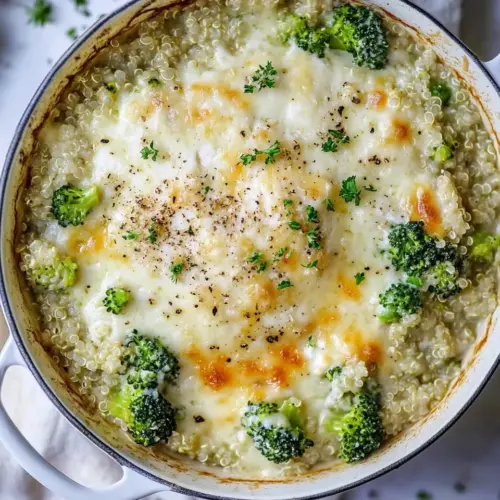
Chicken Broccoli Cheddar Quinoa Casserole
Chicken Broccoli Cheddar Quinoa Casserole is a creamy, cheesy, and wholesome bake that combines tender chicken, nutty quinoa, and bright broccoli for an easy weeknight dinner. With a savory milk based sauce and a golden cheddar cheese crust, this dish is both comforting and satisfying, perfect for family meals or casual gatherings. Make it for a simple crowd pleasing casserole that reheats beautifully.
Equipment
- Large Skillet
- Oven Broiler
- Mixing Spoon
Ingredients
- 2 tablespoons extra virgin olive oil Sauté in a skillet to develop a flavorful base and help brown proteins for depth in the casserole; contributes healthy fats and aids in preventing sticking during cooking.
- 1 pound boneless chicken breasts, cut into cubes Cube and quickly sear to create tender, bite-sized pieces that provide the main protein and substantial texture contrast throughout the dish.
- kosher salt and pepper Season generously to enhance and balance flavors; use to taste to lift savory notes and a pinch of pepper for subtle heat and complexity.
- 1/2 sweet onion, diced Sweat until translucent to add natural sweetness and aromatic foundation; soft diced pieces meld into the creamy sauce without overpowering other components.
- 1 cup cremini mushrooms, roughly chopped Sauté briefly to release earthy, umami flavors and add meaty texture; roughly chopped mushrooms contribute moisture and savory richness to the casserole.
- 2 tablespoons all purpose flour Whisk in to thicken the sauce and create a smooth, velvety consistency; flour helps bind liquids and coat the quinoa and vegetables evenly.
- 1 1/2 cups whole milk Warm and stir into the roux to form the creamy base that unites ingredients; milk brings richness and a mild dairy flavor to the casserole.
- 1 cup low sodium chicken broth Simmer with quinoa and other liquids to infuse a savory backbone and control seasoning; low sodium broth adds depth without excessive saltiness.
- 3/4 cup dry quinoa Rinse and cook with the liquid to provide a nutty, slightly chewy grain that absorbs flavors and adds wholesome body to each serving.
- 2 cups roughly chopped broccoli Steam slightly before baking to retain bright color and tender-crisp texture; roughly chopped florets distribute vegetable bites evenly through the casserole.
- 1 tablespoon chopped fresh thyme, plus more for topping Chop finely and stir into the mixture to add bright herbal notes and subtle aromatic complexity that complements both chicken and cheese.
- 1/2 teaspoon garlic powder Sprinkle in to add warm, mellow garlic flavor without adding moisture; powder delivers consistent, shelf-stable savory undertones throughout the dish.
- 1 cup shredded cheddar cheese Fold in shredded to create gooey, melty pockets of rich, sharp flavor; cheddar contributes the characteristic cheesy creaminess and browning on top.
- 1/4 cup grated parmesan cheese Grate and sprinkle into the sauce to add salty, umami complexity and a slightly granular texture that enhances overall savory character.
Instructions
- Preheat the broiler to high. Heat the olive oil in a large skillet set over medium heat. When the oil shimmers, add the chicken and season with salt and pepper. Cook 8-10 minutes, stirring occasionally until the chicken is cooked through. Remove the chicken from the skillet. To the skillet, add the remaining 1 tablespoon olive oil, onion, and mushrooms. Season with salt and pepper. Cook, stirring occasionally until the onion is fragrant and the mushrooms have caramelized, about 5 minutes. Stir in the flour and cook 1 minute. Slowly pour in the milk and chicken broth and bring to a simmer. Add the quinoa, broccoli, thyme, and garlic powder. Stir back in the chicken. Reduce the heat to low, cover and cook 15-20 minutes or until the quinoa is tender. Remove from the heat and add the cheese. Transfer to the oven and broil for 2-3 minutes or until the cheese has melted. Top with fresh thyme and EAT!: When you set the broiler to high, you will soon notice the oven element glowing and radiating intense heat, which is what creates that attractive golden and slightly crisp cheese finish. This step matters because the rapid radiant heat forms a thin crust on the cheddar cheese without drying the interior. A common mistake is leaving the broiler on too early, which can cause the top to brown before the rest of the dish is piping hot; wait until the casserole is assembled and placed in the oven before using the broiler.
- Heat the olive oil in a large skillet set over medium heat: As the extra virgin olive oil warms, it will become glossy and begin to shimmer, releasing a faint, fruity aroma. This visual cue tells you the pan is ready for the chicken . Warming the oil gently ensures even browning without burning. If the oil smokes, the heat is too high and can leave a burnt flavor, so reduce heat slightly if needed.
- When the oil shimmers, add the chicken and season with salt and pepper: Once the oil shimmers, adding the cubed chicken will create a satisfying sizzle as the meat hits the pan. That sizzle indicates the proteins are searing and developing those flavorful browned bits. Seasoning right away helps the seasoning adhere. Avoid moving the chicken constantly, or it will not brown well and you will miss that deep, savory flavor.
- Cook 8 to 10 minutes, stirring occasionally until the chicken is cooked through: During these minutes the chicken will turn opaque and the exterior will develop golden brown spots, releasing a roasted, savory aroma. Listen for a gentle crackle and watch for juices running clear as visual doneness cues. The danger here is undercooking, so check that the pieces register fully opaque and hot throughout; overly large pieces will need more time, so cut uniformly to avoid that issue.
- Remove the chicken from the skillet: Taking the chicken out of the pan stops the carryover browning and prevents it from overcooking while you work on the vegetables. Set it aside on a warm plate so it retains heat. If you leave it in the hot pan, it will continue to cook and can become dry.
- To the skillet, add the remaining 1 tablespoon olive oil, onion, and mushrooms: Adding the extra olive oil and then the diced onion and chopped mushrooms should produce a gentle sizzle. The onion will soften and the mushrooms will release moisture and begin to brown, creating the aromatic base for the sauce. If you overcrowd the pan, the vegetables will steam instead of caramelize, so give them space to brown.
- Season with salt and pepper: Seasoning the vegetables as they cook helps draw out moisture and amplify their natural sweetness. A light sprinkle of kosher salt and pepper at this stage enhances the savory backbone of the casserole. Over seasoning is easy to do early on, so taste later and adjust if necessary.
- Cook, stirring occasionally until the onion is fragrant and the mushrooms have caramelized, about 5 minutes: Over about five minutes you will smell the onion turn sweet and the mushrooms deepen in aroma as they brown. Visual cues include translucent onion and browned mushroom edges. The mistake here is rushing with higher heat; quick cooking may brown the exterior but leave raw texture inside, so moderate heat gives even caramelization.
- Stir in the flour and cook 1 minute: When you sprinkle in the all purpose flour , it will clump slightly then dry out as you stir; cooking for one minute removes the raw floury taste and creates a roux that will thicken your sauce. You should notice the mixture taking on a slightly nutty aroma. If you skip this minute, the sauce can taste floury and thin.
- Slowly pour in the milk and chicken broth and bring to a simmer: Adding the whole milk and chicken broth slowly while stirring helps incorporate the roux smoothly, preventing lumps and creating a glossy sauce. Bring it to a gentle simmer where small bubbles appear at the edges, signaling the starches are activating and thickening. Boiling too hard can curdle the milk or break down the sauce texture, so aim for a gentle simmer.
- Add the quinoa, broccoli, thyme, and garlic powder: As you add the quinoa and roughly chopped broccoli , you will notice the pot fill with color and texture. The thyme releases a subtle herbal perfume and the garlic powder layers in savory depth. Stir so the grains are submerged in the liquid; if the quinoa is not adequately covered it may cook unevenly.
- Stir back in the chicken: Returning the browned chicken to the pan reintroduces those savory browned bits into the sauce and ensures each portion has protein. The chicken will warm through and meld with the other flavors. If the chicken is crowded or cold, it will cool the sauce and extend cooking time, so bring it to room temperature if possible before adding.
- Reduce the heat to low, cover and cook 15 to 20 minutes or until the quinoa is tender: Lowering to a gentle heat and covering traps steam to cook the quinoa and soften the broccoli . After about 15 to 20 minutes the grains should be tender and slightly translucent around the germ ring. If you lift the lid and stir too often you will lose steam and extend the cooking time, so only check near the lower end of the window.
- Remove from the heat and add the cheese: Taking the pan off the heat before folding in the cheddar cheese and parmesan cheese prevents the dairy from separating and helps it melt into a silky, cohesive sauce. Stir until the cheeses are evenly incorporated and glossy. Adding cheese to a pan that is too hot can make oils separate, giving a grainy texture.
- Transfer to the oven and broil for 2 to 3 minutes or until the cheese has melted: Under the broiler the cheese will bubble and form a thin browned crust in just a couple of minutes, giving a lovely contrast between the creamy interior and a slightly crisp top. Watch carefully and keep the oven door slightly ajar if your oven runs hot, because broilers can go from perfect to burnt quickly. Leaving it too long is the most common broiler mistake.
- Top with fresh thyme and EAT: Adding fresh sprigs or leaves of thyme right before serving lifts the aroma and adds visual freshness. Serve immediately while piping hot so the cheese is gooey and the textures are distinct. If you let it sit too long, the casserole will set and the contrast between creamy and crisp diminishes.
Notes
- Adjust the milk: If you need a lighter sauce, you can use a lower fat milk, but expect a slightly thinner texture; compensate by cooking a minute longer to concentrate the sauce.
- Quinoa texture: For firmer quinoa, reduce the cooking time by a couple minutes; for creamier results, let it sit covered five minutes after cooking to steam and soften further.
- Broccoli timing: If you prefer crisper broccoli, add the florets halfway through the simmer rather than at the start, keeping them bright and slightly al dente.
- Cheese melting: Use freshly shredded cheddar cheese for the best melt and texture, because pre shredded blends often include anti caking agents that can affect creaminess.
- Make ahead: Assemble the casserole through the cheese step, cover and refrigerate; when ready, broil just before serving to refresh the top and heat through.