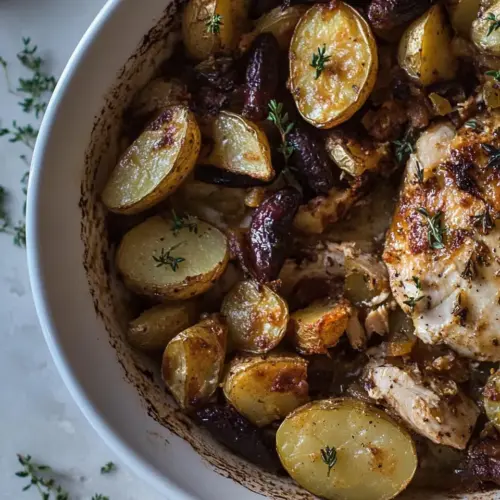
Chicken Andouille Potato Bake
Chicken Andouille Potato Bake is a smoky, filling sheet pan dinner that combines crispy roasted chicken, tender potatoes, and savory andouille sausages for an easy weeknight dinner. The herbs and smoked paprika create warm, layered flavors while lemon brightens each bite, making it perfect for casual gatherings and make ahead meals. Try it for a fuss free family meal that feels indulgent and satisfying.
Equipment
- Rimmed Baking Sheet
- Parchment paper or Silpat liner
- Large Bowl
- Instant read thermometer
Ingredients
- 5 chicken legs Provide rich, moist flavor and tender protein; roast until juices run clear and skin crisps, infusing surrounding ingredients with savory juices. Season legs well and arrange evenly to ensure even cooking and appealing presentation. Use bones to add depth if making pan sauce or leftovers for stock.
- 1/4 cup olive oil Coat ingredients to promote even browning and prevent sticking; drizzle over sausages and potatoes to help seasonings adhere and enhance mouthfeel. Choose extra-virgin for brighter flavor or regular olive oil for higher smoke point during roasting.
- 4 andouille sausages, cut 1 inch thick Add smoky, spicy pork character and hearty texture when sliced into thick rounds that caramelize at the edges as they roast. Render fat into the pan to flavor the potatoes and chicken, contributing to a robust overall savory profile.
- 1 pound baby red potatoes, cut in half if large Provide a tender, creamy base that soaks up pan juices and renders a rustic texture when roasted until golden; halve large potatoes for uniform cooking. Use baby reds for their thin skins and slightly sweet, waxy flesh that holds shape well.
- 1 teaspoon dried oregano Impart warm, herbal aroma and Mediterranean brightness; sprinkle evenly to complement the rosemary and thyme without overpowering. Use dried oregano early to allow flavors to bloom during roasting and bind the seasoning blend.
- 1 teaspoon kosher salt Enhance and balance flavors with a clean, mineral saltiness; disperse evenly to avoid underseasoned bites and to amplify natural sweetness of the potatoes and chicken. Adjust quantity to taste and consider kosher salt’s flakier grains when measuring.
- 1/2 teaspoon minced fresh rosemary Contribute piney, resinous notes and subtle citrusy top notes when minced fresh and distributed sparingly. Incorporate rosemary early enough to infuse oil and pan juices, adding aromatic complexity without becoming overpowering.
- 1/2 teaspoon fresh thyme leaves Add delicate floral, woodsy accents and bright herbaceous lift; scatter leaves to complement the oregano and rosemary. Use fresh thyme leaves for subtle savory depth that holds up to roasting temperatures.
- 1/2 teaspoon smoked paprika Provide smoky warmth and color to the dish; dust over potatoes and chicken to introduce a subtle barbecue-like flavor. Use smoked paprika to enhance visual appeal and create a layered, savory finish.
- 1 lemon zested and then cut into wedges Brighten and finish the bake with citrus zest and wedges for squeezing over the finished dish to cut through richness. Zest before juicing to capture fragrant oils, and serve wedges to allow diners to adjust acidity to taste.
Instructions
- Preheat oven to 400 degrees and line a rimmed baking sheet with parchment paper or silpat liner.: You will notice the kitchen warming and the oven light glowing as it approaches temperature, which is important for immediate browning when the tray hits the hot air. Preheating to 400 degrees ensures the exterior of the chicken starts to crisp while the interior cooks slowly enough to stay moist. If the oven is not fully preheated, the meat can release juices and steam instead of forming a crust, leading to soggy skin. A common error is skipping the lining which makes cleanup harder and can cause sticking; parchment or a silpat liner prevents this and promotes even roasting.
- In a large bowl add all ingredients and stir to evenly coat.: As you toss everything with the olive oil and spices, you should smell the herbal aroma of oregano and smoked paprika , and the oil will give the mixture a glossy sheen. Coating helps heat transfer and encourages the spices to adhere so each piece browns uniformly, and it also helps the lemon zest cling to the components. If pieces are not well coated, you may get uneven browning and bland bites; be sure to scrape the bottom of the bowl so small herb bits are distributed evenly. Overcrowding the bowl while tossing can make a mess, so use a large bowl for freedom of movement.
- Place the chicken, potatoes and sausage out onto your prepared baking sheet.: Lay the components skin side up for the chicken and space them so air circulates; you should be able to see pockets of space between pieces. Proper spacing produces crisp edges and prevents steaming, which is crucial for golden skin and roasted potato surfaces. Visually, you want exposed surfaces that will brown, and the sizzling will begin as the tray hits the hot oven. A frequent misstep is clustering everything tightly which results in pale, soft skins and underroasted potatoes, so arrange with intention and give each piece room to breathe.
- Bake for about 1 hour or until the chicken is fully cooked (the internal temperature should be 160 degrees) and the potatoes are soft.: During the bake you will hear gentle crackles and maybe some pops as rendered fat meets the hot pan, and the aroma will deepen to savory, smoky notes. Look for golden brown skin and slightly blistered potato edges as visual cues. The internal target of 160 degrees is essential for safety and juiciness, and using an instant read thermometer prevents overcooking which dries the meat. A common pitfall is relying solely on time, since oven variances can change doneness; always check the internal temperature and test a potato with a fork for tenderness.
- Note: I find by chunking my sausage larger it is less likely to get dried out. In the picture I cut it a small for my liking and it was a bit more crispy. If you like your sausage crispy simply cut it smaller.: The size of the sausage pieces directly affects their texture after roasting, and larger chunks retain moisture and develop a satisfying snap without becoming brittle. If you prefer extra crispness, slicing smaller will expose more surface area and create crunchy edges, which can be delicious but may dry the center. When adjusting sizes, keep an eye on the tray as smaller pieces may finish sooner and need to be removed earlier to avoid over crisping. Avoid cutting everything too small if you want juicier bites, and consider removing smaller sausage pieces early if you opt for a crisper finish.
Notes
- Swap sausage size — Cut the andouille sausages into thicker chunks to keep them plump and juicy, or slice thinner if you prefer crisp edges. Adjust roasting time accordingly to prevent over crisping.
- Herb focus — Emphasize either the rosemary or the thyme by slightly increasing one to 1 teaspoon if you want a more pronounced herbal profile. Fresh herbs add brightness but avoid using too much, which can overwhelm.
- Oil choice — Use a neutral oil with a higher smoke point if your oven runs hot to prevent smoking, while still getting good browning on the chicken and potatoes.
- Adjust salt — If you are using a naturally salty sausage, reduce the added kosher salt to avoid oversalting; taste a small cooked piece if unsure and adjust next time.
- Make it a one tray party — Add quick roasting vegetables that match the cook time if you want more variety, making sure cuts are similar in size to cook evenly with the potatoes and chicken.
- Finish with citrus — Always keep lemon wedges on the side so diners can brighten their portion, as the juice freshens and balances the rich roasted flavors wonderfully.