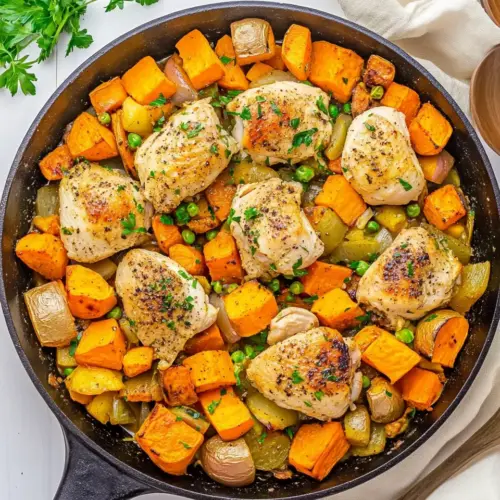
Chicken and Sweet Potato Skillet
Chicken and Sweet Potato Skillet is a comforting, easy weeknight dinner that pairs crispy, golden chicken thighs with tender, caramelized sweet potatoes, a sticky maple Dijon glaze, and savory herbs. The balance of sweet, savory, and aromatic textures makes it a crowd pleasing family meal that feels special without requiring complicated techniques, making it a perfect go to for busy evenings.
Equipment
- Large Heavy Skillet
- Digital Thermometer
Ingredients
- 6 bone-in chicken thighs, for questions about types of chicken, see the FAQs in blog post Season thoroughly and provide rich, savory flavor to the dish while helping to tenderize the chicken and enhance overall taste; balance salted components throughout cooking and adjust to preference.
- 1 teaspoon salt, or to taste Season sparingly and draw out natural flavors of the chicken and vegetables while aiding in caramelization of the sweet potatoes; dissolve into broths and sauces for even seasoning.
- 1 teaspoon freshly ground black pepper, or to taste Season freshly and deliver a sharp, aromatic heat that brightens the skillet, complementing smoky and sweet elements; adjust grind to control intensity.
- 1/2 teaspoon smoked paprika, or more to taste Season boldly and contribute a warm, smoky depth that pairs well with roasted sweet potatoes and chicken; increase for a more pronounced smoked profile.
- 2 tablespoons olive oil, divided, plus more if necessary Coat and sear effectively to develop a golden crust on the chicken and prevent sticking; reserve some for later to finish vegetables or deglaze the pan.
- 2 large sweet potatoes, peeled and diced into 1/2-inch cubes (no bigger or they take too long to cook) Cube uniformly and provide a sweet, starchy base that caramelizes when seared, creating texture contrast with tender chicken; ensure pieces are the specified size for even cooking.
- 1 large yellow onion, diced into bite-sized pieces (white onion may be substituted) Sauté until softened to add sweetness and savory moisture, building the aromatic foundation of the skillet; choose white onion as a milder substitute if desired.
- 3 cloves garlic, minced Mince finely and impart a pungent, aromatic punch that melds with aromatics during sautéing, enhancing savory depth; stir in toward the end of cooking to avoid burning.
- 1 green bell pepper, seeded and diced into bite-sized pieces (another color pepper may be substituted) Dice evenly and add crisp, bright vegetal flavor and slight sweetness that balances the dish; substitute other bell pepper colors for different flavor profiles.
- 1/2 cup chicken broth, I used reduced sodium Deglaze and moisten the pan to lift fond and create a cohesive sauce, contributing savory background flavor and helping the sweet potatoes finish cooking; reduced-sodium broth controls saltiness.
- 2 tablespoons maple syrup Sweeten gently and create a sticky glaze that complements savory and herbaceous notes, caramelizing slightly as it reduces; add to the sauce for depth and balance.
- 1 tablespoon Dijon mustard Emulsify flavors and add a sharp, tangy counterpoint to the maple syrup, helping to bind the sauce and brighten the overall profile of the skillet.
- 1 teaspoon dried oregano Season herbally and offer earthy, slightly bitter notes that complement chicken and root vegetables; sprinkle into the sauce so flavors infuse during simmering.
- 1 teaspoon dried rosemary Season piney and provide a woodsy, aromatic layer that pairs well with roasted meats and sweet potatoes; crumble dried if fresh sprigs are unavailable.
- 3 fresh thyme sprigs, or use 1/2 teaspoon dried thyme Infuse aromatics and add subtle floral, lemony notes when tucked into the pan or simmered in the sauce; omit or substitute dried thyme using the given conversion.
- Fresh parsley, optional for garnishing, finely minced Garnish finely and contribute a fresh, grassy finish that lifts the richness of the skillet while adding color and a hint of brightness to each serving.
Instructions
- Generously season the chicken on both sides with salt, pepper, and smoked paprika, or to taste.: As the salt and spices hit the surface of the chicken , you should notice a subtle, fragrant dusting that will become part of the golden crust during searing. The aroma of smoked paprika mingles with the pepper to hint at the savory finish, and the tactile act of seasoning helps you bond with the recipe before heat is introduced. A common misstep is skimping on seasoning, which leaves the final dish bland, or over salting too early, which can pull moisture out of the skin. I recommend patting the thighs dry first so the seasoning adheres and the skin crisps properly.
- To the skillet, add 1 tablespoon olive oil, turn the heat to medium-high, add the chicken, sear it, and then cook for about 5-7 minutes per side, or until it's golden browned and cooked through to 165 F as measured on a digital thermometer. Set chicken aside on a plate. Cooking and Searing Tips– Once you place the chicken in the skillet to sear it, just let it be. Don't move it around or fuss with it; if it resists flipping, it likely means it's not ready to be flipped. Allow it to cook a bit longer until it can be flipped with more ease.: You will hear a steady sizzle as the chicken kisses the hot oil, and the surface will darken to an even golden brown that smells nutty and caramelized. That Maillard crust is essential for flavor, and it also leaves browned bits in the pan that will enrich the sauce. Use a digital thermometer to ensure the internal temperature reaches 165 F, because visual cues alone can be misleading. A frequent error is flipping too often, which interrupts crust formation; resist the urge and let the heat do its work. If the pan smokes excessively, lower the heat slightly to avoid burning the fats.
- Add 1 tablespoon olive oil (or more if necessary), the sweet potatoes, onion, and cook for about 5 minutes, stirring and flipping frequently to ensure even cooking. Veggie Size Tips– Sweet potatoes are the ingredient in this entire recipe that will take the longest to cook through if they are cut too large. Do yourself a favor and keep them to 1/2-inch cubes so that they don't hold up the entire meal. Conversely, I like to keep the onions and green bell pepper a little chunkier so as they cook through they don't get too small, but it's personal preference.: When the sweet potatoes hit the skillet, you'll hear an immediate lively sizzle and see edges begin to brown in spots, releasing a toasty, caramel scent. Stirring and turning helps create even browning, and it prevents one side from scorching. The onions will begin to soften and release a sweeter aroma as their natural sugars warm up. Avoid crowding the pan, because that traps steam and prevents proper browning; if your skillet looks too full, cook the vegetables in two batches for optimal texture.
- Add the garlic and cook for 1 minute; stir continuously.: As the minced garlic warms, it will release a sharp, savory perfume that quickly mellows into a nutty sweetness. Stirring constantly keeps the garlic from clinging to the pan and burning, which would introduce a bitter edge. This is a delicate step because garlic transitions from fragrant to bitter very fast; keep the heat moderate and watch the color, removing it from direct contact with the hot surface if it begins to brown too quickly.
- Add the bell peppers and cook for 3-4 minutes; stir very frequently.: The bell pepper will soften and become glossy, releasing a bright, vegetal fragrance that complements the caramel notes from the potatoes and onions. Frequent stirring encourages even softening without turning the pepper to mush, preserving little pops of texture in the finished dish. A common mistake is overcooking so the peppers lose their identity, so aim for tender but still present pieces that add contrast to the dish.
- In a small bowl, whisk together the broth, maple syrup, Dijon mustard, and pour it over the vegetables in the skillet.: When the sauce hits the hot pan, you will notice steam rise and aromas bloom, combining savory broth with sweet maple and tangy Dijon. Whisking first ensures the mustard is evenly dispersed and helps the liquid emulsify slightly as it reduces, forming a cohesive glaze. If the sauce seems too thin after simmering, allow it to reduce uncovered briefly; if too thick, add a splash more broth. Avoid dumping cold liquid straight from the fridge without mixing, as it can shock the pan and cause uneven thickening.
- Return the chicken to the skillet, evenly sprinkle the oregano, rosemary, and lay the thyme sprigs (or sprinkle dried thyme) over the chicken and veggies, and reduce the heat to medium-low.: Returning the chicken allows it to finish cooking gently in the sauce, absorbing aromatics while staying moist. The dried herbs will release their oils as they warm, and fresh thyme sprigs infuse the pan with a gentle, green scent. Reducing to medium low is crucial so the sauce simmers, rather than violently boils, which preserves the integrity of the meat and prevents the liquid from reducing too quickly. A misstep here is keeping the heat too high, which can toughen the chicken and over reduce the sauce.
- Cover the skillet with a lid, and allow it to simmer for about 15 minutes, or until the sweet potatoes are tender, and the sauce has thickened slightly. Sauce too thin or too thick? Read the FAQs in blog post for how to adjust and make a thicker or thinner sauce.: During this covered simmer, aromas deepen and meld, and the sweet potatoes will steam to tender, creamy centers while taking on some of the pan sauce's flavor. The lid traps moisture so nothing dries out, producing a cohesive, saucy finish. Check the potatoes with a fork to ensure they are tender through the center, and if the sauce has not reduced enough, uncover for a few minutes to concentrate flavors. Do not over simmer or the potatoes may break down too much and the chicken can dry.
- Optionally, garnish with parsley. Spoon the sauce over the sweet potatoes and spoon it all over the chicken, or as you desire, and serve warm.: The final garnish of fresh parsley adds a bright, herbaceous flourish that freshens each bite. As you spoon the glossy sauce, notice how it clings to the vegetables and skin, giving a pleasing sheen and saturated flavor. Serve warm, because the texture and sauce presence are best right away. A common mistake is letting the skillet sit too long before serving, which causes the sauce to congeal and the chicken to lose its crisp edges; serve promptly for best results.
Notes
- Storage guidance: Leftovers keep airtight in the fridge for up to 5 days or in the freezer for up to 3 months. I portion into shallow containers so the food cools quickly and reheats evenly. When reheating, do so gently to preserve texture; I prefer a low microwave burst followed by a brief stovetop warm through to restore some crispness to the chicken skin.
- Reheating tips: Reheat gently in the microwave for about 30 seconds, then finish in a skillet for 2 to 3 minutes to refresh the sauce and crisp the edges. Microwaving too long will collapse the sweet potatoes and soften any crispness on the chicken, so short bursts are better.
- Adjusting sauce consistency: If the sauce is too thin after simmering, remove the lid and simmer uncovered for a few minutes, stirring occasionally until it reduces. If it becomes too thick, stir in a tablespoon of warm chicken broth at a time until you reach desired consistency.
- Herb choices: Fresh thyme is lovely while dried thyme works fine; if you prefer more aromatic punch, add more rosemary cautiously because it can dominate. Remove thyme sprigs before serving if you prefer not to encounter stems on the plate.
- Oil management: Use a neutral oil with a higher smoke point if your skillet runs very hot, or reduce heat slightly to avoid burnt oil flavors that can taint the entire pan.