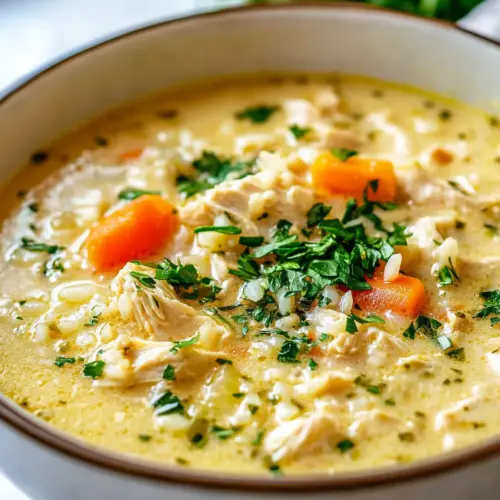
Chicken and Rice Soup
Chicken and Rice Soup is a creamy, comforting bowl that balances tender shredded chicken, soft white rice, and gentle aromatics. This easy weeknight dinner offers savory depth from sautéed onion and carrots, with a silky finish from evaporated milk. It is perfect for cold evenings or when you want a simple, satisfying meal that reheats beautifully.
Equipment
- Large Dutch Oven or Pot
- Wooden spoon or spatula
- Tongs or Forks for Shredding
- Instant read thermometer
Ingredients
- 1 tablespoon olive oil Heat and sauté other aromatics and vegetables to provide a cooking fat that helps soften and brown ingredients while adding a subtle fruity flavor to the soup.
- 1 onion finely minced Finely mince to release pungent, sweet flavors which form the aromatic base and dissolve into the broth for depth and balance.
- 3 large carrots peeled and diced Peel and dice then simmer until tender to contribute natural sweetness, texture, and body to the soup while complementing savory components.
- 2 stalks celery diced Dice and cook until softened to add crunchy-turned-tender texture and a fresh, slightly bitter vegetal note that enhances the overall mouthfeel.
- 1 teaspoon garlic minced Mince and gently cook to release sharp, savory aromatics that boost overall flavor and provide a warm, garlicky backbone to the broth.
- 1 teaspoon dried parsley Measure and sprinkle to introduce a mild herbaceous element that brightens the soup and complements other dried seasonings.
- 1/2 teaspoon dried thyme Measure and add to bring a subtle earthy, floral note that pairs well with poultry and supports the soup’s savory profile.
- 1 teaspoon salt Measure and season to balance and elevate flavors, helping to enhance the natural taste of the chicken and vegetables throughout the soup.
- 1/4 teaspoon black pepper Measure and grind into the pot to introduce a mild heat and aromatic sharpness that accentuates savory flavors without overpowering them.
- 6 cups low sodium chicken broth Pour and simmer as the primary cooking liquid that provides savory depth, helps cook rice and vegetables, and carries all flavors together.
- 2 chicken breasts about 1 lb Trim and cook thoroughly to contribute lean protein and savory meatiness; shred or dice after cooking to distribute tender chicken throughout the soup.
- 1 cup white rice Measure and add to impart comforting starchiness, slightly thicken the broth, and give the soup a hearty, filling quality when fully cooked.
- 1 cup evaporated milk Pour and stir in at the end to add creamy richness and a smooth mouthfeel while mellowing the broth without overpowering the other flavors.
Instructions
- In a large dutch oven or pot, heat oil over medium-high heat on the stove top. Add onion, carrots and celery to dutch oven. Cook and stir for 4-5 minutes, or until the onion begins to turn golden brown.: The pan should sound slightly alive with a soft shimmer as the olive oil warms, not a harsh smoke. You want the oil to coat the surface and feel fluid, which helps the aromatics release sugars quickly. When the oil is ready, it will slightly ripple and the first bit of minced onion will sizzle on contact. This step builds the flavor base, so take your time to avoid burning, as scorched oil creates bitter notes. A common mistake is using too high heat, which browns the aromatics too fast and leaves them raw inside, so keep the heat steady.
- Add garlic, parsley and thyme to dutch oven, cook for 1 minutes.: You will hear a lively sizzle as the diced vegetables hit the oil, and the scent will turn sweeter within a minute or two. Stir to coat every piece and spread them into an even layer so they cook uniformly. As the vegetables soften they release moisture and a gentle caramel aroma develops around the edges, a key indicator you are developing depth. If the pan looks too dry, add a splash of broth rather than cranking the heat, because rushing this step can produce bitter, overbrowned bits.
- Add the salt and pepper, broth, chicken breasts and rice to dutch oven. Stir to combine. Bring to a boil over medium-high heat.: Listen for a consistent gentle sizzle and watch the onion shift from translucent to edged with gold, which signals the sweet compounds are emerging. The carrots and celery should begin to yield, with the carrots starting to soften and the celery losing its raw crunch. Stir periodically to prevent sticking and to expose all pieces to the hot surface. Rushing or leaving the pan unattended often results in uneven browning or burning, which will add harsh flavors to your finished soup.
- Reduce heat to simmer, cover and cook for 18-20 minutes, stirring through cooking time. The rice and vegetables should be tender and the internal temperature of the chicken breasts should be 165 degrees Fahrenheit.: When you introduce the minced garlic and dried herbs, the aroma will lift and become herbaceous quickly, but it only needs a brief minute to mellow the garlic's raw edge. Stir constantly so the garlic does not cling to the hot pan and burn, which would introduce bitterness. This brief burst intensifies the aromatics and integrates the herb flavors, creating a fragrant layer that the broth will amplify. A frequent slip here is overcooking the garlic, so watch closely.
- Remove chicken from pot and shred. Add back to the pot and stir in evaporated milk.: As you add the seasoning and pour in the 6 cups of low sodium chicken broth , you will see steam rise and the pot come to life. Nestle the raw chicken breasts into the liquid and scatter the uncooked rice so it can absorb heat evenly. Stir gently to distribute seasonings and to ensure the grains are not clumped. This step transforms the pot into a unified cooking environment, where starch from the rice will thicken the broth and the chicken will poach slowly to keep juices intact. Avoid vigorous stirring that could break up the rice too soon.
- Stir to combine. Bring to a boil over medium-high heat: As you increase heat toward a boil, watch for steady bubbling across the surface and a warming aromatic lift. The moment the liquid has consistent rolling bubbles, reduce the heat so the cook continues gently. A full, aggressive boil can agitate the rice and make it release too much starch quickly, leading to a gluey texture, so moderation is crucial. If you see very vigorous turbulence, lower the flame to keep things calm.
- Reduce heat to simmer, cover and cook for 18 to 20 minutes, stirring through cooking time: Lowering to a simmer creates a gentle, steady movement in the pot, with small bubbles rising and occasional soft bubbling at the edges. The soft percussion of those bubbles tells you the rice is hydrating and the vegetables are tenderizing. Stirring occasionally keeps the rice from clumping and ensures even cooking. After about 18 minutes the grains should be plump and the vegetables yielding, while the chicken will reach a safe internal temperature. A classic error is under simmering which leaves rice underdone, or boiling too hard which overcooks it.
- The rice and vegetables should be tender and the internal temperature of the chicken breasts should be 165 degrees Fahrenheit: Check by probing the thickest part of the chicken with an instant read thermometer, looking for 165 degrees Fahrenheit, and taste a bit of the rice for tenderness. Proper doneness yields juicy, shreddable chicken , and rice that is soft but intact. If the temperature is low, return to a gentle simmer rather than increasing heat aggressively, which can dry the meat.
- Remove chicken from pot and shred: Use two forks or tongs to lift the breasts out; they should pull apart with little resistance and produce moist, tender shreds. The texture should be fibrous yet soft, and the act of shredding releases additional savory juices that you will return to the pot. If the meat resists shredding, it likely needs a few more minutes back in the simmering broth, as undercooked chicken will be rubbery rather than tender.
- Add back to the pot and stir in evaporated milk: When you fold the shredded chicken back into the simmering soup, the pot will smell rounded and full. Stirring in the evaporated milk gently warms it so it blends into a silky finish, turning the broth slightly opaque and rich. This step should be done off high heat to avoid curdling; a low gentle warmth is perfect. Overheating the milk can cause texture issues, so keep it calm and stir steadily until everything is integrated and heated through.
Notes
- Swap the dairy finish Try using more or less evaporated milk to control creaminess, adding it gradually until you reach the mouthfeel you prefer.
- Adjust rice timing For firmer texture cook the rice slightly less, and for softer, give it an extra few minutes while keeping the heat low.
- Stretch with broth If you prefer a thinner bowl, increase the amount of low sodium chicken broth by a cup or two and adjust seasoning afterwards.
- Make it heartier Add extra shredded chicken for more protein per serving, folding it in at the end so it stays tender.
- Control salt Taste near the end before adding more salt, because the flavors concentrate as the soup simmers and the final addition prevents over salting.
- Reheating note When reheating leftovers, warm gently and add a splash of warm broth to restore silky consistency since the rice soaks up liquid while stored.