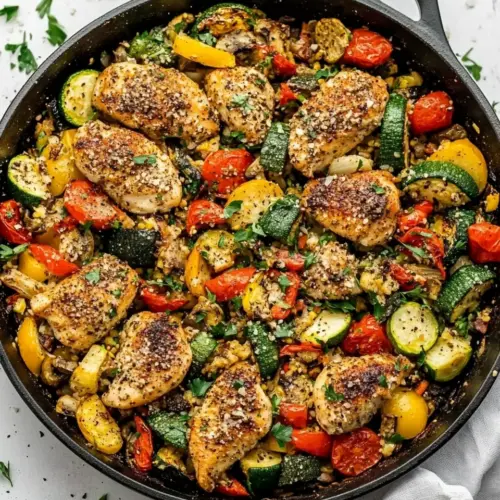
Chicken and Garden Vegetable Skillet
Chicken and Garden Vegetable Skillet is a bright, easy weeknight dinner that pairs seared chicken with tender summer vegetables and a crisp Panko and parmesan topping. This one pan dish is savory, juicy, and quick to pull together, perfect for busy evenings when you want comforting flavor with minimal cleanup. Try it for a fast family meal that tastes like you spent more time than you did.
Equipment
- Oven-safe skillet
Ingredients
- 1 pound boneless skinless chicken breasts, cut into 1-inch pieces Cut into 1-inch pieces to ensure quick, even cooking and tender bites; browns nicely when seared in a hot skillet. Season pieces well so they absorb the surrounding flavors of herbs and spices during sautéing.
- 1 tablespoon olive oil Use to coat the skillet and prevent sticking while adding a mild fruity flavor; adds a pleasant sheen to vegetables and chicken. Heat until shimmering before adding proteins to achieve a good sear.
- 1 tablespoon Italian seasoning Season generously to infuse the chicken and vegetables with a robust blend of dried herbs; provides an aromatic, Mediterranean profile. Mix with other dry spices to evenly distribute flavor across the skillet.
- 1 teaspoon garlic powder Sprinkle to impart a savory, garlicky backbone without introducing moisture; enhances umami and complements Italian seasoning. Apply directly to chicken and vegetables for consistent seasoning before cooking.
- 1/2 teaspoon paprika Add for subtle smoky color and warmth; helps deepen the overall flavor profile without overpowering. Use sparingly to balance against salt and herbs in the pan.
- 1 teaspoon Kosher salt, to taste Season to taste to bring out natural flavors and enhance overall seasoning balance; Kosher salt dissolves quickly for even coverage. Add incrementally and adjust at the end to avoid over-salting.
- 1/4 teaspoon black pepper Grind or sprinkle to introduce mild heat and a sharp, earthy counterpoint; helps balance the saltiness and herbs. Use in small amounts to taste for a gentle peppery finish.
- 1 small zucchini, cut into half moon shapes Slice into half moon shapes to cook quickly and maintain a tender-crisp texture; adds a delicate, slightly sweet vegetal note. Toss into the skillet toward the middle of cooking so it softens without becoming mushy.
- 1 small yellow squash, cut into half moon shapes Cut into half moon shapes to mirror the zucchini’s cooking time and texture; provides a slightly sweet, mellow flavor and bright color contrast. Add with zucchini to ensure even cooking and attractive presentation.
- 1/4 cup red onion, sliced Slice thinly to add a mild sharpness and subtle sweetness; contributes texture and aromatic depth when caramelized. Add early enough to slightly soften and release natural sugars into the dish.
- 1/2 cup cherry tomatoes Halve or leave whole to burst and release bright, acidic juices that lighten the dish; adds freshness and a pop of color. Stir in near the end of cooking to retain juiciness and prevent over-softening.
- 1/4 cup Panko breadcrumbs Use to provide a light, crunchy topping or coating that adds texture contrast to the tender chicken and vegetables. Combine with seasonings and toast briefly in the skillet to enhance flavor and crispness.
- 1/4 cup parmesan cheese, grated Grate finely to lend a salty, nutty, umami-rich finish that binds crumbs and seasons the dish; melts slightly over warm ingredients. Sprinkle on at the end to add a savory, cheesy layer without overwhelming other flavors.
- 1 tablespoon olive oil Add as an extra drizzle to ensure enough fat for crisping and flavor; enhances browning and mouthfeel. Use to finish the skillet or toss with breadcrumbs for a richer, golden crust.
Instructions
- Preheat the oven to 350 degrees Fahrenheit.: You will notice a faint warmth spreading through the kitchen as the oven comes to life, and that steady heat matters because it gives the breadcrumb topping a predictable environment to crisp and the cheese a chance to melt evenly. If you skip preheating, the topping may not brown properly, leaving a pale, soft crust instead of a golden one to contrast with the tender filling. A quick check is to glance through the oven window and ensure it has reached temperature before you slide the skillet in.
- Add the cut boneless skinless chicken breasts to a large bowl. Season with 1 tablespoon Italian seasoning, 1 teaspoon garlic powder, 1/2 teaspoon paprika, 1 teaspoon Kosher salt, and 1/4 teaspoon black pepper, then toss to coat the chicken.: Right away you will sense the aroma of dried herbs and spices clinging to the surface of the chicken , which helps each piece pick up an even layer of flavor while searing. Tossing distributes the seasoning so no single bite is bland, and it helps the spices adhere to the meat for better crust formation. A common mistake is to overcrowd the bowl and not fully coat each piece, so take a moment to mix thoroughly with your hands or a spoon so everything is evenly seasoned.
- Heat a large oven-safe skillet with 1 tablespoon olive oil over medium-high heat. Add the chicken and cook for 5-7 minutes or until no longer pink. Set the chicken aside.: When the oil shimmers in the pan you will hear a lively sizzle as the chicken hits the surface, and that sound indicates the Maillard reaction is underway, producing savory browned notes. Cook until the edges are golden, and the interior is opaque, which keeps the meat juicy. If you crowd the pan, the pieces will steam instead of sear, so work in batches if needed. Letting the chicken rest briefly off the heat preserves the juices and prevents overcooking when you return it to the skillet.
- Returning to the same skillet, add 1 small zucchini, 1 small yellow squash, 1/4 cup red onion, and 1/2 cup cherry tomatoes. Cook for 5-7 minutes or until the vegetables start to soften.: You will hear a softer sizzle as the vegetables hit the hot pan, and soon the kitchen fills with sweet, vegetal aromas. The goal here is to coax out flavor and develop slight caramelization without reducing the vegetables to mush, so keep them moving in the pan. Watch for visual cues, like the edges taking on a light color and the tomatoes beginning to blister. Overcooking is a common slip, which makes the squash watery, so aim for tender crispness that still holds shape.
- Add the cooked chicken back to the skillet and stir to combine the vegetables and chicken.: At this point the skillet should smell layered and inviting, with browned chicken notes blending with sweet caramelized vegetables. Stirring integrates pan juices and helps distribute heat so everything finishes evenly. If you find the mixture looks dry, a splash of reserved oil or a tablespoon of water can help deglaze and bring flavors together. Avoid vigorous stirring that breaks down the vegetables; gentle folding keeps textures intact.
- Add 1/4 cup Panko breadcrumbs, 1/4 cup parmesan cheese, and 1 tablespoon olive oil to a bowl.: The moment you mix these you will notice the nutty fragrance of the parmesan cheese and the dry flake texture of the Panko breadcrumbs . Combining them with olive oil ensures the crumbs toast evenly in the oven rather than remaining powdery. A frequent misstep is adding too little oil, which can prevent the topping from browning properly, or too much oil, which weighs it down and makes it greasy.
- Stir to combine then sprinkle evenly over the chicken and vegetables.: As you distribute the crumb mixture, you will see the skillet transform visually, the pale topping resting atop the colorful vegetable and chicken bed. A level, even layer guarantees consistent browning and that every portion gets a crunchy finish. Pressing lightly helps the crumbs adhere, but avoid compressing too much, which can impede air circulation and result in a soggy top instead of a crisp one.
- Place the oven-safe skillet in the oven for 5 minutes to crisp up the topping and melt the cheese.: In the oven the scent will intensify as the crumbs toast and the parmesan cheese softens and begins to bubble. This quick blast of heat is key to the final texture contrast. Keep an eye on it, since ovens vary, and remove it once the topping is golden rather than waiting for a deep brown that could indicate burning. Underbaking leaves a pale, soft topping, while overbaking risks dryness.
- Remove the skillet from the oven, season with additional salt and pepper if needed, and enjoy!: Pulling the skillet out produces a rush of warm, roasted scents and a visually appealing golden crust. Taste a small piece and adjust seasoning to brighten the flavors, adding a little more Kosher salt or black pepper if desired. Let the skillet rest briefly before serving to allow juices to redistribute. A common error is serving immediately off high heat, which can mask the subtle flavors and make the topping less stable on the plate.
Notes
- Swap vegetables based on season, use whatever fresh summer produce you have, keeping the proportions similar so the texture and cooking times remain consistent.
- Make it spicier, add a pinch of red pepper flakes to the seasoning mix if you want a gentle heat that melds with the other flavors.
- Use a different cheese, swap the parmesan cheese for a milder grated cheese if you prefer a creamier, less salty finish.
- Sear in batches, if your skillet is crowded, sear the chicken in two batches to ensure optimal browning and then combine for the final bake.
- Adjust breadcrumb texture, pulse the Panko breadcrumbs lightly if you want a finer crumb that still crisps but adheres more closely to the vegetables.