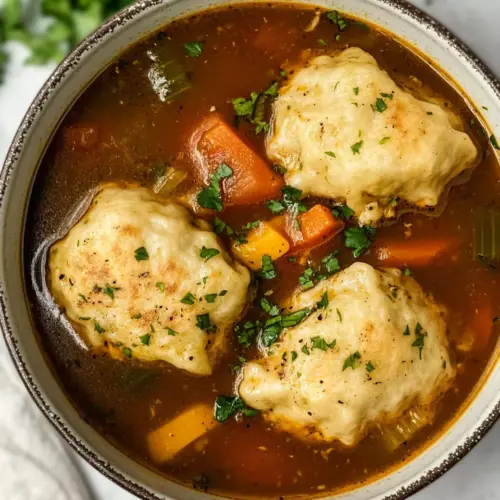
Chicken and Dumplings Soup
Chicken and Dumplings Soup delivers a creamy, savory bowl of comfort with tender chicken, soft vegetables, and pillowy dumplings. This easy weeknight dinner blends simple pantry staples with bright pops of peas and rich chicken stock for a satisfying, crowd pleasing meal you will want to make again and again.
Equipment
- Soup pot
- Mixing Bowl
- Wooden Spoon
- Measuring Cups
- Spoons for dropping dumplings
Ingredients
- 2 tablespoons olive oil Heat and coat the pan to prevent sticking and help brown ingredients; provides a mild fruity flavor and healthy fats for sautéing the aromatics and chicken.
- 1 pound boneless skinless chicken breasts cut into 1-inch cubes Cut into bite-sized pieces to ensure even cooking and tender texture; supplies the primary protein and body for the soup while absorbing flavors from the broth.
- 1 medium yellow onion diced Provide a savory aromatic base when sautéed; release natural sugars to add sweetness and depth to the soup’s overall flavor profile.
- 1 stalk celery diced Offer a crisp aromatic note and subtle herbaceousness when cooked; helps build the soup’s savory foundation and adds textural contrast.
- 1 medium carrot peeled and diced Contribute natural sweetness and color while softening in the broth; add nutrients and gentle texture to balance the savory elements.
- 2 cloves garlic minced Introduce a pungent, savory punch when minced and sautéed; enhances umami and helps brighten the overall flavor of the soup.
- 1 medium russet potato diced Add a starchy element that thickens the broth slightly as it breaks down; contributes heartiness and a creamy texture when diced and cooked.
- 1 teaspoons salt Enhance overall seasoning and bring out other flavors; helps balance the soup’s taste and is essential for proper seasoning control.
- 1/2 teaspoon pepper Provide mild heat and flavor balance when added; helps round out seasoning and complement the salt and herbs in the soup.
- 1/2 teaspoon Italian seasoning Impart a blend of herbs that adds Mediterranean notes and warmth; complements the chicken and vegetables for a well-rounded savory profile.
- 2 tablespoons all purpose flour Act as a thickening agent when cooked with the fat and liquids; helps create a slightly thicker broth and adds a subtle toasty flavor when browned.
- 32 ounces chicken stock Form the liquid base that carries flavors and cooks the ingredients; supplies savory depth and moisture necessary for simmering the soup.
- 1/2 cups frozen peas Supply bursts of sweetness, color, and texture late in cooking; add a bright contrast to the rich broth and tender vegetables.
- 1 cup all purpose flour Provide bulk and structure for dumplings when combined with leavening and liquid; creates a tender, comforting dough component for the soup.
- 2 tablespoons vegetable oil or olive oil Used for frying or sautéing to develop color and flavor in the dumpling dough or any pan-cooked components; contributes a neutral frying medium.
- 1/4 cup nonfat milk Moisten the dumpling dough and add a slight richness while keeping fat content lower; helps bind dry ingredients into a cohesive batter.
- 1 large egg Bind dumpling dough together and add richness and structure; contributes to the tenderness and color of the cooked dumplings.
- 2 teaspoons baking powder Leaven the dumpling batter to create light, airy dumplings; helps provide lift and a soft interior texture when steamed or simmered.
- 1/4 teaspoons salt Season the dumpling dough for balanced flavor; a small amount ensures the dumplings themselves are flavorful and not bland.
Instructions
- Heat 1 tablespoon olive oil in soup pot over medium high heat. Season chicken with salt and pepper (about 1/2 teaspoon each). Add the chicken and brown on all sides, about 3-4 minutes total. Remove chicken from the pan.: The moment the oil warms you should notice it shimmer, and that sheen tells you it is hot enough to sear. You will hear a gentle sizzle when you add the chicken , and the rapid browning creates browned bits that add a savory, caramelized note to the broth. Why this matters, the Maillard reaction concentrates flavor and gives the final soup a deeper profile. A common mistake is crowding the pan, which causes steaming instead of browning, so give the pieces space and work in batches if needed.
- Add second tablespoon of olive oil to the pan. Cook onion, celery, and carrot for two minutes, stirring often. Add the garlic, cook one minute. Add the potato, salt, pepper, and Italian seasoning and cook for another minute.: As you grind the pepper and sprinkle salt , take a moment to press the seasoning into the meat so it adheres. You may hear faint pops as the surface sears, and the aroma becomes noticeably savory. Proper seasoning at this stage builds layers of flavor, otherwise the chicken may taste bland even after cooking.
- Stir flour into vegetables and cook one minute then stir in chicken stock. Stir to remove anything stuck to the bottom of the pan. Cover and bring to a boil.: You want a golden crust that releases easily from the pot, that release signals good searing. The crust adds textural contrast to the tender interior and to the soft dumplings later on. Avoid moving the pieces constantly; let them develop a crust, then turn. A common error is flipping too soon which prevents proper browning.
- Meanwhile, make the dumplings by stirring all ingredients for the dumplings in a medium sized bowl. Mixture will be thick. Set aside.: When you lift the browned pieces out, you will notice flavorful fond left on the bottom, those brown bits will enrich the soup. Removing the chicken prevents overcooking while you brown the vegetables. If you skip this, the meat can become dry as it continues to cook during the vegetable stage.
- Boil soup for about 4-5 minutes then add the chicken back to the pan. Cook until potatoes are fork tender.: When the fresh oil hits the pot it will mingle with the browned bits, loosening them so they can be incorporated into the soup. The oil also ensures even cooking for the aromatics and prevents sticking. If your pan is too dry, the vegetables will scorch, imbuing a bitter note.
- Add the peas to the pot and stir.: You will hear a soft sizzle and see the vegetables sweat and soften, releasing sweet aromas. This initial sauté begins flavor development and helps the vegetables integrate into the broth. Don’t rush it with high heat; if they brown too quickly you risk a burnt edge that will show up in the soup.
- Drop dumplings into the pot using two spoons. This recipe makes about 6 dumplings, unless you want them smaller or larger.: As the minced garlic hits the pan the scent will become pungent and inviting, but it browns faster than the other vegetables, so stir constantly. This short cook time releases fragrant oils and prevents a raw garlic sharpness. Burnt garlic turns bitter, so be vigilant.
- Cover the pot and cook until the dumplings are cooked, 8-11 minutes. Serve hot.: The diced potato will begin to pick up toasted notes from the pan while the herbs infuse their aroma into the oil. This minute helps meld seasoning into the vegetables so each spoonful is seasoned evenly. If potatoes are in uneven sizes they will cook unevenly, so uniform dice is important.
- Stir flour into vegetables and cook one minute then stir in chicken stock: You will notice the flour coating the vegetables, and as it cooks the raw edge disappears with a subtle toasty scent, creating a light thickening base. Pouring in the chicken stock will loosen the fond, producing a rich, glossy broth. If you do not cook the flour first the broth can taste pasty.
- Stir to remove anything stuck to the bottom of the pan Cover and bring to a boil: As you scrape the bottom, the broth will take on deep brown notes from the fond, and bringing it to a boil quickly helps extract flavor. Covering traps steam and elevates the overall cooking temperature. A frequent oversight is skipping the scrape, which throws away concentrated flavor.
- Meanwhile make the dumplings by stirring all ingredients for the dumplings in a medium sized bowl: The dough will feel thick and slightly tacky, and as you mix the crumbly flour with the milk and egg it becomes cohesive. This texture is key for dumplings that puff but hold shape. Over mixing activates gluten and makes dumplings tough, so stir until just combined.
- Mixture will be thick Set aside: Resting the dumpling batter allows the baking powder to relax and the ingredients to hydrate, which supports a tender interior. The batter’s thickness should hold a shape when spooned, that ensures dumplings will float rather than disperse. If it seems too wet, add a touch more flour sparingly.
- Boil soup for about 4 to 5 minutes then add the chicken back to the pan: The brief boil helps the broth concentrate and start to soften the potato , after which returning the browned chicken reintroduces caramelized flavor into the liquid. This sequence prevents the meat from overcooking while ensuring it absorbs broth flavor. A common misstep is adding the meat too early which can dry it out.
- Cook until potatoes are fork tender: You will know they are done when a fork slides through with light resistance and the broth thickens slightly from the potato starch. Taste a piece to confirm tenderness, because undercooked potatoes upset the soup’s mouthfeel. Overcooked potatoes will begin to break down too much and cloud the broth.
- Add the peas to the pot and stir: The frozen peas will introduce a bright green color and sweet pop, and the brief heat will warm them without turning them mushy. Stir gently so they distribute evenly. Leaving them in too long will cause color and texture loss.
- Drop dumplings into the pot using two spoons: As each dumpling hits the surface you will hear a soft plop, and they should float initially then puff up. Size influences cook time and texture, with larger dumplings keeping a pillow like interior and smaller ones cooking through faster. A common issue is overcrowding which makes dumplings stick together
- This recipe makes about 6 dumplings unless you want them smaller or larger: Adjusting size changes the eating experience, smaller for more bites per bowl, larger for a more rustic feel. Aim for uniform scoops so they cook evenly. Uneven sizes will result in mixed doneness.
- Cover the pot and cook until the dumplings are cooked 8 to 11 minutes: Steam trapped under the lid finishes the dumplings gently, and you may notice a faint hissing as they set. The dumplings should spring back slightly when touched with a spoon and feel tender inside. If you lift the lid too often you will lose steam and extend the cook time.
- Serve hot: The final bowl should be steaming and aromatic, with tender chicken , soft vegetables, and pillow like dumplings. Serve immediately for best texture and warmth. Holding too long will soften dumplings and change the intended contrast.
Notes
- Use quality chicken stock for the most flavorful soup, a richer stock yields a deeper, more satisfying broth which means the whole dish tastes better without extra effort.
- Measure flour accurately when making dumplings, too much flour leads to dense dumplings, so spoon the flour into the cup and level it off for precision.
- Don’t overcrowd the pan when browning the chicken, sear in batches if needed so each piece gets a good crust that contributes savory notes to the soup.
- Keep an eye on dumpling size, aim for consistent scoops so all dumplings finish at the same time and none are underdone or overcooked.
- Adjust salt at the end after the broth reduces and the dumplings finish, this prevents over seasoning during the long cooking process.