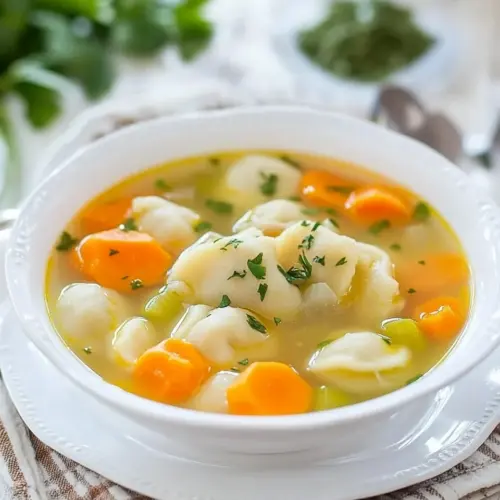
Chicken and Dumpling Soup
Chicken and Dumpling Soup is a creamy, comforting, and easy weeknight dinner full of tender chicken, soft dumplings, and hearty potatoes. The buttery dumplings soak up savory broth while fresh herbs brighten each bowl, making it perfect for cold evenings or family meals. Make it for a crowd and enjoy leftovers that taste even better the next day.
Equipment
- 5 Qt soup pot
- Mixing Bowl
- Cutting Board
- Knife
- Spatula
- Measuring Cups
Ingredients
- 2 sticks of celery, finely diced Finely diced to provide aromatic crunch and freshness, celery adds a subtle vegetal backbone that balances richer flavors in the soup; it also contributes texture and moisture as it simatures during simmering.
- 1 small/medium onion, finely diced Finely diced to form a flavorful aromatics base, onion adds natural sweetness and depth when sautéed; it helps build the savory foundation that supports the broth and other vegetables.
- 3 tbsp olive oil Used for sautéing aromatics and browning ingredients, olive oil imparts a smooth mouthfeel and carries fat-soluble flavors throughout the soup without overpowering other components.
- 2 large carrots, thinly sliced Thinly sliced to deliver tender, sweet bites that soften during cooking, carrots bring color, natural sweetness, and nutritional value, enhancing both taste and visual appeal.
- 6 cups reduced sodium chicken broth + 6 cups water Combined to create a light but flavorful cooking liquid, reduced sodium chicken broth plus water provides savory depth while controlling overall saltiness, allowing the other ingredients to shine.
- 1 tbsp salt, or to taste (I used sea salt) Added to season and enhance savory flavors, salt calibrates taste throughout cooking and can be adjusted to personal preference to bring out natural flavors in the soup.
- 3 -4 medium potatoes, about 1 1/2 lbs, peeled and cut into bite-sized pieces Peeled and cut into bite-sized pieces to contribute hearty texture and starch, potatoes help thicken the soup slightly and offer a comforting, filling element that soaks up surrounding flavors.
- 1/2 lb boneless skinless chicken breast, 1 large chicken breast, diced Diced to provide lean protein and body, boneless skinless chicken breast cooks quickly and imparts savory, meaty flavor to the broth while remaining tender when simmered properly.
- 2 bay leaves Simmered with the broth to impart an earthy, herbal note, bay leaves add subtle warmth and complexity that deepen the overall flavor profile without being overpowering.
- 2 tbsp Chopped Dill and/or 2 Tbsp Chopped Parsley, I used both Chopped and added for fresh herbal brightness, dill and/or parsley lift the soup with grassy, slightly citrusy or peppery notes, balancing richness and adding a fresh finish.
- 2 cups flour, sifted Sifted and used as the main dry component for dumplings, flour provides structure and body, binding with eggs and liquids to create tender, doughy dumplings that cook through in the broth.
- 2 large eggs Beaten into the dumpling mixture to enrich and bind, large eggs add moisture, structure, and a tender crumb while helping the dumplings hold together during simmering.
- 1 tbsp sour cream Mixed into the dumpling batter for moisture and tang, sour cream contributes richness and slight acidity that tenderize the dough and enhance overall dumpling flavor.
- 1/2 tsp salt Measured to season the dumpling dough, salt enhances the dumpling’s taste and balances the dairy and flour, ensuring the finished dumplings are flavorful.
- 1/4 tsp sugar Added sparingly to the dumpling mixture to brighten flavors slightly, sugar helps balance savory and acidic elements and can improve the dumpling’s overall taste harmony.
- 6 tbsp 3/4 stick melted Butter Melted and incorporated into the dumpling mixture to add rich butterfat, melted butter creates tender, rich dumplings with a silky mouthfeel and enhanced flavor.
Instructions
- In a 5 Qt soup pot, over medium heat, add 3 Tbsp olive oil and saute 2 sticks diced celery and small finely diced onion until softened (5 min). Add thinly sliced carrots and continue to cook until onions and celery are golden (3-4 min).: The aroma of sizzling onion and celery is the first sign the soup is coming together, a warm, herbaceous scent that softens into sweetness as they sweat. You should hear a gentle sizzle rather than a loud crackle, and see the edges of the onion turn translucent and then pale gold, which takes about five minutes. This step builds the savory foundation, so do not rush to high heat which will brown too quickly and change the flavor profile. A common mistake here is overcrowding the pot, which steams the vegetables instead of sautéing them, leaving a flatter base. Keep stirring occasionally to develop even color and prevent sticking to the bottom.
- Into the same pot, pour in 6 cups chicken broth and 6 cups water along with 1 Tbsp salt and all of your chopped potatoes. Bring to a boil then cook 10 minutes, or until potatoes are nearly done.: When you introduce the carrots , the pan releases a fresher, slightly sweet aroma that balances the savory base. The sound softens as they warm and the visual cue is brightening color and gentle translucence. Cook just long enough for the carrots to lose raw edge, about three to four minutes, so they contribute texture without turning to mush in later simmering. Avoid overcooking at this point, which can result in limp, flavorless pieces, and watch for any signs of browning that would make the soup taste too caramelized.'
- Meanwhile, make your dumplings: Sift 2 cups flour, 1/2 tsp salt and 1/4 tsp sugar into a medium bowl. P. S. I measured 2 cups flour before sifting - scoop it into the measuring cup, then scrape off the top for an accurate measurement. Make a well in the center and add 2 eggs with 1 Tbsp sour cream. Fold together with a spatula. Your dough will look like scraps of cloth. Pour in 6 Tbsp melted butter and stir/ knead with spatula until butter is well incorporated and dough is uniform in texture and color. It should be very soft but won't stick to your hands.: As the liquid hits the pot the smell becomes brothy and comforting, steam rising and carrying layered aromas through the kitchen. The potatoes begin releasing starch as they simmer, slightly thickening the broth and creating a fuller mouthfeel. Bring to a steady boil where the surface shows rolling bubbles, then lower so it maintains a gentle, consistent boil for even cooking. A common misstep is boiling too vigorously which can break up the potatoes , making the broth cloudy and starchy. Keep an eye on the pot, stir occasionally to prevent sticking, and watch for the potatoes to become tender but not falling apart.
- Transfer dough to a smooth cutting board. Separate your dough into two pieces, roll each piece into a long slim log and cut thin slices from each log. Don't cut them too big since they expand in the soup. You want them to be small and bite-sized. The dough should not stick to the knife or cutting board because of all the butter in it.: The sound of the pot will deepen, and you should see movement across the surface as starches leach out and meld with the broth. Check tenderness by piercing a larger piece of potato with a fork, it should offer slight resistance but not feel raw. This timing lets the vegetables and starches partially break down to enrich the liquid while reserving enough structure so they hold through the final simmer. A typical error here is assuming uniform doneness without testing, so sample a piece to avoid over or under cooking.
- After boiling potatoes about 10 minutes, keep the pot at a boil and add 2 bay leaves, diced chicken and prepared dumplings. Continue boiling over medium/low heat another 10 minutes or until dumplings are tender and chicken is cooked through.: Sift 2 cups flour, 1/2 tsp salt and 1/4 tsp sugar into a medium bowl : The dry scent of sifted flour and the faint sweetness of the sugar set expectations for tender dumplings. Sifting aerates the flour and prevents lumps, which helps produce light, fluffy dumplings instead of dense ones. I measure before sifting for consistency, and then create a well for wet ingredients. A common mistake is skipping the sift which can lead to uneven texture, and using too much flour will yield heavy dumplings.
- Season to taste - I added about 1/2 tsp more of salt. Stir in your fresh dill or parsley (or both) and remove from heat.: When you crack in the eggs and stir with sour cream , the mixture becomes glossy and slightly tangy, contributing to a cohesive dough that will steam to tenderness in the broth. The wet center should slowly incorporate the dry edges, forming scrap like pieces that hold together when turned. If the dough looks too dry at this stage it will not come together properly later, so pay attention to texture rather than exact appearance. Avoid overworking the mix which can develop gluten and make dumplings tough.
- Fold together with a spatula: The motion of folding creates pockets of air and prevents over development of the gluten, giving dumplings a tender bite. At this stage you will notice the dough resembling fabric scraps, textured and soft rather than smooth like a bread dough. A lubrication of fat will follow, so trust the process and avoid adding extra liquid prematurely which would make the dumplings slack and dense once cooked.
- Pour in 6 Tbsp melted butter and stir/ knead with spatula until butter is well incorporated and dough is uniform in texture and color: Adding melted butter brings a rich aroma and glossy sheen, and working it in ensures the dough has fat evenly distributed which translates to a tender dumpling. The dough should be soft but not sticky to the touch, and you should see an even color as the butter blends. Too much handling makes the dough tight, so incorporate until uniform and then stop. A common mistake is using cold butter which will not integrate properly and leaves uneven pockets in the dough.
- Transfer dough to a smooth cutting board: On the board you can shape without sticking, and the tactile feedback helps you judge consistency. The dough should feel slightly soft and pliable due to the butter. If it clings to the board excessively, you may have mismeasured or need a brief dusting of flour, but be cautious as extra flour changes tenderness. Avoid cutting directly from a chilled dough which can crumble rather than slice smoothly.
- Separate your dough into two pieces, roll each piece into a long slim log and cut thin slices from each log: Rolling gives even pieces that cook uniformly, and thin slices will expand in the broth into perfect bite sized dumplings. The dough should not stick to the knife because of the butter, and you can see the small discs rise slightly when dropped into hot liquid. Cutting too large yields doughy, undercooked centers, so aim for small, consistent slices to ensure even cooking throughout.
- Don't cut them too big since they expand in the soup: Size determines cook time and texture, and the dumplings will swell as they absorb liquid. Smaller pieces cook through more reliably and offer pleasant mouthfuls that complement the potatoes and chicken . A common error is making oversized dumplings that remain dense inside after the recommended cooking time, so keep them modest in size.
- After boiling potatoes about 10 minutes, keep the pot at a boil and add 2 bay leaves, diced chicken and prepared dumplings: The pot will sound lively as you add the components, and the aroma intensifies with the addition of raw chicken and the herbal lift from the bay leaves . Dumplings should sink briefly then float as they cook through, and the broth should return to a gentle boil, signaling active cooking. Avoid dropping all dumplings at once in a cramped pot which can cause sticking; space them if needed. Also, crowding the pot can lower the temperature and lengthen cooking time.
- Continue boiling over medium/low heat another 10 minutes or until dumplings are tender and chicken is cooked through: You will notice a soft rustling as dumplings swell and the broth takes on a slightly thicker, pillowy feel from released starches. Check a dumpling by tearing it open it should be fluffy inside and fully set, while the chicken should be opaque and tender. Overcooking will make dumplings gummy and the chicken stringy, so test early and trust sensory cues rather than strict minutes alone.
- Season to taste - I added about 1/2 tsp more of salt: Tasting at the end allows you to balance the soup after the dumplings and potatoes have influenced salt absorption. Adjust in small increments, stirring and sampling between additions to avoid oversalting. A typical pitfall is salting heavily at the start then realizing late that the dumplings concentrated the broth, so always finalize seasoning toward the finish.
- Stir in your fresh dill or parsley (or both) and remove from heat: Adding fresh dill or parsley right off the heat preserves their bright, herbaceous flavor and adds a vivid green contrast. The final bouquet lifts the whole bowl and gives a fresh finish. Do not simmer long after adding herbs, as extended heat dulls their brightness and aroma.
Notes
- Control your heat Keep the pot at a steady medium to medium low after adding the dumplings, because a vigorous boil can break them apart while too low a simmer may leave them undercooked.
- Measure flour consistently Use the scoop and level method before sifting as noted, which prevents heavy dumplings and ensures the dough remains tender and light.
- Size matters Cut dumplings slim and bite sized to ensure even cooking and a pleasant mouthfeel that complements the diced chicken and potatoes.
- Use reduced sodium broth Starting with lower sodium gives you control when finishing the soup, avoiding an overly salty result after the dumplings absorb liquid.
- Add herbs at the end Stir in chopped dill or parsley off the heat to preserve bright color and fresh flavor that lifts the whole dish.