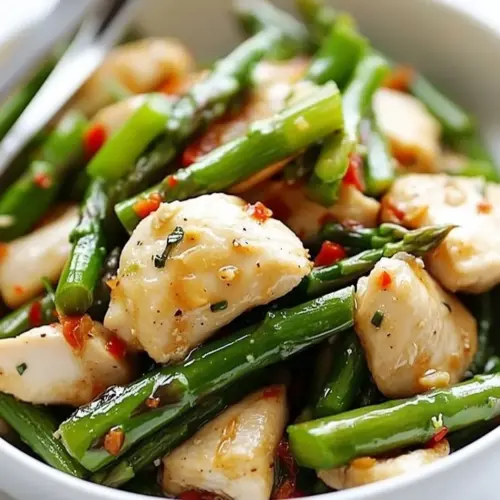
Chicken and Asparagus
Chicken and Asparagus is a quick, savory stir fry with tender chicken cubes and crisp asparagus tossed in a glossy, umami rich sauce. This easy weeknight dinner brings fragrant garlic, soy, and a hint of sweet chili for balanced flavor and satisfying texture. Ready in about 15 minutes, it is perfect when you want a bright, simple meal that feels thoughtful and flavorful.
Equipment
- Skillet
- Small Bowl
- Spatula
Ingredients
- 8 oz (230 g) chicken breast, cut into cubes Cut into cubes to ensure even, quick cooking and to allow the chicken to absorb sauces and seasonings; provides the primary protein and substance of the dish. Lightly pat dry before cutting to promote better browning when sautéed in hot oil. Marinate briefly if desired to deepen flavor and tenderize the meat.
- 1/2 tablespoon cornstarch Coats and lightly thickens the chicken when combined with a small amount of liquid; helps create a velvety texture on the exterior during searing. Use sparingly to avoid gummy texture while aiding sauce adherence. Mix with a little liquid before adding to meat for even distribution.
- 1 tablespoon oil Heats quickly to sear the chicken and soften aromatics, contributing both cooking medium and flavor. Choose a neutral oil with a high smoke point to achieve a golden crust without burning. Add at the right temperature to prevent sticking and to lock in juices.
- 2 cloves garlic, minced Provides a pungent, aromatic base that flavors the oil and permeates the chicken and asparagus as they cook. Mince finely to release more essential oils and create uniform distribution. Add early in the sauté and cook briefly to mellow raw sharpness without burning.
- 1 lb (500 g) asparagus, bottom stems trimmed Trims and cooks quickly to retain a crisp-tender texture and bright green color; balances protein with a fresh vegetable component. Remove tough bottom stems to improve mouthfeel and even cook time. Cut into uniform lengths so pieces cook evenly with the chicken.
- 1 tablespoon soy sauce Adds salty, umami depth and helps build a savory backbone for the sauce when combined with other seasonings. Contributes a glossy finish and helps balance sweeter elements in the dish. Stir in toward the end of cooking to preserve its nuanced flavor.
- 1 tablespoon oyster sauce Contributes rich, savory umami and a slightly sweet, oceanic complexity that enhances overall depth of flavor. Thickens the sauce subtly while layering a distinctive savory note that pairs well with soy sauce. Use in moderation to avoid overpowering delicate asparagus.
- 4 tablespoons water Provides a small amount of liquid to loosen and meld sauce components while helping to steam and finish cooking the asparagus. Controls sauce consistency and prevents sticking during simmering. Add gradually to reach the desired sauciness.
- 1/2 teaspoon sugar Offers a faint sweet counterpoint to salty and savory components, balancing flavors in the sauce and rounding edges. Dissolves easily into the sauce mixture and helps temper sharper seasonings. Adjust quantity to taste for a more balanced profile.
- 1 teaspoon cornstarch Acts as an additional thickening agent to create a glossy, clingy sauce that coats chicken and asparagus evenly. Mix thoroughly with cold water before adding to hot liquid to prevent lumps and ensure smooth texture. Adds body without altering flavor significantly.
- 1 tablespoon Thai sweet chili sauce Provides a sweet, tangy, mildly spicy finishing flavor that brightens the dish and adds an appealing glaze-like quality. Complements savory sauces and offers a contrast to salty soy and oyster sauces. Stir in near the end to preserve its sweet chili character.
Instructions
- Mix the chicken with cornstarch. In a small bowl, combine all the ingredients for the Sauce and stir well. Set both aside.: The aroma of cornstarch meeting hot oil is subtle, but the real reward comes in texture, creating a silky coating that helps the sauce cling to each piece. When you coat the chicken , pat the cubes so the cornstarch adheres evenly, which encourages uniform browning. You should notice a slightly dusty finish that will turn glossy once seared. A common pitfall is adding too much cornstarch; that can produce a pasty surface. If pieces clump, gently separate them with your fingers before cooking.
- Heat a skillet with the oil. Sauté the garlic until aromatic. Add the chicken and stir-fry until the surface turns opaque. Then add the asparagus and continue to stir-fry for about 1 minute.: You will smell the soy and sweet chili first, a savory and sweet duet that signals the flavor direction. Stir until the cornstarch for the slurry is dissolved so the sauce will thicken smoothly later. Mixing in the sugar and oyster sauce integrates the salty umami with a rounded sweetness, building depth. Avoid leaving the cornstarch undissolved, because lumps will create a grainy texture when heated. If the mixture seems too thick, add a splash of water and whisk again.
- Add the sauce to the skillet. Once it thickens, dish out the contents and serve immediately.: Letting the seasoned chicken and sauce rest for a moment allows flavors to settle and the cornstarch to hydrate. This short pause makes the cooking phase more predictable, and you will notice the sauce components come together visually. It also gives you a chance to recheck seasoning. Do not let the chicken sit too long at room temperature for food safety; ten to fifteen minutes is fine, but avoid extended resting.
- Heat a skillet with the oil: As the pan warms, you will hear a faint whisper as oil spreads and a thin shimmer when it is hot enough. Test by tipping a small bit of sauce or a pinch of cornstarch into the oil to see a quick bubble. Heating properly ensures instant sear and prevents sticking. If the oil smokes heavily you have it too hot; reduce heat slightly to avoid burning and off flavors.
- Sauté the garlic until aromatic: The scent will bloom within seconds, filling the kitchen with a warm, savory perfume. Watch closely because garlic moves from fragrant to bitter quickly, and a few seconds too long can taint the whole pan. Stir constantly on medium heat to release its natural sweetness without allowing browning. If the garlic begins to darken, remove the pan from heat briefly and lower the temperature.
- Add the chicken and stir-fry until the surface turns opaque: You will see the chicken change from glossy raw to a firm, opaque exterior, and the sizzling sound will deepen as moisture escapes. This stage builds a light crust and seals juices inside. Move pieces frequently so they brown evenly on all sides. A common error is overcrowding the pan, which causes steaming and prevents that desirable sear. Cook in batches if needed for the best texture.
- Then add the asparagus and continue to stir-fry for about 1 minute: The asparagus will hiss as it hits the hot pan, and its color will shift to a vibrant green almost immediately. That quick cook keeps it crisp tender, offering a pleasant snap when you bite. Stir constantly so the spears heat through without losing brightness. If your spears are very thick, slice them on the diagonal to ensure they cook through in this short time.
- Add the sauce to the skillet: As the sauce hits the hot surface it will bubble and begin to thicken, releasing heightened aromas of sweet and savory. The cornstarch slurry will transform the liquid into a glossy coating that clings to the chicken and asparagus . Tilt the pan to distribute the sauce evenly and listen for a gentle simmer. Avoid dumping in cold sauce too quickly if the pan is not hot enough, as it can cause the ingredients to cool and the sauce to be slow to thicken.
- Once it thickens, dish out the contents and serve immediately: The final texture should be a shiny glaze that coats each piece, and you will see a slight reduction in volume as flavors concentrate. Serve hot so the sauce stays glossy and the asparagus keeps its snap. A common mistake is letting the pan sit off heat too long, which can lead to a congealed sauce and limp vegetables. Plate promptly for the best contrast of textures and temperature.
Notes
- Prepping protein Start by cutting the chicken into uniform cubes so they cook at the same rate, preventing some pieces from drying while others finish.
- Even coating Toss the chicken with cornstarch in a shallow bowl and separate any clumps so each cube gets a thin, even layer for the best texture.
- Pan heat check Heat the pan until the oil shimmers slightly, this is the sweet spot for immediate sear without excessive smoke.
- Garlic timing Add the garlic just before the chicken, and watch it closely; garlic becomes bitter when over browned, so keep it moving.
- Asparagus size If your asparagus stalks are thick, trim and slice them diagonally to ensure they cook through in the short stir fry time.