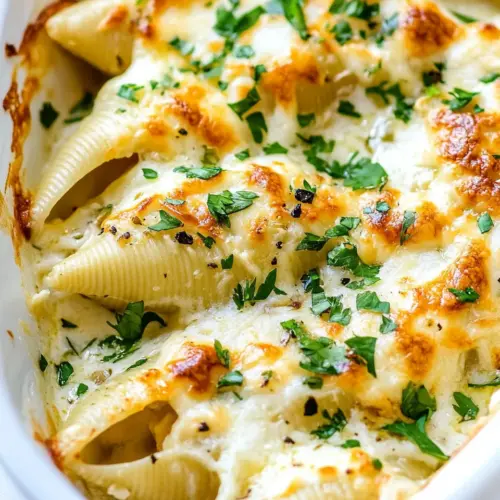
Chicken Alfredo Stuffed Shells
Chicken Alfredo Stuffed Shells deliver creamy, cheesy comfort with tender shredded chicken tucked into jumbo pasta shells. This easy weeknight dinner combines ricotta, mozzarella, and Parmesan with rich Alfredo sauce for a crowd pleasing meal that melts in your mouth. Serve it when you want a cozy, satisfying dish that still feels special and effortless to make.
Equipment
- 9×13 baking dish
- Large Pot
- Baking Sheet
- Mixing Bowl
Ingredients
- 12 ounces jumbo pasta shells Boil until al dente and provide large cavities perfect for holding creamy cheese and chicken filling; ensure shells remain intact while handling to avoid tearing during stuffing. Drain and cool slightly so shells are easier to fill and maintain their shape in the baking dish.
- 1 egg lightly beaten Whisk gently to add structure and help bind the cheese filling together so it holds its shape inside the shells when baked. Incorporate evenly to create a cohesive texture and contribute a slight richness to the mixture.
- 15 ounces ricotta cheese Spoon and fold to create a creamy, mild base for the filling that adds moisture and a smooth texture; its mild tang balances the richness of the cheeses and sauce. Mix thoroughly with eggs and seasonings to make the filling luscious and cohesive.
- 1 1/2 cups shredded mozzarella cheese divided Shred finely and reserve half for mixing into the filling and the other half for topping; deliver melty, gooey stretch and a mild milky flavor that gratinates under heat. Use the divided portions to ensure a cheesy interior and a golden, bubbly surface.
- 3/4 cups shredded parmesan cheese divided Grate and divide to supply savory, nutty umami notes and a slightly granular texture; part mixes into the filling for depth while part tops the shells for a flavorful crust. Sprinkle sparingly to enhance richness without overpowering the other cheeses.
- 1/3 cups sour cream Spoon in small amounts to lend extra creaminess and a slight tang that lightens the texture of the ricotta blend and helps create a silkier filling. Combine well to achieve a balanced richness that prevents the mixture from being dry.
- 2 teaspoons Italian seasoning Sprinkle evenly to infuse the filling with aromatic Mediterranean herbs and a balanced savory profile, enhancing both the cheese and chicken components. Use measured amounts to avoid overwhelming the dish while adding classic Italian flavor.
- 1/2 teaspoon kosher salt Measure precisely to season the filling and sauce, drawing out and balancing flavors without making the dish overly salty; use kosher salt for a clean, controlled seasoning. Adjust slightly if using a salty Alfredo sauce or pre-salted cheeses.
- 1/2 teaspoon black ground pepper Grind or sprinkle to add mild heat and a subtle bite that brightens the overall flavor profile and complements the herbs and cheeses. Distribute evenly to avoid concentrated pockets of pepper and to enhance savory notes.
- 2 cups cooked chicken shredded Shred or chop and fold into the filling to introduce hearty protein, tender texture, and savory depth that makes the shells a satisfying main course. Use cooked chicken to ensure safe consumption and to combine flavors with the cheeses and sauce.
- 15 ounces Alfredo sauce Pour and coat to envelop the stuffed shells in a rich, creamy, garlicky sauce that keeps the filling moist and produces a luscious baked finish. Heat through to meld flavors and allow the sauce to bubble around the shells for an appealing presentation.
- Chopped fresh parsley for garnish Chop finely and sprinkle just before serving to add a bright, fresh herbal finish that contrasts the richness of cheeses and sauce; act as a visual garnish and palate cleanser. Use sparingly to maintain the dish's creamy profile while adding color and fragrance.
Instructions
- Preheat oven to 375°F. Lightly spray a 9×13-inch baking dish with nonstick spray. Set aside.: The oven warmth should feel steady when you open it and the air should be noticeably warm, not scorching. This temperature allows the filling to heat through and the cheeses to melt gently, producing a creamy interior rather than a dried out top. A common mistake is skipping preheating, which leads to uneven baking and longer cook time, so always wait until the oven registers the correct temperature. If your dish sticks, the nonstick spray will prevent cheese from bonding to the pan.
- Bring a pot of water on the stovetop to a boil. Cook the pasta shells to al dente. After cooking the pasta shells, drain and place them upside down on a baking sheet to dry.: As the water reaches a rolling boil, you will hear lively bubbling and see steam rising; add a generous pinch of salt for seasoning. Cook until the shells are tender but still firm at the center, they should give slightly under pressure. Draining and placing them upside down stops residual steam from making them soggy, and you want them just dry enough to hold the filling. Overcooking will cause tearing during stuffing, so test one shell before draining all. If shells stick together, separate gently with a fork to avoid ripping.
- Make the filling. In a large bowl, combine the egg, ricotta cheese, 1 cup mozzarella cheese, 1/4 cup parmesan cheese, sour cream, Italian seasoning, salt, and pepper. Mix well, then fold in the shredded chicken.: When you mix, the bowl will carry a tangy, cheesy scent and the texture should become smooth and slightly glossy, indicating the egg and sour cream have emulsified with the cheeses. Folding in the shredded chicken distributes savory pockets throughout the mixture, giving balanced bites. Avoid overmixing, which can break down the ricotta and make the filling runny. If the filling feels too loose, chilling for 10 minutes firms it slightly and helps with stuffing.
- Stuff each shell with the filling and arrange them side by side, open side up, in the prepared baking dish.: When filling, you will notice the shells cradling the mixture; press gently so the filling nests without tearing the edges. Arrange them snugly so they support one another and do not tip over as the cheeses melt. A frequent issue is overfilling, which leads to spilling and uneven baking, so use a spoonful per shell and keep the top level with the rim. If a shell rips, replace it with a reserve shell to maintain presentation.
- Evenly spread the Alfredo sauce on top of the stuffed shells. Top with the remaining mozzarella and parmesan cheeses.: As you pour the Alfredo sauce , watch it pool and cascade into gaps, coating the shells and creating a glossy surface. The sauce keeps the shells moist and creates a cohesive casserole as it warms. Sprinkle the remaining cheeses evenly so the top melts uniformly and achieves golden color. A mistake is piling too much sauce in one area, which can lead to soggy pockets; aim for an even layer so baking is consistent.
- Cover with foil and bake for 25 minutes, then remove the foil and continue baking for another 10 minutes, until bubbly. For golden cheese, broil for 1-3 minutes.: With the foil on, steam builds gently and the filling heats through evenly, you will hear a soft bubbling as moisture moves. Removing the foil allows the top to brown; look for bubbling around the edges and a lightly golden surface as cues it is ready. If you choose to broil, watch closely because broiling goes from perfect to burnt in seconds; stand by the oven and listen for the sizzling and watch the color change. A common error is leaving the foil on too long, which prevents browning, so time the transitions carefully.
- Garnish with fresh parsley and serve.: The final garnish adds a fresh scent and bright green contrast to the creamy casserole, lightening each bite visually and on the palate. Serve hot so the cheese pulls and the sauce remains silky. If you let it cool too long, the texture firms and it will be less luscious, so plan to serve shortly after resting five to ten minutes. Use a spatula to lift shells carefully so they keep their shape on the plate.
Notes
- Reserve a few shells: When boiling the jumbo shells, cook an extra two to three to account for any that tear during assembly, ensuring you do not run short mid assembly.
- Temperature check: Use an oven thermometer to confirm the oven reads 375 degrees so baking time is accurate and the center heats through properly.
- Even cheese distribution: Measure the cheeses and divide exactly as written to achieve both a melty interior and a golden crust on top for visual and textural contrast.
- Work with warm components: Slightly warm the Alfredo sauce before pouring so it spreads evenly and reduces chilling of the casserole when it hits the filling.
- Make ahead option: Assemble the dish up to the point of baking, cover tightly, refrigerate for up to twenty four hours, then bake as directed adding a few extra minutes if cold from the fridge.