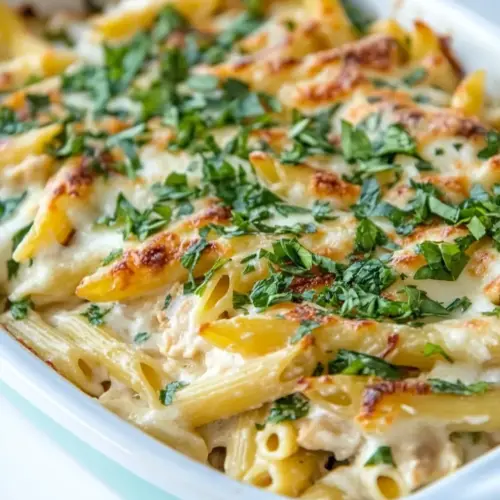
Chicken Alfredo Penne Casserole
Chicken Alfredo Penne Casserole is a creamy, comforting bake featuring tender chicken, whole grain penne, and a lighter Alfredo sauce, finished with melty mozzarella and a golden parmesan crust. Perfect for an easy weeknight dinner or feeding a crowd, it balances rich texture with wholesome ingredients, making it both satisfying and approachable. Try it when you want a cozy, shareable meal.
Equipment
- Saucepan
- Large Pot
- Baking Dish
Ingredients
- 3 cups Skinny Alfredo Sauce Provide a creamy, low-calorie base that binds the casserole while delivering classic Alfredo flavor and a smooth texture; heats evenly and melds with pasta and cheese for a rich finished sauce.
- 1 tablespoon extra virgin olive oil Add a fruity, peppery fat that enhances browning and helps sauté chicken and sausage; contributes mouthfeel and a subtle Mediterranean aroma to the dish.
- 14 ounces boneless and skinless chicken breasts sliced to strips Ensure tender, meaty protein when cooked, offering substantial texture and savory flavor; slices quickly absorb sauce and brown nicely for visual and taste contrast.
- 3 ounces lean chicken sausage or turkey, crumbled Contribute lean, seasoned pork or turkey crumbles that boost savory depth and add a firm, slightly spiced texture; mixes well with pasta to distribute flavor throughout the casserole.
- 1/4 teaspoon salt Balance flavors by enhancing overall taste and controlling seasoning levels; helps draw out natural flavors from proteins and cheeses when used sparingly.
- pepper to taste Season to personal preference to brighten and complete the dish; provides aromatic heat and contrast that lifts the creamy elements and prevents blandness.
- 14 ounces whole-grain penne Supply hearty whole-grain structure and chewiness that holds up under baking while adding fiber; tubes capture sauce and cheese for satisfying bites throughout the casserole.
- 3/4 cup parmesan grated Deliver nutty, salty richness that melts into the sauce and gratin, contributing umami and a savory crust when baked on top of the casserole.
- 3 1/2 ounces mozzarella ball roughly chopped Add gooey, milky meltiness and a mild flavor that creates stringy, satisfying cheese pulls; chunks distribute pockets of creamy texture throughout the dish.
- parsley fresh, finely chopped for garnishing (optional) Provide a bright, herbaceous finish and color contrast when sprinkled over the baked casserole; adds light freshness that complements the rich, creamy components.
Instructions
- Preheat the oven to 375 degrees F.: You'll notice the oven taking on a warm, dry heat that prepares the dish to brown evenly, encouraging the top to form a golden, slightly crisp crust. This temperature is chosen because it is hot enough to meld cheeses and develop browning without drying the interior. A common mistake is to skip preheating, which leads to uneven bake time and a less cohesive texture, so always give the oven time to reach the full 375 degrees F before the casserole goes in. If your oven runs hot, consider checking with an oven thermometer to avoid overbrowning.
- Bring a pot of water to a boil to cook the penne.: As the water approaches a rolling boil you will hear strong bubbling and see steam rise, which signals it is time to add salt and the penne . Boiling water keeps the pasta moving so it cooks evenly and prevents sticking. If the pot is too small, the temperature will drop dramatically when you add pasta, extending cooking time and making it stickier, so use a wide, roomy pot for the best results. Overcrowding is the usual slip up that yields clumped noodles instead of individual tubes.
- In a large saucepan, make your skinny alfredo sauce.: The sauce should become smooth and glossy as you stir, releasing a fragrant dairy aroma that signals the fats and milk are marrying. A gentle simmer is important, because vigorous boiling can break the emulsion and cause separation. Stir constantly and keep heat moderate to maintain a silky texture. If the sauce begins to split or looks grainy, lowering the heat and whisking constantly can help bring it back together; overheating is the primary culprit here.
- Over medium heat, in a saucepan with extra virgin olive oil, sauté the chicken and sausage then season with salt and pepper. Set aside.: You will hear a satisfying sizzle as the chicken and crumbled sausage hit the hot oil, and that sound lets you know the Maillard reaction is building flavor. Aim for a gentle browning that creates savory fond without charring. Once cooked, the proteins should be opaque and slightly caramelized. The main mistake is overcrowding the pan, which causes steaming rather than browning; cook in batches if needed for color and depth.
- When the water for the penne is boiling, add some salt then cook them for following the number of minutes indicated in the package but lessen 2 minutes from it.: The pasta will be firm yet pliable when you taste it, with a mild wheaty aroma from the whole grain. Undercooking by two minutes is deliberate because the penne will finish softening in the oven, absorbing flavors rather than becoming mushy. Rinsing can cool the pasta too much and strip starches that help bind the casserole, so avoid rinsing unless you need to stop cooking quickly for timing; the biggest misstep is overcooking to the point where the casserole lacks structure.
- In the saucepan of the alfredo sauce, mix in the chicken, penne, 1/2 cup of the Parmesan and mozzarella.: As you fold these together, pay attention to the way the sauce clings to each piece of penne and strands of chicken . The aroma becomes richer, and you will notice the sauce thickening as cheese melts and integrates. This step harmonizes textures so the casserole bakes evenly. A common issue is adding all cheese at once; reserving some for topping ensures a golden finish. If the mixture appears too loose, a brief low simmer will tighten it, but do not boil.
- Transfer the penne to an oiled baking dish then sprinkle the remaining Parmesan on top. Drizzle with extra virgin olive oil. Bake for 15 - 20 minutes or until it turns golden brown on top.: The casserole will bubble around the edges and the top will shift from pale to a warm, toasted hue, releasing a toasty cheesiness. The olive oil drizzle helps create that appealing sheen and encourages uniform browning. Keeping an eye on the oven in the final minutes helps you catch the ideal moment before the top goes from golden to burnt. If you see excessive browning early, tent loosely with foil to continue heating without overbrowning.
- Sprinkle with the parsley if using.: The final touch of fresh parsley gives the plated casserole a flash of green and a subtle herbaceous lift that brightens each bite. Added after baking, it retains its fresh color and crispness, contrasting the warm creaminess below. Avoid adding it too early, because the herb will wilt and lose that lively note. Forgetting this last garnish is a small missed opportunity to add freshness to every forkful.
Notes
- Make it lighter Use a skinny Alfredo as called for, and focus on portion control by pairing the casserole with a fresh salad to keep the meal balanced and satisfying without overindulgence.
- Boost the flavor Brown the chicken well and crisp the crumbled sausage to deepen savory notes; that caramelization creates complex flavors that shine through the creamy sauce.
- Swap pasta shapes If you do not have penne, use another tube pasta that holds sauce well, making sure to adapt the cooking time to maintain al dente texture before baking.
- Prep ahead You can assemble up to the baking step and refrigerate, then pop it into the oven a bit longer if starting cold; this makes the dish ideal for busy evenings or entertaining.
- Control salt Add salt gradually because parmesan contributes significant saltiness; taste before adding the final seasoning to avoid over salting.