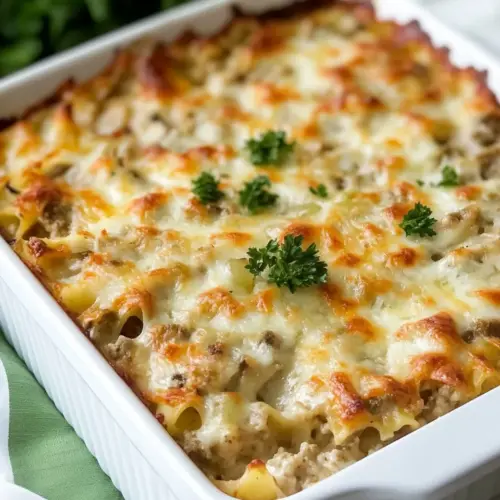
Chicken Alfredo Lasagna Casserole
Chicken Alfredo Lasagna Casserole blends creamy Alfredo sauce, tender chicken, and melty cheeses into a comforting, easy weeknight dinner. The layers bake into a sliceable casserole with browned edges and gooey pulls, perfect for feeding a small crowd. Make it when you want a hearty, reliable dish that reheats beautifully and earns seconds every time.
Equipment
- Large Frying Pan
- Baking Dish
- Mixing Spoon
Ingredients
- 1 lb . mushrooms, chopped into medium-size pieces Sauté until tender and lightly browned to add an earthy, meaty texture and deepen the casserole’s savory flavor profile; chopping into medium pieces ensures even distribution and pleasant bite-size mushrooms throughout the dish.
- 1 T + 2 tsp. olive oil Heat and drizzle to provide a glossy sauté base and help brown aromatics; precise measurement balances richness without overpowering the sauce or making the casserole greasy.
- 8 cups diced, cooked chicken (see notes) Shred or cube and layer generously to supply the primary protein and hearty body; cooked chicken also soaks up Alfredo sauce and seasonings, delivering comforting, savory bites in every portion.
- 1 small onion, chopped Sweat until translucent to release sweet, aromatic notes that build the flavor foundation; chopping small helps the onion meld into layers without creating large, raw pockets in the casserole.
- 2 tsp . Poultry Seasoning Sprinkle to infuse warm, herbaceous poultry-specific flavors that complement chicken and cream components; using measured teaspoons ensures consistent seasoning throughout the bake.
- 2 tsp . garlic powder Dust to add concentrated garlic flavor without moisture, lending warm, roasted notes that enhance the creamy sauce; powdered garlic distributes evenly for gentle, background savory depth.
- 1 tsp . dried sage (sometimes called rubbed sage; more or less to taste) Crumble or measure to bring warm, slightly bitter and piney herb tones that pair well with poultry and dairy; adjusting to taste allows control over herbal intensity in the casserole.
- one 15 oz. jar Rao's Alfredo Sauce Pour and spread to deliver the creamy, Parmesan-forward base that binds layers and supplies rich, silky sauce; using a quality jarred Alfredo speeds preparation while ensuring consistent texture.
- 4 Parmesan Cheese Folios, cut in half Layer to contribute concentrated aged-sheep-and-cow milk flavor and a salty, nutty finish; cutting folios in half makes them easy to nest between layers so the cheese melts into pockets.
- 3 cups grated Mozzarella cheese Sprinkle to create gooey, stretchy topping and interior pockets of mild, milky meltiness; grating ensures even melting and a golden, bubbly finish when baked.
Instructions
- Cut up about 8 cups of diced chicken, a bit more or less won't hurt.: You will notice the sound of a knife tapping the board as you work, and the pieces should be roughly uniform so each bite is balanced. The reason for dicing rather than shredding is that diced chicken holds pockets of sauce between pieces, creating contrasted textures. A common mistake is making pieces too large, which leads to uneven heating in the bake. If some pieces are bigger, try to cut them down a bit so the casserole bakes evenly and every slice is moist.
- Chop up 1 lb. mushrooms, heat the 1 T olive oil in a large frying pan, and cook until mushrooms are nicely browned and any released liquid had evaporated. Remove mushrooms to a plate.: As the mushrooms cook you will hear a lively sizzle that settles as moisture escapes. Watch for a deepening color and the return of the sizzle, which signals that the moisture has evaporated and caramelization is happening. This step is crucial because browning adds umami and complexity that a plain mushroom would not. A typical error is crowding the pan, causing steaming rather than browning. If you see large puddles of liquid, increase the heat slightly and give them room to brown, stirring occasionally to promote even color.
- Add chopped onion (and a little more oil if needed) and cook the onion about 3 minutes.: The mushrooms will continue to release some steam off heat, so transferring them clears the pan for the onion . You should notice a concentrated mushroom aroma on the plate, and the pan will be ready for the next ingredient without smoky residues. Leaving them in the pan can cause them to overcook during subsequent steps, making them rubbery. Set them aside so they retain their texture and return at the right moment.
- Then add Poultry Seasoning, Garlic Powder, and Dried Sage and cook a minute or two longer.: When the onion hits the warmed pan the first softening is subtle, followed by a gentle sweetening as it becomes translucent. The smell becomes more aromatic and rounded, which signals readiness. This brief cooking loosens the raw sharpness while preserving moisture. Overcooking can lead to bitter edges, so keep the heat medium and stir to avoid browning too quickly in a hot pan.
- Add the mushrooms and diced chicken to the frying pan and gently stir to combine.: As the dried herbs warm they release aroma, and the pan will fill with herbaceous notes that blend with the softened onion . Warming spices briefly unlocks their oils and deepens flavor in the final dish. A misstep is adding spices to a pan that is too cold, which prevents them from blooming and leaves flavors flat. Ensure the pan is warm so the seasonings toast gently and integrate.
- Then add Rao's Alfredo Sauce or your favorite Alfredo Sauce, stir to combine, and cook at a low simmer about 10 minutes, or until the sauce has thickened and reduced a bit.: The moment you return the mushrooms you will see steam rise and hear a softer sizzle as flavors mingle. Gently stirring keeps the mixture cohesive, ensuring each morsel picks up herb and onion notes. This combination step lets the chicken pick up caramelized mushroom flavor, which builds depth. Avoid vigorous stirring that can break apart the chicken pieces and make the filling mushy.
- I used my favorite lasagna dish that's 7.5" x 11.5" x 3 inches deep; choose a size that's close to that. Spray the baking dish with non-stick spray.: As the sauce warms it loosens, then gently thickens as moisture reduces and flavors concentrate, and you will smell a rich dairy aroma. Simmering lets the herbs infuse the sauce and ensures it clings to the chicken and mushrooms , rather than running off the folios during baking. A common error is boiling vigorously, which can separate the sauce. Keep the heat low and stir occasionally to maintain a glossy texture.
- Cut the Folios in half and cover the bottom of the dish, putting the straight edge along the side of the dish. (I only needed two Folios per layer for my size dish but bigger casserole dishes might need three.): The dish size affects layer thickness and baking time, you will see bubbling more quickly in a smaller, shallower dish. Spraying ensures clean release when serving, and the right size keeps slices proportional. Using a dish that is too large can dry out layers, while too small can overflow. If unsure, pick a dish close to the suggested dimensions to match the recipe's baking behavior.
- Put half the chicken/mushroom mixture over the Folios, spreading out so it's an even thickness.: Laying the Parmesan folios carefully creates a stable foundation, and you will notice how a straight edge helps form neat layers. This technique mimics lasagna without boiling sheets, giving structure and a salty umami base. If folios crack, gently press them into place rather than forcing, to avoid tearing. Uneven placement can lead to weak spots that make the casserole fall apart when sliced.
- Put 1 1/2 cups grated Mozzarella over the chicken/mushroom layer.: When the filling spreads evenly, you will see a uniform layer that bakes predictably, producing consistent texture across slices. Even thickness ensures the sauce heats through simultaneously with the folios. A typical mistake is piling filling in one area, which causes uneven baking and can leave undercooked sections. Spread gently and use the back of a spoon to level the layer.
- Make another layer of Folios, chicken/mushroom mixture, and the other 1 1/2 cups grated Mozzarella. (You can get by with a bit less cheese if you prefer.): The moment you add the first layer of Mozzarella you will hear a faint rustle and see the pale layer that will melt and bind. Dividing the cheese creates even melting and prevents a single gloopy pocket. If your cheese is packed too cold, it can delay melting; let it sit briefly at room temperature for smoother integration. Overloading cheese can make the casserole overly heavy, so measure for balance.
- Bake at 375 F/190 C for 30-35 minutes, or until the mixture is bubbling hot and the top is lightly browned.: Building the second tier repeats the visual rhythm of layers and ensures every slice has proportionate filling and cheese. You will notice the casserole take on height and stability. Press gently to settle layers, but avoid compacting them, which can make the interior dense. A common error is skipping the second layer of cheese, which reduces the melt factor that gives the top its classic pull.
- Let it sit for 10 minutes or so before you cut into eight pieces (although it will still taste great if you can't wait that long, it just won't hold together as well.): As the casserole bakes you will see the sauce bubble at the edges and the Mozzarella develop a pale golden hue, giving off an inviting aroma of baked cheese and herbs. Baking at this temperature allows even heating through the layers while encouraging gentle browning. Opening the oven too often drops temperature and extends cook time, so resist peeking frequently. If the top browns too quickly, tent with foil to prevent excessive color while the center comes to temperature.
- Let it sit for 10 minutes or so before you cut into eight pieces: Resting is when the casserole sets, and you will notice steam calm and layers firm so slices hold together. This pause improves texture and presentation, and flavors settle so each serving tastes cohesive. Cutting too soon will produce sloppy slices that fall apart. If impatience wins, know it will still taste great, but expect looser portions.
Notes
- Warm the cheese briefly before assembly to ensure it melts evenly and creates a silky top layer, which helps avoid cold pockets of solidified cheese.
- Use a shallow, wide dish when you want faster baking and a crisper edge, because increased surface area encourages browning at the sides.
- Double check pan size by loosely arranging layers before baking so you know whether you need to overlap folios or trim them to fit neatly.
- Rest slices on a wire rack briefly after cutting to avoid soggy bottoms, as trapped steam can soften the base if left on a flat surface.
- Reserve some mozzarella to sprinkle on top in the last five minutes of baking for extra fresh browning and a glossy finish.
- Make ahead and refrigerate up to a day before baking to develop deeper flavors, then allow extra bake time if the dish goes into the oven cold from the fridge.