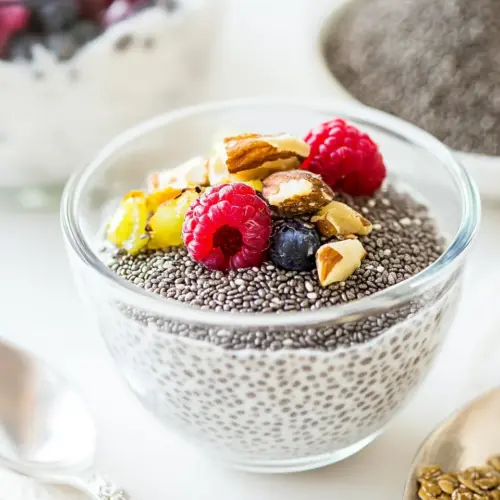
Chia Seed Pudding
Chia Seed Pudding is a creamy, easy to make breakfast or light dessert that highlights the gel like texture of chia seeds with your choice of milk and natural sweeteners. This simple, make ahead recipe is ideal for busy mornings and wholesome snacks, offering a satisfying, flavorful option you can customize. Try it for easy weeknight prep and enjoy a nutritious, spoonable treat.
Equipment
- Medium Bowl
- Mason jar
- Refrigerator
Ingredients
- 2 cups milk of choice (almond, oat, rice, soy or cow’s milk) Provide a creamy liquid base that hydrates chia seeds and creates the pudding texture; choose almond, oat, rice, soy, or cow’s milk based on dietary preference and flavor. Adjust creaminess by selecting whole or plant-based milks and chill before combining for a smoother result.
- 1/4 cup honey, maple syrup or agave Sweeten naturally and enhance flavor depth with honey, maple syrup, or agave; use 1/4 cup to achieve a balanced sweetness for the full batch. Stir thoroughly to dissolve and distribute sweetness evenly before adding chia to avoid clumping.
- 2 teaspoons vanilla extract Add warm fragrant notes and round out sweetness with vanilla extract; 2 teaspoons elevate the overall aroma and complement the milk and sweetener. Mix in early so the vanilla infuses the pudding as it sets.
- 1/2 cup chia seeds Absorb liquid and thicken the mixture into a gel-like pudding while providing fiber and omega-3s; 1/2 cup chia seeds is the primary thickening agent for the main portion. Whisk well after adding to prevent seeds from settling and allow adequate time to hydrate.
- 1/2 cup milk of choice Top up with additional milk to adjust consistency or create layered servings; 1/2 cup more milk lightens texture and can tailor servings for individual preference. Use chilled milk and stir into jars for a smooth final consistency.
- 1 tablespoon honey, maple syrup or agave Drizzle a small amount of sweetener to finish layers or individual servings; 1 tablespoon adds a subtle sweet balance without overpowering. Use the same or a contrasting sweetener to create flavor variation between layers.
- 1/2 teaspoon vanilla extract Enhance final flavor with a hint of vanilla for the layered portion; 1/2 teaspoon provides a delicate aromatic lift that ties flavors together. Add to the top layer or mix with the extra milk to ensure gentle infusion.
- 2 tablespoons chia seeds Garnish or create a small secondary layer with chia seeds to add texture and visual contrast; 2 tablespoons supply a pleasant sprinkle of seeds and extra nutritional boost. Scatter on top just before serving to maintain a slight crunch.
Instructions
- Place the chia seeds and milk in medium bowl and stir to combine. Alternatively you can add the ingredients to 1 large mason jar or divide evenly between 4 smaller mason jars with lids and shake to combine. For best results stir or shake covered jars after 5 minutes to prevent seeds from clumping.: The first sensory cue is the way the milk initially pools around the chia seeds before the seeds begin to swell, creating a slightly gritty but wet appearance. You will hear a soft clink of seeds if you shake a jar, and the mixture should look uniformly dispersed, with no dry pockets. This step matters because even hydration ensures an even, pudding like texture. If you skip thorough mixing, seeds clump and create gelatinous islands, which is the most common mistake. To avoid this, stir briskly for 30 seconds or shake vigorously in a jar until you see the liquid fully coat each seed. When using a bowl, scrape the sides to incorporate every last seed, and if anything looks dry, add a splash more milk and stir. The aroma will be faintly nutty from the chia seeds , and the surface should be smooth without floating clumps.
- Add the honey and vanilla and stir or shake again.: At this stage you will notice the aroma of vanilla extract blooming and the glossy sheen that honey or maple syrup gives the surface when mixed in. The sound is minimal, a quiet whisk or jar rattle, but the visual change is clear, as the liquid becomes more cohesive. This mixing is important for flavor distribution so every spoonful is balanced. A common mistake is adding sweetener only to the top and not fully incorporating it, which leads to pockets of syrup. Prevent that by stirring until the sweetener is fully dissolved into the liquid, tasting briefly to adjust sweetness. If it tastes flat, a little more sweetener will help; if it tastes too strong, a splash more milk will mellow it. Also, this is when you can notice sweetness level and correct it before the pudding sets.
- Refrigerate 2 hours, stirring or shaking the jar once halfway through.: During refrigeration the chia seeds undergo a dramatic textural transformation, swelling as they absorb the milk and forming that signature gel. You will see the mixture thicken within minutes, but full set happens over the two hour window. Stirring or shaking halfway helps redistribute any seeds that are clumping on the bottom or stuck to the sides, ensuring a uniform pudding. The sensory cue to look for is a uniform, spoonable consistency without watery pockets on top. A common pitfall is impatience, serving too early before the seeds fully hydrate, which results in a thin, underdeveloped texture. If you find some liquid remaining after two hours, a gentle stir usually finishes the job, and if needed, allow an extra 30 to 60 minutes. The pudding should have a cohesive body that holds its shape on a spoon, with a soft, slightly bouncy mouthfeel.
- Add toppings of choice and serve chilled or at room temperature.: When you top the pudding, the sensory excitement comes from visual contrast and aroma. Fresh fruit adds brightness and juiciness, while nuts or seeds bring a toasted crunch. If serving chilled, the pudding will feel cool and refreshingly dense; at room temperature it opens up more aromatic notes. This finishing step matters because toppings provide texture contrast and complementary flavors that make the dish sing. A common mistake is adding wet toppings that waterlog the surface, so reserve juicy fruit until just before serving or pat it dry. Also, try to layer toppings artfully so each spoonful delivers both pudding and garnish. Enjoy the gentle vanilla aroma and the balanced sweetness as you serve.
Notes
- Choose your milk wisely The type of milk you use determines creaminess and calorie content; almond gives a light, nutty profile while oat feels richer and creamier, making a tangible difference in mouthfeel.
- Sweetener timing Adding honey or maple syrup early ensures it disperses evenly, but you can also sweeten portions individually at serving time to control sugar for each eater.
- Batch prep strategy Make a larger batch in a pitcher for quick servings through the week, or portion into single jars for grab and go convenience that keeps flavors fresher per serving.
- Texture control If your pudding becomes too thick after standing, stir in a splash of milk to loosen it; if it is too thin, add a little extra chia seeds and allow more time to set.
- Blending option For a smoother pudding, pulse the mixture in a blender for ten to twenty seconds before chilling; this reduces the noticeable seed texture without removing the nutritional benefits.