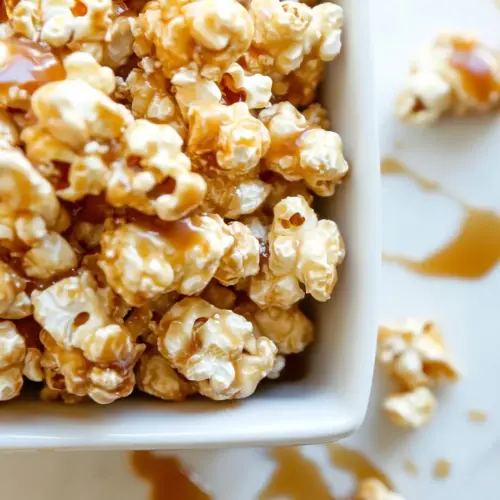
Chewy Caramel Corn
Chewy Caramel Corn is a buttery, crispy and tender snack that combines airy popped popcorn with a soft caramel coating made from brown sugar, corn syrup, and unsalted butter. This easy treat comes together quickly and makes a perfect party snack or movie night indulgence, delivering warm toffee notes and a satisfying chew. Make it for sharing and enjoy the homemade difference.
Equipment
- Medium Saucepan
- Candy thermometer
- Large Bowl
- Sheet Pan
Ingredients
- 1 cup brown sugar, firmly packed Provides deep molasses-like sweetness and moisture, helping create a rich caramel flavor and chewiness; dissolves into the syrup base when heated and contributes to the final color and texture of the candy. Measures should be packed firmly to ensure consistent sweetness and proper caramelization during cooking.
- 1/2 cup light corn syrup Adds invert sugar to prevent crystallization, helping produce a smooth, glossy caramel coating and a chewy texture; balances sweetness with a slightly neutral flavor that allows brown sugar notes to shine. Use light corn syrup for a milder taste and stable syrup consistency while cooking.
- 1/4 cup unsalted butter Enriches the caramel with creamy fat and butterfat flavor, contributing to a smooth mouthfeel and glossy finish; melts into the sugar mixture to help emulsify and bind the caramel to the popcorn. Use unsalted butter to control overall salt level and ensure a balanced sweetness.
- 1/4 teaspoon kosher salt Enhances overall flavor contrast by balancing sweetness and rounding flavors; helps intensify caramel notes and cut through richness when added sparingly. Use kosher salt for consistent granule size and even seasoning distribution throughout the popcorn.
- 4 quarts 16 cups popped popcorn (1/2 cup unpopped corn kernels) Provides the base vehicle for the caramel coating, offering crisp, airy texture and a large surface area for caramel adherence; popped popcorn yields the final snack volume and deliverable crunch. Start with the specified popped volume or the equivalent unpopped kernels to ensure proper proportions and coating coverage.
Instructions
- Melt the brown sugar, corn syrup, and butter in a medium saucepan. Stir to mix well. Cook until caramel reaches a temperature of 235°F for a chewy caramel, stirring often. Add the popcorn to a large bowl or spread it on a sheet pan topped with wax paper. Top with the hot caramel and toss to coat, mixing well.: The aroma will shift as the mixture heats, first smelling sweet and malty from the brown sugar , then rounded and buttery once the unsalted butter fully incorporates. You want a gentle, steady simmer so the ingredients meld smoothly into a homogenous caramel, stirring frequently to prevent localized scorching. If the heat is too high, the mixture can burn at the edges, creating bitter notes, so keep the flame moderate and use a saucepan with a thick bottom for even heat distribution. Listen for a soft whisper of bubbling rather than a fierce boil, and watch for the surface to become glossy which signals proper blending.
- For crunchier caramel corn, cook the caramel to 240-245°F.: As you stir, feel the viscosity change under the spoon, the mixture going from syrupy to syrup that stretches slightly. This tactile feedback indicates the sugars are dissolving and integrating with the fat. Use a wooden spoon or heatproof spatula to scrape the bottom and sides, preventing grit or tiny burned bits from forming. One common mistake is stirring too infrequently, which leads to uneven cooking and a risk of crystallization along the cooler sides. Maintain steady, even strokes and monitor the uniformity of the color and texture.
- Cook until caramel reaches a temperature of 235°F for a chewy caramel, stirring often: At this temperature the caramel will set with a soft, chewy texture once cooled, rather than turning rock hard. The smell changes to a deeper, toasted sugar scent and the color deepens to a warm amber. Stirring often ensures the temperature is uniform and reduces the chance of hot spots that burn. Avoid overshooting the target, because even a few degrees can transform chew into brittle. If you do not have a candy thermometer, look for a ribbon like fall from the spoon and a slightly thicker coat, but using a thermometer is the most reliable method.
- Add the popcorn to a large bowl or spread it on a sheet pan topped with wax paper: The visual contrast of white and yellow kernels makes it easy to see coverage as you work. Spreading the popcorn on wax paper prevents sticking and allows for easier tossing, and using a large bowl gives room to combine without crushing the popcorn . Be mindful of any unpopped kernels which are hard and can be a choking hazard; pick them out before coating to ensure a pleasant eating experience.
- Top with the hot caramel and toss to coat, mixing well: When you pour the caramel, you will hear a gentle sizzle and see the caramel sheen over the kernels, creating a glossy, warm coating. Use a spatula to fold the mixture, ensuring even distribution without crushing the popcorn . Work quickly and confidently because the caramel cools and becomes less pliable, and if you wait too long the mixture will clump. If clumping occurs, gently heat the coated popcorn in a low oven for a few minutes to loosen the coating, stirring carefully to avoid burning.
- For crunchier caramel corn, cook the caramel to 240 to 245°F: Raising the temperature slightly yields a firmer, crunchier finish as more moisture is driven off, and the scent will take on a more pronounced toasted sugar character. The visual cue is a deeper amber without smoke, and the caramel will feel less flexible once cooled. Watch the thermometer closely because the window between chewy and brittle is narrow, and overshooting will produce very hard shards instead of a pleasant crunch. If you prefer a chewier texture, stick to the lower temperature, and if you accidentally go too high, allow the batch to cool and then break it into smaller pieces for an intense toffee like bite.
Notes
- Adjust cook temperature: If you want a slightly firmer bite, take the caramel to 240 to 245°F, but monitor closely because higher temperatures can turn chew into brittle fast.
- Control salt level: Vary the kosher salt to taste, adding a touch more for contrast, but add gradually so the caramel does not become noticeably savory.
- Even coating technique: Pour the caramel in a slow stream while tossing the popcorn to improve coverage and avoid large sticky clumps.
- Use fresh popped popcorn: Freshly popped popcorn is drier and more receptive to the caramel coating; stale or oily popcorn will not crisp or coat as well.
- Reheat gently to fix clumps: If pieces stick together after cooling, spread them on a sheet pan and warm in a low oven for a few minutes, then separate with a spatula.
- Protect from humidity: Store cooled Chewy Caramel Corn in an airtight container at room temperature to preserve texture, humidity can soften the chewiness into sogginess.