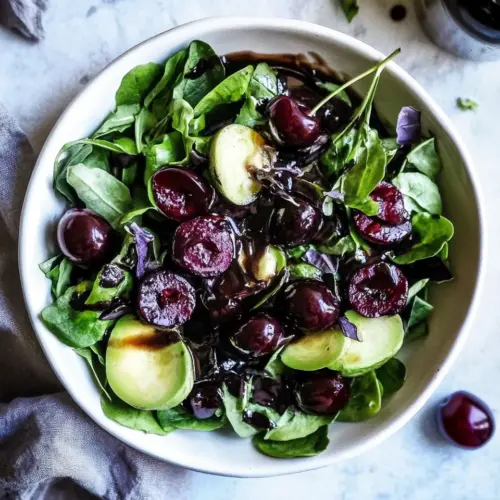
Cherry Balsamic Salad Dressing
Cherry Balsamic Salad Dressing is a bright, slightly sweet and tangy vinaigrette that brings fruity cherry notes to salads. Creamy emulsified olive oil meets deep balsamic vinegar and black cherry juice for a fresh, versatile dressing perfect for easy weeknight salads and entertaining alike. Make it for a quick flavor boost that elevates simple greens and seasonal fruit.
Equipment
- Small blender
Ingredients
- 5 tablespoons 100% black cherry juice Adds concentrated cherry flavor and natural sweetness to balance acidity; helps build the dressing base and deepen color. Provides fruit-forward notes that complement the balsamic for a harmonious vinaigrette. Can be reduced slightly when simmering to intensify flavor without adding liquid.
- 2 tablespoons balsamic vinegar Provides tangy acidity and rich, slightly sweet complexity to anchor the dressing. Helps emulsify with the oil and contrasts the cherry juice for a balanced flavor profile. Pairs well with the fruit and greens to create a classic balsamic vinaigrette character.
- 3 tablespoons sugar Sweetens the dressing and helps round out tart and acidic components for a softer taste. Aids in achieving a cohesive flavor and can slightly thicken the vinaigrette when dissolved. Balances bitterness from mustard and vinegar for a pleasing mouthfeel.
- 1/4 teaspoon onion powder Adds subtle savory depth without overpowering the delicate fruit flavors; imparts a mild onion-like aroma. Enhances background complexity and supports the vinaigrette’s overall seasoning. Works well with mustard to create a nuanced savory backbone.
- 1/2 teaspoon Dijon-style mustard Contributes sharp, tangy emulsion and helps bind oil and vinegar into a stable dressing. Provides a slight pungency that lifts the salad’s flavors and complements both fruit and cheese. Helps create a smoother, creamier texture in the vinaigrette.
- 3 tablespoons olive oil Delivers richness and mouth-coating texture while carrying fat-soluble flavors throughout the dressing. Helps form an emulsion with mustard and vinegar to create a cohesive vinaigrette. Adds a subtle fruity and peppery note depending on the oil quality.
- 6 cups mixed greens Serves as the salad base, offering a crisp, varied texture and mild flavors that showcase the dressing and toppings. Provides volume and a fresh contrast to sweet and tangy elements on the plate. Acts as a neutral canvas for the dressing’s fruit-forward profile.
- 1 large pear thinly sliced Provides juicy sweetness and pleasant texture contrast when thinly sliced; brings mild floral flavor to the salad. Adds visual appeal and pairs well with both cherries and balsamic notes. Offers bite-sized fruitiness that complements the greens and cheese.
- 2 teaspoons lemon juice Contributes bright acidity and citrus freshness to prevent the dressing from tasting flat; helps awaken other flavors. Stabilizes the vinaigrette’s balance by cutting through sweetness and oiliness. Freshly squeezed lemon juice enhances overall brightness.
- 3/4 cup red grapes Adds burstable sweetness and a juicy texture that contrasts with greens and nuts; contributes seasonal red color. Enhances the fruit-forward theme and pairs naturally with balsamic and cherry notes. Works as a refreshing complement to denser fruits like pear.
- 1/2 cup sliced almonds Provides crunchy texture and nutty flavor that adds contrast to soft fruits and greens; offers fat and protein for satiety. Toasting lightly will deepen flavor and aroma while complementing the dressing’s sweetness. Helps balance textures throughout the salad.
- 1/2 cup dried cherries Contributes concentrated cherry flavor and chewy texture for added sweetness and tartness contrast. Enhances the overall fruit profile and pairs well with balsamic for layered cherry notes. Adds chewiness that contrasts with fresh fruit and greens.
- 1/3 cup feta cheese Supplies salty creaminess and tang that contrasts with sweet fruits and balsamic acidity; crumbles easily over the salad. Adds savory richness and a pleasant crumbly texture that elevates the dressing’s complexity. Balances sweetness and enhances savory notes.
- sliced strawberries optional Provides optional bright color and fresh berry sweetness to boost fruit complexity and visual appeal. Adds tender texture and light acidity that pairs well with balsamic and cherries. Works as a seasonal garnish to enhance the salad’s flavor and presentation.
Instructions
- To make the dressing, combine all the ingredients except the olive oil in a small blender, pulse until combined. Drizzle in the olive oil and pulse again until just combined and emulsified. Alternatively, combine all the ingredients in a jar and shake until well combined. You may need to stir up the sugar as it tends to settle on the bottom.: The aroma of cherries and balsamic will be the first hint that you are on the right track, a bright, fruity scent with a tangy undertone. As the ingredients break down you should see the sugar dissolve and the mixture become smoother, losing its grainy feel. Why this matters, the initial blending releases flavors and ensures the dry seasonings like onion powder distribute evenly. A common mistake is skimping on blending, which leaves the dressing uneven and clumpy, so pulse long enough to homogenize, then pause and scrape down the sides if bits cling to the blender. Expect a slightly syrupy texture at this point.
- To toast the almonds, spread the sliced almonds in a single layer in a dry pan over medium-high heat. Stir every 15 seconds for about 1–2 minutes, or until they slightly darken and become fragrant—be careful not to let them burn. You can also use honey-roasted almonds in this salad.: When you add the olive oil , do it in a slow stream while pulsing to encourage emulsification, which creates a glossy, cohesive dressing that clings to leaves rather than pooling. You will notice the texture turn silkier and the color lighten as the oil suspends the other liquids. This technique matters because a well emulsified dressing coats the salad uniformly, giving consistent flavor in every bite. A common pitfall is pouring too quickly, which prevents proper emulsification and leaves the oil separated; if that happens, pulse a bit more while adding a touch more mustard to help bind.
- Thinly slice a large pear and toss with the lemon juice. Slice the red grapes in half. Add the sliced pears, sliced grapes, almonds, and dried cherries to the mixed greens. Toss with dressing and sprinkle feta cheese on top.: If you do not use a blender, place the measured ingredients except the olive oil into a jar, secure the lid, and shake vigorously while slowly adding oil, or add oil first and shake hard. The sound will be a brisk sloshing and you should see the mixture turn uniform and slightly thickened. This method works well for on the go, and it yields a pleasantly textured dressing. The why here is convenience and portability, though jar emulsions may be slightly less stable than blender emulsions, so shake again before dressing the salad. A frequent error is under shaking, which leaves pockets of sugar or vinegar; give it a solid minute of shaking.
- You may need to stir up the sugar as it tends to settle on the bottom: After resting, you might find some granulated sugar settled; use a spoon or whisk to reincorporate it until the graininess disappears. This step matters because undissolved sugar changes mouthfeel and gives uneven sweetness. The sensory cue is a smooth texture and consistent shine rather than gritty bits. To avoid this, dissolve the sugar during initial blending, or warm the cherry juice slightly beforehand if you struggle with dissolving; but do not overheat, as that can dull fresh fruit notes. The common mistake is ignoring the grit, which distracts from the otherwise silky dressing.
- To toast the almonds, spread the sliced almonds in a single layer in a dry pan over medium high heat: As the almonds heat, you will hear a delicate sizzling and soon they will release a warm, nutty perfume that fills the kitchen, signaling they are nearly done. Stir frequently, about every 15 seconds, so they color evenly and do not burn, aiming for a light golden brown. Toasting intensifies flavor and adds depth to the finished salad, which is why I never skip it. Watch them closely, because almonds can go from golden to bitter fast; if you see dark spots, remove them immediately.
- Stir every 15 seconds for about 1 to 2 minutes, or until they slightly darken and become fragrant: The visual cue is a uniform light brown color and the aroma becomes richer and more toasty. The sound will quieten as moisture leaves the nuts, and the pan will feel drier. This matters because properly toasted almonds contribute crunch and a roasted flavor that contrasts the sweet dressing and soft fruit. A common issue is overheating, which results in burnt, bitter nuts, so remove them from the pan and transfer to a cool plate to stop cooking.
- You can also use honey roasted almonds in this salad: If you choose honey roasted almonds, expect a sweeter and stickier crunch that pairs well with the cherry notes; the texture is slightly different, and the sweet glaze may mingle with the dressing to create an extra layer of flavor. Why this option exists, it caters to those who prefer a sweet salty contrast without extra steps. The downside is the sweet coating can dominate subtler flavors, so use sparingly. A common pitfall is overpowering the salad with too many glazed nuts, which makes the overall balance tilt overly sweet.
- Thinly slice a large pear and toss with the lemon juice: Tossing the pear slices in lemon juice prevents oxidation and keeps them bright, while adding a faint citrus lift that plays nicely against the balsamic. The pear should be tender but still hold shape, offering gentle sweetness and moistness. This matters because browned pear looks less appetizing and loses fresh flavor. Be careful to slice evenly so the pear pieces dress and soften at the same rate; uneven slices can lead to a mix of mushy and undercooked texture.
- Slice the red grapes in half: Halving the red grapes exposes their juicy interior and lets their bursts of sweetness distribute throughout the salad. You will notice small pools of grape juice at times, which add pleasant pops against the savory feta cheese . This step matters because whole grapes can dominate a bite, while halved grapes integrate more subtly. The common oversight is leaving grapes whole, which can create inconsistent bites and sudden sugar spikes.
- Add the sliced pears, sliced grapes, almonds, and dried cherries to the mixed greens: As you combine these elements with the mixed greens , you will see a colorful mosaic of textures and colors, the crunch meeting the soft fruit and chewy dried cherries. This mix creates contrast that the dressing ties together, enhancing both taste and mouthfeel. Toss gently to distribute without bruising delicate greens. Avoid over tossing, which wilts greens quickly.
- Toss with dressing and sprinkle feta cheese on top: Once dressed, the salad should glisten with the dressing and smell of cherries and balsamic. Finish by scattering feta cheese so each serving gets a bit of salty creaminess. This final step unifies flavors and provides an attractive presentation. A common mistake is adding cheese before tossing, which can cause it to clump; sprinkle at the end for the best texture and appearance.
Notes
- Use good quality juice — Choosing a true 100% black cherry juice gives a clean fruit flavor without added syrups or artificial notes that can muddy the dressing.
- Don’t skip emulsifying — Slowly adding the olive oil while pulsing creates a stable dressing that clings to leaves and prevents pooling at the bottom of the bowl.
- Toast nuts for aroma — Briefly toasting sliced almonds deepens their flavor and adds a warm, toasty note that contrasts the fruit elements beautifully.
- Protect sliced fruit — Toss sliced pear lightly with lemon juice to prevent browning and maintain bright color and fresh taste.
- Adjust sweetness gradually — Start with the listed sugar, then taste and add a touch more if you want a sweeter profile, keeping balance in mind so the dressing remains bright rather than syrupy.