Cheesy Popovers
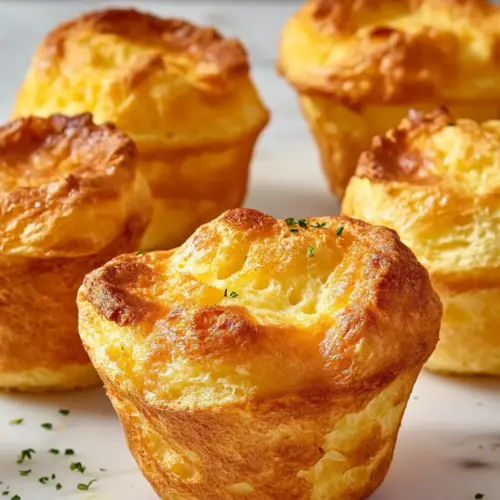
Cheesy Popovers are airy, crispy on the outside and soft inside, with a rich savory hit from parmesan cheese. This easy, quick recipe makes an impressive brunch addition or side for an easy weeknight dinner, using pantry staples for maximum flavor with minimal fuss. Make them to enjoy warm, golden popovers that vanish fast.
Equipment
- Oven
- Popover pan
- Mixing Bowl
- Whisk
Ingredients
- 3 large eggs, at room temperature Whisk vigorously to incorporate air and provide structure; eggs act as the primary leavening and binding agent, creating steam during baking that helps popovers rise. Use room temperature eggs to ensure a smooth, homogenous batter and better volume.
- 2 cups all purpose flour Sift or whisk to ensure even texture and prevent lumps; all purpose flour supplies the gluten framework that traps steam and supports the airy interior. Measure accurately to maintain the right batter consistency for optimal rise.
- 2 cups milk, lukewarm Warm gently to about lukewarm to promote emulsification and proper batter fluidity; milk hydrates the flour and contributes moisture, tenderness, and mild flavor. Using lukewarm milk helps the eggs blend smoothly and can aid in achieving a higher rise.
- 1/2 teaspoon kosher salt Season judiciously to enhance overall flavor balance; kosher salt sharpens and brings out the savory notes of cheese and butter without overwhelming the batter. Dissolve thoroughly into the wet ingredients to distribute seasoning evenly throughout the popovers.
- 1/2 cup parmesan cheese, grated Grate finely to melt uniformly and contribute savory depth; parmesan adds umami, nuttiness, and a crisp browned exterior when baked. Fold in toward the end to preserve some texture while ensuring even cheesy pockets throughout the popover.
- 2 tablespoons unsalted butter, melted and cooled slightly Melt and cool slightly to incorporate as fat without cooking the eggs; unsalted butter provides richness, flavor, and a tender crumb while also helping achieve a golden crust. Use unsalted butter to control overall saltiness so seasoning can be adjusted precisely.
Instructions
- Preheat oven to 425 F.: When the oven reaches 425 F , you should feel a steady surge of heat and smell the faint toasty scent that indicates the interior air is primed for dramatic lift. A well preheated oven is crucial because the initial blast of heat creates the steam that inflates the batter, producing tall, airy popovers. If the oven is not fully hot they may not rise properly and can turn out dense. One common mistake to avoid is placing the pan in before the oven has stabilized at 425 F , which leads to uneven puff and soggy edges. Check that your oven rack is positioned so the popovers have room to expand upward without hitting the rack above, and resist opening the door as it preheats, so the steady temperature is maintained.
- Place all of the ingredients in a bowl and whisk to combine. Allow mixture to come to room temperature while oven preheats. This helps with creating a light and fluffy popover.: As you whisk the mixture, notice the batter transition from a streaky mix to a glossy, slightly thin consistency that coats the back of a spoon, which signals it is well combined. The sound is soft and rhythmic, and the aroma becomes faintly eggy with a hint of dairy and butter, promising richness. Achieving a smooth batter eliminates lumps that can weigh down the interior and impede rising, and whisking thoroughly helps incorporate air that supports the structure. A typical pitfall at this stage is overmixing to the point of developing too much gluten, which can make popovers chewy; whisk just until smooth and homogenous. Letting the batter rest while the oven preheats allows any small bubbles to settle and the temperature to even out, which encourages a more uniform rise.
- Grease each popover tin with cooking spray or butter and fill 3/4 of the way up with batter.: When you grease the wells generously with unsalted butter or cooking spray, you will hear a quiet slicking sound and notice a shiny layer that helps the batter release as it climbs. Filling the wells about three quarters full gives the batter room to expand, and watching the batter settle into a smooth dome indicates it is ready to bake. This step matters because insufficient greasing or overfilling can lead to sticking or spillover, and a stuck popover will tear when you try to remove it. A frequent error is filling too high, which can cause the top to bake too fast and crack in odd ways; keep to the three quarter guideline for consistent results.
- Bake for 35 minutes and do not open the oven door while cooking.: During baking you will notice the popovers rise dramatically, their edges turning a deep golden brown with a satisfying crispness that contrasts with a tender interior. The oven fills with a warm, toasty cheese aroma, and you might hear a faint crackle as steam escapes. That uninterrupted baking time is the reason popovers puff so well; opening the door lets heat and steam escape and often causes them to collapse. Avoid the temptation to peek, because even a brief door opening can deflate them. If you see one popover browning unevenly, don't open the door to fix it mid bake; instead, allow the full 35 minutes and evaluate once they are out and resting briefly.
- Serve immediately.: As soon as the tray comes out, the popovers will sing with warmth and release a gentle steam when cracked open, revealing a soft, custardy center contrasted by a crisp shell. Serve them hot so guests can experience the full sensory spectrum, from the crackling edge to the creamy interior; delayed serving leads to moisture migration and softened exteriors. If you must hold them for a short time, keep them loosely tented in a warm but not humid spot, but know that the best texture is right out of the oven. A common mistake is letting them sit in a covered container, which traps steam and ruins the crispness, so resist covering them tightly.
Notes
- Use a popover pan: While a muffin tin can work, a dedicated popover pan yields taller, more uniform rises and crisper edges, because the wells concentrate heat along the sides as they expand.
- Rest the batter briefly: Allowing the batter to come to room temperature while the oven preheats encourages better steam production and a lighter crumb, so take those extra minutes for a superior result.
- Grease generously: Coat every part of the well and the rim thoroughly with melted unsalted butter or nonstick spray to ensure the popovers release cleanly when risen above the pan.
- Give them space to rise: Make sure popover wells are not crowded by oven racks above; reposition racks so there is ample vertical room, preventing tops from hitting the rack as they expand.
- Do not open the oven door: Keep the oven sealed for the full 35 minute bake to avoid collapsing the airy structure; temperature stability is the key to a dramatic puff.