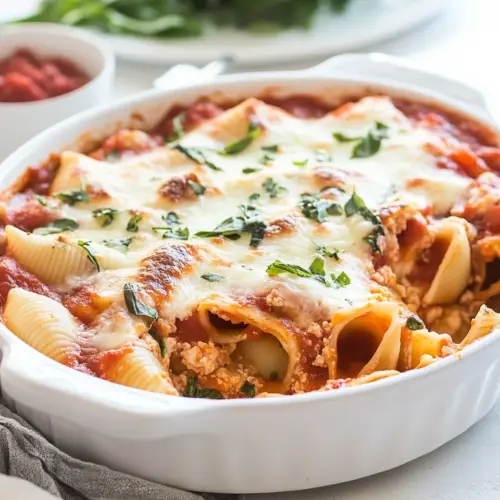
Cheesy Lasagna Pasta Stuffed Shells
Cheesy Lasagna Pasta Stuffed Shells brings creamy ricotta cheese, gooey mozzarella cheese, and savory parmesan cheese together in a cozy, oven baked dish. This easy weeknight dinner transforms jarred pasta sauce and jumbo shells into a comforting, crowd pleasing meal with a golden cheesy top, perfect for family dinners and make ahead nights.
Equipment
- Large Pot
- Colander
- Large slotted spoon
- Medium Bowl
- 3 quart rectangular baking dish
Ingredients
- 12 -15 dried jumbo shell macaroni Boil until al dente and use as the edible vessel for holding the ricotta-cheese filling and sauce; dried jumbo shells provide structure and a satisfying pasta bite when baked.
- 16 oz ricotta cheese Provide a creamy, slightly tangy base for the stuffing that binds with egg and cheeses; ricotta adds moisture, richness, and a traditional lasagna-like texture inside each shell.
- 2 tsp garlic, minced Infuse the filling with savory garlic flavor that complements cheeses and tomato sauce; minced garlic disperses easily through the ricotta for consistent aromatic depth.
- 1 tsp Italian Seasoning Season the filling with a balanced Mediterranean herb blend that adds oregano, basil, and thyme notes; Italian seasoning deepens the overall savory profile without fresh herbs.
- 1/2 tsp salt Enhance and control the overall flavor, balancing the creaminess and acidity of other components; salt also helps draw out moisture and emphasize cheese flavors.
- 1/4 tsp black pepper Provide a subtle spicy, earthy contrast that sharpens the filling and complements the tomato sauce; freshly ground black pepper adds aromatic heat without overpowering.
- 2 cups mozzarella cheese, divided Melt into a gooey, stringy topping and interior pockets when divided; mozzarella contributes stretch, mild milky flavor, and a visually appealing golden finish when baked.
- 1/2 cup parmesan cheese Add a sharp, nutty, and umami-packed finishing flavor that brightens the filling and gratin top; grated parmesan also helps thicken and bind the cheese mixture slightly.
- 1 egg Bind the ricotta and cheeses together for a cohesive filling while adding richness; beaten egg improves structure so the filling sets when baked.
- 24 oz jar favorite tomato pasta sauce Provide a savory, acidic sauce component that dresses the shells and ties flavors together; favorite tomato pasta sauce brings herbs, tomato sweetness, and comfort-food familiarity.
- fresh basil leaves, optional Garnish with bright herbal freshness and a pop of color to finish the dish; fresh basil leaves add aromatic lift and a pleasant contrast to the rich cheeses and tomato sauce.
Instructions
- Preheat oven to 350 degrees F. Cook jumbo shells according to package directions. Using a large slotted spoon, transfer shells to a colander. Rinse with cold water; drain well and set aside.: As the oven comes up to temperature, you will notice the faint warm air and hum from the heating cycles, which signals readiness. This preheat ensures even baking so the filling sets while the top browns. A common oversight is not preheating, which can lengthen baking time and affect texture.
- Meanwhile in a medium bowl whisk together the ricotta cheese, garlic, Italian Seasoning, salt, pepper, 1 cup mozzarella cheese, parmesan cheese and egg.: The water will roar as it returns to a boil, and the shells should be cooked until just tender with a slight bite, or al dente. Proper timing here prevents mushiness after baking. Overcooking is a frequent mistake, so test a shell a minute or two before the lower bound of the package time.
- Spread about 1/2 cup of the pasta sauce in the bottom of a 3-quart rectangular baking dish. Spoon cheese mixture into drained jumbo shells; place stuffed shells in prepared baking dish. Top with remaining pasta sauce.: The clinking of shells in the spoon and the quick shake as they drain is satisfying. Rinsing with cold water stops the cooking process and cools them so you can handle them when stuffing. If you skip rinsing, shells can continue to soften and break.
- Bake, covered, for 30 minutes. Uncover and sprinkle with remaining mozzarella cheese. Bake, uncovered, about 15 minutes more or until heated through. Let stand 10 minutes before serving. Top with fresh basil. Enjoy!: The cold rinse tightens the pasta surface, making shells less likely to tear as you fill them. Drain thoroughly so excess water does not thin the filling or make the dish watery. A common issue is leaving water pooled at the bottom of the dish, which dilutes flavor.
- Meanwhile in a medium bowl whisk together the ricotta cheese, garlic, Italian Seasoning, salt, pepper, 1 cup mozzarella cheese, parmesan cheese and egg: As you combine these, the texture transforms from separate ingredients into a cohesive, creamy mixture with flecks of herbs and cheese. Whisking incorporates air, creating a lighter filling. If the mixture seems too loose, chilling briefly helps it firm up; under-seasoning at this stage is easy, so taste the bowl mixture and adjust carefully.
- Spread about 1/2 cup of the pasta sauce in the bottom of a 3 quart rectangular baking dish: The sauce creates a flavorful bed that keeps shells from sticking and infuses moisture from below. Smoothing it with the back of a spoon helps the shells sit neatly. Using too much sauce under the shells can cause sliding during baking, so aim for an even thin layer.
- Spoon cheese mixture into drained jumbo shells: When you spoon filling into a shell, you will appreciate the creamy weight and feel the perfect balance between cheese and seasoning. Filling them generously yields a substantial bite, but overstuffing risks tearing the shell. Use a small spoon or piping bag for neater results and watch for thin spots that might split.
- Place stuffed shells in prepared baking dish: Arrange them seam side up so the filling stays contained and the top browns evenly. The shells should sit snug but not crowded, allowing heat to circulate. Overcrowding can prevent even browning and lead to uneven heating.
- Top with remaining pasta sauce: Spoon the rest of the sauce gently over the shells, ensuring each one gets some coverage so the top does not dry out. The sauce should nestle into the crevices, promising pockets of tomato flavor in every bite. Too thin a layer can expose cheese to direct heat and cause excessive browning, so cover adequately.
- Bake, covered, for 30 minutes: Covered baking traps steam that helps the filling heat through without drying, and you will hear a soft bubbling start around the edges as flavors meld. This steam also helps the shells finish cooking gently. A typical misstep is baking uncovered at this stage, which can dry the filling.
- Uncover and sprinkle with remaining mozzarella cheese: Once uncovered, the surface changes from matte to glossy, and adding mozzarella cheese now gives you that desirable, melty top. The cheese will sizzle slightly as it makes contact with the hot sauce, producing a golden, stretchy finish when baked. Be mindful not to add too much, which can overwhelm the delicate balance of flavors.
- Bake, uncovered, about 15 minutes more or until heated through: During this time the cheese will bubble and develop golden spots, releasing a warm, toasty aroma. Visual cues like even browning and steady bubbling indicate readiness. Leaving it too long can overbrown the cheese or dry the filling, so watch the oven closely in the final minutes.
- Let stand 10 minutes before serving: The resting period lets the filling set so slices hold together, and the steam disperses so flavors concentrate. You will notice the bubbling subside and the aroma mellow as it rests. Skipping the rest can lead to sloppy portions that fall apart when plated.
- Top with fresh basil: Fresh basil leaves add a fragrant, herbaceous finish and a bright color contrast to the golden top. Tear or chiffonade the leaves just before serving to preserve their aroma. Adding basil too early in the bake can blacken the leaves and reduce their fresh flavor.
Notes
- Mix cheeses for complexity Try combining different types of mozzarella cheese or using a bit more parmesan cheese for a sharper profile, which deepens the savory notes and creates a more interesting melt.
- Adjust seasoning to taste If you like more herbal lift, increase the Italian Seasoning slightly and add an extra pinch of garlic, but taste as you go to avoid overpowering the delicate creaminess of the ricotta cheese.
- Use a smoother sauce Choose a plain marinara for a bright, simple tomato flavor, or a chunky sauce if you want textured bites between the cheese pockets; both change mouthfeel significantly.
- Assemble ahead You can build the dish the night before, cover tightly, and refrigerate which allows flavors to meld and saves time on the day you plan to bake.
- Fresh herbs at the end Add fresh basil leaves right before serving to preserve their fragrance and color, which lifts the finished plate and gives a fresh contrast to the warm cheeses.