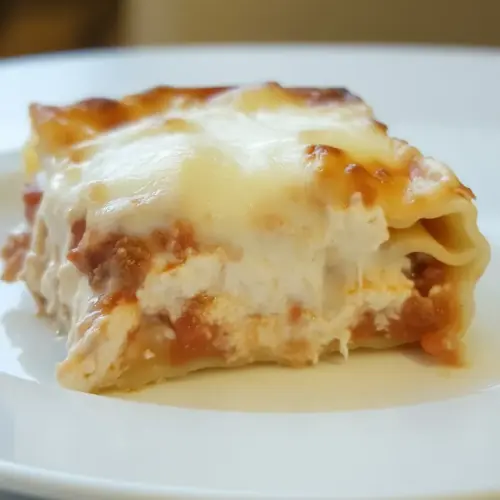
Cheesy Lasagna Bolognese
Cheesy Lasagna Bolognese delivers creamy béchamel, melty cheeses, and a rich meat sauce in every bite. This satisfying layered pasta is perfect as an easy weeknight dinner or a make ahead crowd pleaser, offering a comforting balance of savory, creamy, and golden baked textures. Try it for a family meal that reheats beautifully and always gets requests for seconds.
Equipment
- Saucepan
- Whisk
- 9 x 13-inch baking pan
- Oven
- Aluminum Foil
Ingredients
- 4 tablespoons unsalted butter Melt and foam as a cooking fat to create a smooth roux and enrich the béchamel; its milk solids add a silky mouthfeel and help carry flavors through the sauce.
- 1/4 cup (31.25 g) all-purpose flour Add and whisk into melted butter to form a blonde roux that thickens the milk; its starch provides structure and prevents a grainy sauce.
- 2 1/2 cups (610 ml) milk Warm and stream slowly into the roux to build a creamy béchamel base for the lasagna; its liquid body determines sauce consistency and tenderness.
- 1/4 teaspoon (0.25 teaspoon) ground nutmeg Season sparingly and grate fresh into the béchamel to introduce warm aromatic notes; its subtle sweetness balances the dairy richness without overpowering.
- 1 cup (132 g) shredded provolone cheese Melt and fold into the hot béchamel to contribute a sharp, melty depth and slightly tangy character that complements the meat sauce.
- 1/2 cup (50 g) grated Parmesan cheese Grate and sprinkle into the cheese layers to deliver nutty, savory umami and help create a golden, slightly crisp top during baking.
- Salt and pepper, to taste Adjust after assembling and tasting to balance the sauce and cheeses; seasoning refines the final flavor profile and enhances all other components.
- 5 cups (750 g) your favorite meat sauce Heat and layer as the hearty meat component that provides savory depth, tomatoes, herbs, and texture; its robust flavor pairs with the creamy cheeses.
- 1 pound (453.59 g) lasagna noodles, fresh or store-bought Boil or layer fresh as the pasta sheets that provide structure and absorb sauce; their texture and starch help bind the casserole together.
- 1 cup (112 g) shredded mozzarella cheese, divided Scatter during assembly and on top to create stretchy, gooey melting pockets and a classic lasagna pull; reserve some for browning the surface.
- 1 cup (100 g) grated Parmesan cheese, divided Sprinkle between layers and atop the dish to add sharp, salty complexity and help form a gratin-like crust when baked.
Instructions
- Make the Béchamel Sauce: In a medium saucepan placed over medium heat, melt the butter. Add the flour and cook, whisking constantly, until the flour turns light brown and emits a nutty aroma. Slowly add the milk, whisking constantly. Once all of the milk has been incorporated, whisk in the nutmeg, and allow the mixture to come to a simmer. Once simmering, cook for 2 minutes, whisking constantly. Remove from the heat, and add the shredded provolone a handful at a time, stirring until it melts. Stir in the Parmesan cheese and season with salt and pepper, then set aside and let cool to warm room temperature.: The kitchen should smell warm and slightly sweet as the butter melts and toasts with the flour , releasing a faint nutty aroma that tells you the roux is ready. As you slowly whisk in the milk you will hear a soft, steady hiss as the mixture smooths, and the sauce will thicken, coating the whisk, which is the visual cue that you have the right consistency. The tiny flecks of nutmeg will lift the dairy, giving a background warmth that rounds out the creaminess. When you add the shredded provolone a handful at a time the sauce will become silkier and glossy, and the aroma will deepen to a rich, cheesy perfume. Stirring in the Parmesan off the heat helps avoid graininess while adding savory complexity. If your sauce becomes lumpy, a quick strain or an immersion blender can rescue it. The reason this step matters is that a smooth, properly seasoned béchamel balances the acidic and meaty notes of the meat sauce , preventing sections of the lasagna from tasting flat. A common mistake is rushing milk addition, which creates lumps and an uneven texture that is hard to smooth later.
- Meanwhile, preheat oven to 400 degrees F.: You will notice the oven warming and then giving off a dry, radiant heat that will brown the cheese later on, so preheating ensures even baking throughout the pan. Allow the oven to reach temperature fully before placing the lasagna inside, because inserting the dish into a cold oven can extend baking time and affect the final crust. The hot oven promotes a golden top while allowing the center to cook gently. A pitfall here is opening the oven frequently which lowers the internal temperature and can prevent proper browning.
- Assemble the Lasagna: Spread 1 cup of the meat sauce on the bottom of a 9 x 13-inch pan. Place noodles in a single layer on top of the sauce (if you are using store-bought lasagna noodles, this should be 3 noodles; if you made fresh pasta, you'll probably use 2 sheets and can cut to fit as needed). Spread 1 1/4 cups of the meat sauce over the noodles. Drizzle one-quarter of the béchamel sauce over the meat sauce. Sprinkle 1/4 cup Parmesan cheese and 1/4 cup shredded mozzarella cheese over the béchamel sauce.: When you spread 1 cup of the meat sauce across the bottom of the pan, the sauce should look glossy and slightly thick, which creates a protective barrier preventing the bottom noodles from sticking. Laying the lasagna noodles in a single layer, whether three store bought or two fresh sheets, reveals a contrast between the satin sauce and the pasta surface. Spoon 1 1/4 cups of meat sauce over the noodles so the layer is even, and then drizzle one quarter of the béchamel , watching it coat the sauce in a pale, creamy veil. The sprinkling of 1/4 cup Parmesan and 1/4 cup shredded mozzarella will glint on the surface, promising a browned finish. This even layering fosters uniform cooking and clean slices later. Avoid piling too much sauce in one spot which can cause sogginess in the center.
- Place another layer of noodles on top of the cheese. Top with another 1 1/4 cups of meat sauce, a quarter of the béchamel sauce, 1/4 cup Parmesan cheese and 1/4 cup shredded mozzarella.: Adding another layer of noodles and repeating with 1 1/4 cups of meat sauce , a quarter of the béchamel , then cheeses, creates the internal structure that gives lasagna its signature density. At this stage the contrast of colors is apparent, with red peeking through creamy white, and the cheeses beginning to nestle into the sauce. The tactile feeling when pressing the layer gently should be cohesive yet not squashed. If the assembly feels uneven, adjust the sauce distribution now. The mistake to watch for is stacking with wet spoons which can dilute the layers unintentionally.
- Place another layer of noodles on top of the cheese. Top with another 1 1/4 cups of meat sauce, half of the remaining béchamel sauce, 1/4 cup Parmesan cheese and 1/4 cup shredded mozzarella.: As you place the next noodles and add another 1 1/4 cups of meat sauce , then half of the remaining béchamel , and cheeses, you will notice the pan starting to look like a unified whole rather than separate toppings. The layers will press into one another slightly, which is desirable because it allows flavors to meld during baking. The béchamel here acts as an emulsifier, keeping the cheeses integrated and preventing excessive oozing. One frequent misstep is uneven cheese distribution, which leads to dry pockets or overly greasy spots.
- Place the final layer of noodles on top of the cheese. Pour the remaining béchamel sauce over the noodles and sprinkle with the remaining 1/4 cup Parmesan cheese and 1/4 cup shredded mozzarella.: With the final noodle sheet in place, pour the remaining béchamel so it blankets the surface, then sprinkle the last 1/4 cup of Parmesan and 1/4 cup shredded mozzarella . The completed top should glisten faintly and look ready to brown. Covering with foil that has been sprayed on the interior prevents sticking and helps retain moisture during the initial long bake, while the final uncovered minutes encourage a golden, slightly blistered top. Over covering without venting can cause excessive steaming and prevent browning.
- Cover the lasagna with a piece of aluminum foil that has been sprayed with non-stick cooking spray. Bake, covered, for 1 hour. Remove the foil and bake for an additional 15 to 20 minutes, or until the top is golden brown. Remove from the oven and let stand for 15 minutes before serving. Leftovers can be stored in the refrigerator for up to 3 days.: Placing the dish in the preheated oven produces low, steady whispers of bubbling around the edges at first, which is normal and welcome. Covered baking allows the interior to reach temperature gently, melting the cheeses and melding the layers without burning the top. After an hour you should see steam condensing on the foil and occasional small bubbles near the edges. If your lasagna appears jammy in the center after this period, it likely needs more time uncovered to set. Opening the oven briefly to check is fine, but avoid lingering with the door open.
- Note: This lasagna can be assembled, covered and refrigerated for up to 3 days before baking. It can also be frozen for up to 1 month. If the lasagna was cold, bake it covered for an additional 15 to 30 minutes, checking to ensure it is heated the whole way through.: Removing the foil will expose the surface to direct heat and encourage browning; within 15 to 20 minutes the top should turn a warm, golden brown with tiny toasted spots and a pleasing bubbling sound. The aroma will intensify, shifting from creamy to toasty and inviting. This crisp top contrasts beautifully with the soft interior. If the edges brown too quickly, tent with foil lightly but remove for the last few minutes to regain color. A common error is leaving it covered the entire time, which yields a pale, uninviting top.
- Rest for 15 minutes before serving: Allowing the lasagna to sit undisturbed lets the layers settle and the internal steam redistribute, so the slices hold their shape. You will notice the bubbling slow and the surface become slightly less jiggly, a sign the interior is set. This pause improves both presentation and eating texture, making slicing neater and the mouthfeel more cohesive. Cutting too soon is the main mistake here, leading to sloppy slices that fall apart on the plate.
- Store leftovers properly: Cool the remaining portions to room temperature before sealing and refrigerating; stored well, they will keep up to three days. The chilled lasagna firms up, which makes reheating easier and often improves sliceability. If freezing, wrap tightly and label with the date, and remember to allow extra bake time from cold to ensure it heats through. Reheating from frozen without adjusting time is a frequent pitfall that results in cold centers.
- Make ahead and freeze guidance: You can assemble the lasagna and refrigerate it covered for up to three days or freeze for up to one month, which makes this a great project for busy weeks. If baking from cold refrigeration, add 15 to 30 minutes to the covered bake time to ensure it heats through. When baking from frozen, allow additional time and check the center temperature before removing. A mistake is assuming frozen assembly bakes in the same time as a refrigerated one, which risks under cooking the interior.
Notes
- Use a thick meat sauce, reserve a robust, not watery meat sauce so the lasagna layers remain distinct and the center does not become soggy. A sauce reduced to a spoonable consistency is ideal.
- Warm the milk slightly, heating the milk just until it is lukewarm makes incorporation into the roux smoother and reduces the chance of lumps forming in the béchamel.
- Shred cheeses fresh, freshly shredded provolone and mozzarella melt more evenly and give a better final texture than pre shredded options that include anti caking agents.
- Prevent sticking under foil, spritz the foil lightly with non stick spray before covering the lasagna to avoid cheese sticking to the foil when baking covered.
- Slice after resting, wait the recommended resting time before cutting into the lasagna to ensure neat portions and a pleasing mouthfeel.