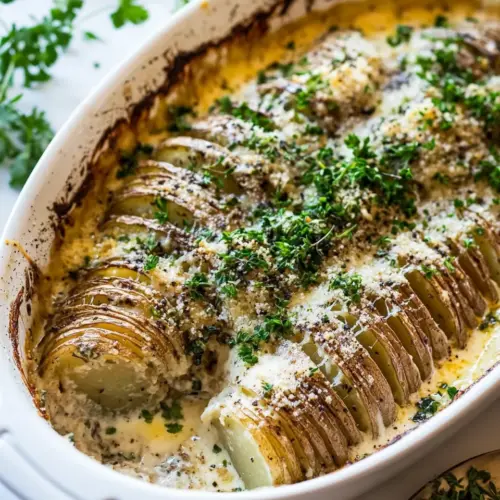
Cheesy Hasselback Potato Au Gratin
Cheesy Hasselback Potato Au Gratin is a creamy, crispy side that combines tender sliced potatoes with melted manchego and gruyere for an easy weeknight dinner or elegant holiday dish. Rich cream and aromatic thyme produce a silky sauce while the hasselback slicing creates irresistible golden edges. Make it to impress without stress, a comforting recipe that delivers texture and flavor in every bite.
Equipment
- 9 x 13 inch baking dish
- Box grater
- Mixing Bowl
- Knife
Ingredients
- 3 pounds baby potatoes, I like using a medium size Rinse and halve or slice thinly to allow even cooking and maximum surface area for crisping; baby potatoes provide a tender, creamy interior and hold their shape when hasselbacked. Season generously while prepping so each cut absorbs flavors from the cream and cheeses during baking.
- 2 tablespoons extra virgin olive oil Coat the potatoes lightly before roasting to promote browning and help flavored liquids cling; extra virgin olive oil adds a fruity, aromatic base and aids in crisping the outer edges. Use sparingly to avoid greasiness while enhancing overall mouthfeel.
- 2 cups heavy cream or whole milk Pour over or gently ladle between potato slices to create a rich custardy texture; heavy cream or whole milk supplies the fat and liquid needed for an au gratin, producing a silky, decadent sauce. Choose heavy cream for a thicker, more luxurious finish or whole milk for a lighter result.
- 2 cloves garlic, minced or grated Mince finely and distribute between slices or whisk into the cream to infuse a savory, aromatic backbone; garlic lends pungency and depth that balances the richness of the dairy and cheeses. Adjust amount to taste to avoid overpowering the delicate potato flavor.
- 1/2 cup grated manchego cheese Sprinkle grated throughout and over the potatoes to contribute nutty, slightly sharp flavor and help form a golden crust; manchego brings a firm, tangy note that complements milder cheeses. Use freshly grated for better melting and texture in the gratin.
- 1/2 cup grated gruyere cheese Layer or mix into the creamy sauce to add a buttery, slightly sweet complexity and excellent melting quality; gruyere promotes gooeyness and a deeply savory finish when browned. Combine with manchego for a balanced cheesy profile and a nicely browned top.
- 1 tablespoon chopped fresh thyme Chop and scatter over the dish or tuck sprigs between slices to release bright, herbal aroma; fresh thyme adds subtle earthiness and a citrusy lift that cuts through the richness. Add near the end of cooking to preserve its fragrance and color.
- 2 tablespoons butter, thinly sliced Dot thin slices across the potatoes to create pockets of rich, browned butter flavor and assist with browning the surface; butter enhances mouthfeel and helps achieve a lusciously golden finish. Use thin slices so butter melts evenly and bastes the potatoes.
- kosher salt and pepper Season generously to taste before and after baking to enhance and balance flavors; kosher salt and pepper highlight the natural potato sweetness and intensify the cheeses' savory notes. Apply sparingly at first, then adjust at the end for best seasoning control.
Instructions
- Preheat the oven to 425 degrees F. Carefully slice the potatoes into thin slices, leaving a 1/8 inch at the bottom, be careful not to slice all the way through the potato. Place in a 9 x 13 inch baking dish and gently toss with olive oil, salt, and pepper. Transfer to the oven and roast for 20-25 minutes. Meanwhile, in a medium bowl, combine the cream, garlic, cheese, thyme, and a pinch each of salt and pepper. Remove the potatoes from the oven and pour the cream over them, arrange the potatoes in a mostly even layer. Place the slices of butter around the potatoes. Return to the oven and roast for another 20-25 minutes, until the sauce thickens and the potatoes are tender. Season with flaky salt just before serving. Enjoy!: When you open the oven you should feel a rush of dry, intense heat that sets the stage for rapid browning. High initial heat encourages the outer ridges of the sliced potatoes to crisp quickly, creating contrast with the tender insides later on. One common mistake is putting the dish into a lukewarm oven, which can lead to limp edges, so always allow the oven to fully reach temperature before roasting. You will smell faint toasty notes as the air warms, and that is your cue to move forward.
- Carefully slice the potatoes into thin slices, leaving a 1/8 inch at the bottom, be careful not to slice all the way through the potato.: As you slice, you will hear a soft, repetitive whisper of the knife against the cutting board, and the slices should fan neatly without separating. Properly leaving a thin uncut base keeps each potato intact while allowing the sauce and butter to penetrate between layers. A common pitfall is slicing too deeply, which breaks the potato apart and loses the hasselback effect; using chopsticks or the handle of a wooden spoon on either side can help guard your cut depth. The visual cue is a tidy fan that still reads as a whole tuber.
- Place in a 9 x 13 inch baking dish and gently toss with olive oil, salt, and pepper.: When you move the sliced potatoes into the dish they should glisten slightly as the olive oil coats each ridge, which helps promote even browning. Tossing by hand ensures seasoning gets into the crevices, so feel the texture and adjust until each potato has a light sheen. Avoid overdoing the oil, which can pool and make the slices soggy; aim for a thin, even coat. The subtle metallic scent of the olive oil mixed with the warm starch of the potatoes is a pleasant indicator you are on track.
- Transfer to the oven and roast for 20 to 25 minutes.: During this initial roast the edges will begin to dry and crisp, and you may hear faint popping or sizzling as moisture evaporates. The surface should turn a light golden in places, signaling that the texture contrast is developing. Resist the urge to open the oven constantly, as that drops temperature and prolongs cooking; a quick peek is fine but avoid lingering. If you notice the edges are not browning at all, increase the rack position slightly closer to the heat for the last few minutes.
- Meanwhile, in a medium bowl, combine the cream, garlic, cheese, thyme, and a pinch each of salt and pepper.: As you whisk the warm dairy with the grated cheese you will feel the mixture thicken and smell the bright, savory aroma of garlic and thyme . This mixture is the flavor backbone, and allowing the ingredients to marry briefly helps the sauce become cohesive when poured over the roasted potatoes . A common error is underseasoning the sauce; do taste a tiny bit and adjust carefully because the cheeses add saltiness too. The visual cue is a smooth, slightly viscous sauce holding the grated cheese suspended.
- Remove the potatoes from the oven and pour the cream over them, arrange the potatoes in a mostly even layer.: As you pour, steam will rise and the oven aroma intensifies into a rich, dairy scented cloud. The cream should snake into the crevices, coating each slice without drowning the dish, and the cheese will begin to warm and soften on contact. Arrange the tubers so heat circulates evenly; crowding can produce uneven cooking. One mistake to avoid is pouring too much liquid, which slows browning and yields a soupier result; the sauce should be generous but not overwhelming.
- Place the slices of butter around the potatoes.: Nestling thin pats of butter among the slices will produce localized pockets of sizzling richness that baste the edges as they melt. As the butter liquefies you will hear soft crackles and notice a glossy sheen forming on the tops of the potatoes . This technique encourages a golden finish and deeper flavor, but too much butter in one spot can cause uneven browning, so distribute it evenly. The sight of little golden pools forming is a satisfying confirmation the dish is progressing well.
- Return to the oven and roast for another 20 to 25 minutes, until the sauce thickens and the potatoes are tender.: During this second roast the surface will bubble and the cheese will brown in spots, releasing a nutty scent as it caramelizes. Expect occasional gentle sizzling as the liquid reduces, and the ridges will take on a deep golden color. To test doneness use a paring knife between slices to feel for tender flesh; it should slip in easily. A common mistake is pulling the gratin too early, resulting in a watery sauce; ensure the sauce has visibly thickened and the potatoes are soft all the way through.
- Season with flaky salt just before serving.: The final sprinkle of flaky salt provides bright, crunchy highlights against the creamy backdrop, emphasizing both savory and sweet notes from the roasted potatoes and melted cheese . Do this at the end so the crystals remain texturally distinct. Avoid over salting early in the process because the cheeses contribute sodium; final seasoning lets you fine tune. The last visual cue is a light glisten where the salt has landed, and a quick taste will confirm balance.
- Enjoy!: As you serve, you should notice an inviting steam and a waft of roasted dairy and herbs. The first bite will reveal crisp outer slices and a creamy, cheese kissed interior, a combination that brings people together. A common hosting mistake is letting the dish sit too long after baking, which can chill and firm the sauce; serve while it is still warm for the best texture and flavor.
Notes
- Guard your slices Use a pair of chopsticks or the handles of wooden spoons on either side of each potato while slicing to prevent cutting through the base, this helps maintain the classic hasselback appearance and keeps each tuber intact.
- Choose consistent sized potatoes Picking medium baby potatoes of similar size promotes even cooking so some pieces are not underdone while others over brown, which simplifies timing and yields uniform texture.
- Prefer fresh grated cheese Freshly grating the manchego and gruyere ensures silkier melting and cleaner flavor, avoid pre shredded blends that may contain anti caking agents and can change the sauce consistency.
- Mind your salt Since the cheeses lend saltiness, season gradually and taste the cream mixture before pouring it over the potatoes, this prevents over salting and helps achieve balanced flavor.
- Rest briefly before serving Let the gratin sit five to ten minutes after baking to allow the sauce to set slightly, this makes portioning cleaner and enhances the texture on the plate.