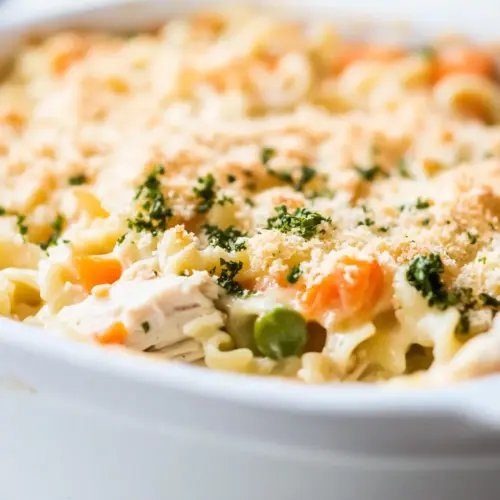
Cheesy Chicken Noodle Casserole
Cheesy Chicken Noodle Casserole is a creamy, comforting bake with tender egg noodles, shredded chicken, and gooey cheddar cheese. This easy weeknight dinner features a crisp panko topping and savory sauce, perfect for feeding a crowd or saving for satisfying leftovers. Make it when you want a cozy, effortless family meal that reheats beautifully.
Equipment
- Large Pot
- Medium Pot
- Whisk
- Oven-safe Dish
- Small Bowl
Ingredients
- 16 oz medium egg noodles Boil to tender and provide the starchy base that holds the casserole together; medium egg noodles soak up the creamy sauce and distribute flavors evenly throughout the dish. Cook just until al dente so they finish cooking in the oven without turning mushy.
- 3 tablespoons butter Melt to create a rich flavor foundation and help form the roux for the sauce; butter adds silkiness and a slightly savory depth. Use it both in the sauce and melted later for the topping to provide browning and moisture.
- 3 tablespoons all purpose flour Whisk in while cooking the butter to form a roux that thickens the sauce; all purpose flour provides structure and prevents a watery casserole. Cook briefly to remove any raw flour taste before adding liquids for a smooth, creamy texture.
- 2 cups chicken stock Simmer into the roux to build a flavorful, savory base for the sauce; chicken stock contributes body and umami that complements the chicken. Adjust amount slightly if you prefer a thicker or thinner sauce before baking.
- 1 cup half & half Stir in for creaminess and richness without being overly heavy; half & half enriches the sauce and creates a smooth mouthfeel. Heat gently to avoid curdling and combine well with the stock-based roux.
- 1/2 cups sour cream Fold in to add tang and extra creaminess that brightens the overall flavor; sour cream also helps stabilize the sauce and adds a slight acidity. Mix thoroughly to ensure an even tang and prevent separation when heated.
- 1 teaspoon onion powder Sprinkle to introduce a mild onion flavor that enhances savory notes without adding texture; onion powder disperses evenly throughout the sauce. Use it to boost aroma and balance the dairy richness.
- 1/2 teaspoon poultry seasoning Season to impart warmth and a subtle herbaceous complexity that pairs well with poultry; poultry seasoning brings sage, thyme, and other complementary spices. Add cautiously and taste, as it can dominate if overused.
- 1 teaspoon salt + more to taste Season to enhance overall taste and balance the dish; salt brings out flavors in the sauce, vegetables, and chicken. Add progressively and taste before baking to avoid over-salting, since stock and cheese can contribute sodium.
- 1/2 teaspoon black pepper + more to taste Season to provide a subtle heat and depth that rounds out the creamy flavors; black pepper adds a sharp, aromatic bite. Grind fresh if possible and adjust to personal preference for mild heat.
- 8 oz frozen mixed vegetables Add frozen mixed vegetables to supply color, nutrition, and textural contrast; they contribute sweetness and bulk to the casserole. Thaw or toss in while assembling so they heat through and retain some bite after baking.
- 12 oz cooked and shredded chicken Incorporate cooked and shredded chicken as the primary protein and flavor carrier; it makes the dish hearty and completes the chicken-and-noodle concept. Use pre-cooked chicken warmed through to avoid excess moisture in the casserole.
- 1 cup cheddar cheese shredded Mix in to lend sharp, melty cheesiness that binds ingredients and enriches the sauce; shredded cheddar contributes tang and a pleasing creamy texture. Reserve some for topping if desired to maximize golden, gooey coverage.
- 1/2 cup panko bread crumbs Sprinkle over the top to add crunch and a toasty contrast to the creamy interior; panko bread crumbs crisp up nicely when baked. Combine with melted butter for even browning and to help the crumbs adhere.
- 3 tablespoons butter melted Brush or drizzle melted butter to moisten the breadcrumb topping and encourage even browning; it adds a nutty richness and helps achieve a crisp finish. Use it sparingly to avoid greasiness while ensuring crunchy texture.
- 1 tablespoon parsley fresh, chopped Garnish with fresh, chopped parsley to introduce a bright, herbaceous finish and pop of color; parsley lightens the rich flavors and adds freshness. Scatter over the baked casserole just before serving to retain its vibrant appearance.
- 1/2 cup cheddar cheese shredded Sprinkle additional shredded cheddar cheese atop for extra melty, golden cheesiness that completes the casserole; this final layer promotes a bubbly, appealing crust. Use evenly so each serving has a balance of creamy interior and cheesy top.
Instructions
- Bring a large pot of salted water to boil. Cook egg noodles according to package directions for al dente and drain. Set aside.: As the water simmers and then roils, you will notice a faint starchy scent rising, and when the egg noodles slip into the boiling water they should sizzle softly as steam escapes. The ideal visual cue for al dente is when the noodle has a slightly firm center if you bite into it, offering gentle resistance rather than collapsing. This texture matters because the noodles will finish cooking in the oven, and starting too soft leads to a mushy casserole. A common mistake is overboiling, so set a kitchen timer and test a noodle a minute or two before the shortest time listed on the package. If the pot foams up, lower the heat slightly and stir to prevent sticking. Drain promptly in a colander and give the noodles a rough toss to release surface starches, which helps the sauce adhere better later.
- In a medium pot, over medium heat whisk butter, flour, and seasonings to form a roux. Cook a couple minutes, whisking frequently.: When you melt the butter and add the flour, the mixture should smell mildly nutty as it cooks, and tiny bubbles will form along the edge, indicating the flour is toasting slightly. This toasting develops a warm, toasty underpinning in the sauce, which keeps flavors from tasting raw or floury. Whisk constantly to avoid scorching, because burnt roux will impart bitterness. If you see dark specks or smell acrid notes, start over and lower the heat. The roux should remain a pale golden color for this recipe, which balances thickening power with a clean flavor base.
- Add chicken broth and bring to a boil, whisking until no lumps remain.: As you pour in the warm chicken stock, steam will lift and the whisk will transform the roux into a glossy sauce, losing any pasty texture. The sound will change to a quiet rolling simmer, and you should whisk until the sauce looks uniformly smooth. This step builds savory depth; if the stock is too cold, you risk forming lumps, so temper with warm stock or whisk vigorously. A typical error is adding all the stock at once on high heat, which can create stubborn lumps, so pour gradually while whisking to maintain silkiness.
- Lower heat and add half & half and sour cream. Taste and adjust seasonings.: Once the base is smooth, reduce the heat so the dairy incorporates gently without breaking. You will see the sauce thicken slightly and take on a creamier, denser sheen. Sour cream adds a subtle tang that brightens the overall palate, so taste and tune with the salt and black pepper provided. Avoid boiling vigorously after adding dairy; instead, keep a gentle simmer to prevent separation. If the sauce seems too thick, a splash of reserved chicken stock will loosen it; if too thin, let it reduce over low heat while stirring, watching for a nappe texture that coats the back of a spoon.
- Combine sauce with cooked noodles, frozen veggies, chicken and cheese and leave on heat just until heated through.: When you fold the warm sauce into the drained egg noodles , frozen mixed vegetables, shredded chicken , and the first portion of cheddar cheese , steam will rise and aromas of dairy and savory herbs will mingle. The cheese should melt gently into the sauce, creating strings and ribbons of gooeyness, while the frozen vegetables will give off a light vapor as they defrost in the heat. Mixing on low heat ensures everything is evenly warmed and reduces extra moisture release. A common slip up is overheating here, which can make the chicken dry or the dairy separate, so aim for just heated through to keep textures pleasant and cohesive.
- Preheat oven to 425° F. Transfer all ingredients to an oven safe dish if needed.: Heat the oven early so it reaches 425° F by the time you are ready to bake, creating the ideal environment for crisping the topping. The casserole will go into a hot oven and the sudden heat encourages surface browning while the interior bubbles, producing that coveted crisp contrast. When transferring, spread the mixture evenly so the top cooks uniformly; uneven distribution leads to hot spots and inconsistent browning. If your dish is shallow, watch the edges as they can brown faster than the center, which is a frequent oversight.
- In a small bowl combine panko bread crumbs, melted butter, parsley and cheese.: Mixing the panko with melted butter should yield a glossy, slightly clumped texture where each crumb is coated. The smell of warm butter will make the parsley and cheese aromas pop, and the small bowl is the perfect place to judge seasoning and moisture. If the crumbs feel too dry, add a touch more butter; if too greasy, add extra panko. Overly wet crumbs will not crisp properly, a trap I have fallen into, so aim for an even, lightly moistened mix.
- Sprinkle bread crumb mixture over top of casserole, evenly distributing.: As you scatter the buttery, cheesy panko over the surface, notice how the topping catches light and forms a textured blanket. Even distribution is crucial so every scoop gets a crunchy finish, so take a moment to spread it with a spoon or your fingers. If you heap crumbs in one spot, that area may brown too quickly or become greasy. A light, even layer yields a golden crust that complements the creamy interior.
- Bake for 10-15 minutes or until top is browned and casserole is bubbly! Serve warm and enjoy!: In the oven you will hear a low bubbling from the center as the sauce reaches serving temperature and the top will gradually deepen to a golden amber color, with small cheese bubbles forming around the edges. The aroma will be warm and inviting, signaling readiness. Let it rest briefly out of the oven so the sauce sets slightly, which makes serving cleaner and ensures each portion holds together. A common mistake is slicing while piping hot, which can cause the filling to run, so allow a short rest to firm up before serving.
Notes
- Double the vegetables: Fold in extra frozen mixed vegetables for more color and nutrition, which also adds a fresh snap that balances the creamy sauce.
- Make it lighter: Replace half the half and half with low fat milk and use reduced fat sour cream, noting that the sauce will be slightly less rich but still satisfying.
- Extra cheesy top: Increase the final 1/2 cup of cheddar cheese in the topping for a more pronounced cheesy crust that browns attractively.
- Breadcrumb crunch: Toast the panko briefly in a skillet before combining with butter to deepen the toasty flavor and reduce oven time needed for browning.
- Prep ahead: Assemble the casserole up to the breadcrumb step and refrigerate, then bake from chilled, adding a few extra minutes to ensure it is hot through.
- Swap noodle shape: Use shells or rotini instead of medium egg noodles to trap more sauce, but adjust the al dente timing slightly as shapes cook differently.