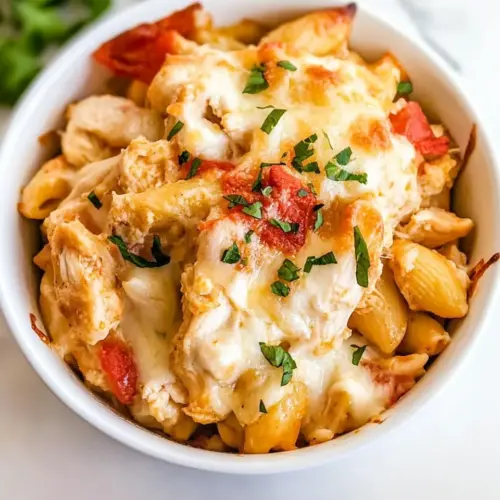
Cheesy Chicken Casserole
Cheesy Chicken Casserole is a creamy, comforting bake loaded with tender chicken, tangy tomatoes, and gooey Mozzarella cheese. This easy weeknight dinner brings familiar pantry ingredients together into a bubbly, family friendly meal that is simple to customize and perfect for feeding a crowd. Make it when you want hearty satisfaction without fuss.
Equipment
- 12 All-Clad Stainless Skillet
- 9x13-inch Casserole Dish
Ingredients
- 1 pound pasta (any kind of pasta you have in your pantry) Boil until al dente and provide the starchy base that absorbs sauce and binds the casserole components together, giving body and comfort to the dish.
- 2 tablespoons olive oil Drizzle to lightly coat the pan and help brown ingredients while contributing a subtle fruity flavor and healthy fats that carry aromatics.
- 1 pound chicken breasts (boneless, skinless, chopped in small 1 inch pieces) Chop and sauté to supply lean protein and savory substance; browning develops flavor while the tender pieces integrate with pasta and sauce.
- salt and pepper (to taste) Season liberally to enhance and balance flavors; adjust to personal taste so other ingredients shine without becoming bland or overwhelming.
- 2 tablespoons butter Melt to create a rich cooking medium for aromatics and to add a silky mouthfeel that helps meld sauce and cheese into a cohesive casserole.
- 1 large onion (chopped) Sauté until translucent to release natural sugars and sweet aromatic depth, forming a flavorful foundation for the sauce and chicken.
- 5 cloves garlic (minced) Mince and cook briefly to release pungent, savory aromatics that build complexity and complement both tomato and cheese components.
- 1 teaspoon oregano Sprinkle to introduce warm, slightly peppery herbal notes that enhance tomato-based sauces and harmonize with Italian seasoning.
- 1 teaspoon basil Add to impart sweet, slightly minty and peppery herbaceousness that pairs well with tomatoes, chicken, and cheese for classic Italian flavor.
- 1/2 teaspoon red pepper flakes Stir in cautiously to provide a touch of heat and complexity, balancing richness and acidity without overpowering the casserole.
- 1 cup chicken broth (low sodium or no sodium added) Pour to deglaze the pan and add savory depth and moisture, helping to create a cohesive sauce that seasons the pasta and chicken.
- 28 ounces diced tomatoes (1 can) Stir into the sauce to contribute bright acidity, sweet tomato flavor, and texture; it forms the primary saucy element that coats the pasta.
- 2 cups Mozzarella cheese (shredded) Sprinkle generously to create a gooey, melty topping that adds creamy richness, mild saltiness, and a satisfying golden finish when baked.
Instructions
- Cook the pasta according to package instructions in a pot of boiling salted water.: You will smell the starchy steam rising as the pasta softens and the water returns to a lively boil, and that bubbling sound signals proper doneness. Stop cooking when the pasta still has a slight bite; it will finish in the oven and you want each piece to hold its shape and texture. A common error is leaving the pasta in until completely soft which makes the final casserole mushy instead of al dente. If your pot is crowded it will take longer to return to a boil, so use a large pot and high heat to keep the water rolling.
- Preheat oven to 375°F.: You will notice the oven light warming the interior and a steady heat settling in when it reaches temperature. Having the oven fully warmed ensures the casserole starts baking immediately and the cheese melts evenly. Skipping preheating can cause uneven bake times and a soggy center, because the dish needs consistent radiant heat to bubble through. Use an oven thermometer if your oven runs cool or hot, as inaccurate temperatures affect texture and browning.
- In a large skillet, heat olive oil over medium heat. Add the chicken and season chicken with salt and pepper. Cook the chicken until no longer pink, about 5 minutes.: You will hear a soft sizzle as the pieces hit the oil and see color develop along the edges, that caramelization gives savory depth. Cook until the interior is opaque and juices run clear, flipping pieces as needed to brown evenly. Rushing this step by using too high heat can char the outside while leaving the center undercooked, so keep a steady medium and give pieces space to brown rather than steam.
- Add the butter to skillet and melt. Stir in onions and cook for 3 to 5 minutes until the onion soften and become translucent. Add garlic and saute for another 30 seconds until aromatic.: The butter will foam and coat the pan, softening the onion into sweet translucency which balances the tomatoes. When the garlic hits the warm pan you will smell a bright, savory perfume almost immediately, a sign to move quickly. Overcooking the garlic will turn it bitter, so add it after the onion has softened and stir only briefly until fragrant.
- Season with more salt and pepper if needed, then add the oregano, basil, and red pepper flakes. Stir in the chicken broth and bring to a boil, scraping all the brown bits. Add crushed tomatoes and simmer for 5 minutes.: The moment you add the chicken broth , you will see steam and hear a more vigorous simmer as the browned bits lift from the pan, creating a rich base. The dried herbs will bloom in the hot liquid, releasing savory aromatics that marry with the acidity of the tomatoes. Simmering concentrates the sauce so it clings to ingredients; rushing this stage leaves a watery mouthfeel. Watch for a gentle rolling simmer and stir occasionally to prevent sticking and to integrate flavors evenly.
- Transfer the cooked pasta to a 9×13-inch casserole dish, pour chicken tomato sauce over the pasta and a cup of the mozzarella cheese, then toss well. Sprinkle the remaining mozzarella cheese over the top of the casserole.: The steaming pasta will release a faint aroma of wheat as you move it into the casserole dish, and coating it with the sauce ensures each piece carries flavor. Toss gently so sauce envelops the pasta without crushing it, folding in a cup of shredded Mozzarella cheese to start a creamy internal layer. Avoid piling the pasta in clumps; distributing sauce evenly prevents dry pockets and ensures uniform melting in the oven.
- Transfer the casserole dish to the oven and bake for about 15 to 20 minutes, just until the cheese melts and gets bubbly.: As you scatter the shredded Mozzarella cheese , it will create a pale blanket that soon turns glossy and bubbly. The top layer browns lightly and forms that irresistible pull when served. Too little cheese will leave the surface uncohesive, while too much can make the casserole overly heavy. Aim for even coverage so the heat can lift and brown the entire top uniformly.
- Transfer the casserole dish to the oven and bake for about 15 to 20 minutes, just until the cheese melts and gets bubbly: You will hear a faint pop as pockets of steam escape and see small bubbles appear around the edges before the entire surface becomes glossy. This short bake finishes melding flavors and warms the dish through without drying it out. Leaving it in too long will tighten the cheese into a drier crust, while pulling it out too early means the cheese is not fully melted and the center may be underheated. Check visually for bubbling and a lightly golden top as your cue to remove it.
Notes
- Swap pasta shapes If you only have short or long shapes, choose one that holds sauce well such as penne, rigatoni, or rotini; avoid ultra thin noodles which can become mushy in the oven.
- Protein choices Both chicken breasts and thighs work; thighs give more flavor and stay juicier, while breasts keep the dish leaner. Cut to uniform size for even cooking.
- Herb intensity If you prefer a brighter finish, add a sprinkle of fresh basil after baking; for a deeper profile, increase dried oregano during simmering to let it infuse the sauce.
- Vegetable boost Sauté mushrooms, spinach, or diced zucchini with the onion to sneak in extra vegetables; cook until just wilted so they do not release excessive water into the casserole.
- Cheese melt For creamier melt, combine part Mozzarella cheese with a small amount of a higher moisture cheese; freshly shredded melts smoother than pre shredded options.
- Make ahead strategy Assemble up to 24 hours ahead and refrigerate; add 10 to 15 minutes to baking time if chilled, and cover loosely with foil for the first part of baking to prevent over browning.
- Freeze for later Cool completely before freezing; wrap the casserole dish tightly and reheat in a moderate oven until hot and bubbling, adding time as needed for even thawing and reheating.