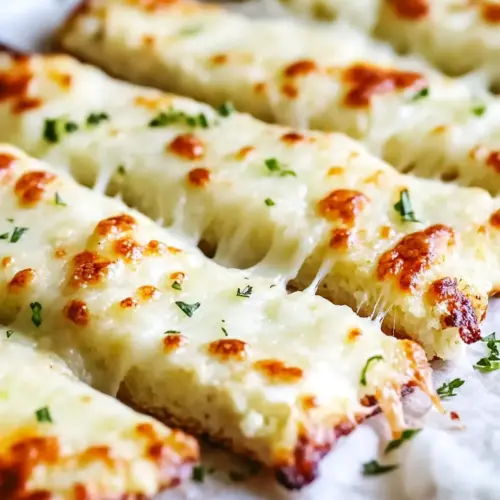
Cheesy Cauliflower Breadsticks
Cheesy Cauliflower Breadsticks are a creamy, crispy, and easy vegetable forward twist on classic breadsticks. With a tender riced cauliflower base, binder of egg whites, and melty mozzarella topped with parmesan, these make a perfect easy weeknight dinner or shareable appetizer. They reheat well and are great for parties, offering a lighter way to enjoy cheesy comfort.
Equipment
- Oven
- Baking Sheet
- Parchment Paper
- Steamer basket
- Food Processor
- Tea towel or cheesecloth
Ingredients
- 4 cups riced cauliflower about 1 large head of cauliflower Provide bulk and structure to the dough by adding moisture and fiber; riced cauliflower serves as the low-carb base that binds with cheeses and eggs when squeezed dry to avoid a soggy crust.
- 3 large egg whites Stabilize and bind the mixture without adding yolk fat; using large egg whites helps the cauliflower and cheese hold together while keeping the finished breadsticks lighter in texture.
- 2 cups shredded mozzarella cheese divided Melt and create gooey stretchiness in the crust; reserve half of the shredded mozzarella to mix into the dough for binding and flavor while holding back the remainder for a golden, bubbly topping.
- 1/4 cups shredded parmesan cheese Add a sharp, nutty depth of flavor and help with browning; shredded Parmesan complements the mozzarella by contributing savory umami and a slightly granular texture.
- 1 teaspoon Italian Seasoning Season evenly with herbal notes to enhance overall flavor; Italian seasoning brings a blend of dried oregano, basil, and thyme that pairs well with tomato dipping sauce.
- 3 cloves garlic minced Infuse aromatic pungency and savory warmth when minced and mixed into the dough; garlic elevates the flavor profile and offers a robust contrast to the mild cheeses.
- 1/4 teaspoon ground pepper Brighten flavor and temper richness with a subtle bite; ground pepper adds mild heat and helps balance the creamy, cheesy components of the breadsticks.
- 1/4 teaspoons salt Enhance overall taste by providing essential seasoning; salt brings out the natural flavors of cauliflower and cheese and is used sparingly to avoid oversalting.
- Marinara sauce for dipping Serve as a flavorful accompaniment for dipping and complementing the breadsticks; marinara sauce provides acidic tomato brightness and herby sweetness to balance the cheesy richness.
Instructions
- Preheat the oven to 425° and line 2 baking sheets with parchment paper. Set aside.: The kitchen will warm with a faint scent of dry heat, and the parchment will prevent sticking, keeping the undersides clean and allowing the edges to brown evenly. Heating to 425° ensures quick oven spring and a crisp crust, which is crucial for texture. A common pitfall is placing cold trays into a not fully preheated oven, which leads to uneven baking. Make sure your oven reaches temperature, and listen for the faint click or beep indicating it is ready.
- If using frozen riced cauliflower, prepare it according to the package and let it cool until it is cool enough to handle. If using fresh cauliflower, prepare a pot of boiling water. Cut the cauliflower into florets and place it in a steamer basket over the boiling water. Cover and steam for 5 minutes until the florets are fork-tender. Alternatively, the cauliflower can be steamed in the microwave in a microwave-safe bowl with a little water in the bottom for 5 minutes. Once cooked, place the steamed florets in a food processor and pulse for 10-15 seconds until you get a nice riced consistency.: As the florets steam, they release a vegetal, slightly sweet aroma and the texture softens to become tender without falling apart. Pulsing in the processor produces a consistent riced cauliflower texture that will bind better. Overprocessing can turn it mushy, while underprocessing leaves large lumps. Aim for a grainy rice like texture, and use short pulses to control the outcome.
- Transfer the riced cauliflower to a tea towel or several layers of cheesecloth and squeeze to remove as much liquid as possible. There is more liquid than you’d think, I’m usually able to squeeze out nearly a cup of liquid. Measure out 4 cups of cauliflower and add to a large bowl.: When you squeeze the warm cauliflower, steam and a savory scent will rise, and you will notice the weight drop substantially. Removing moisture is the single most important step for structure because excess water prevents the mixture from setting and leads to a soggy result. A frequent mistake is skipping the squeeze because it is tedious, but it is worth the effort; aim to remove as much liquid as you can by pressing firmly and twisting the cloth.
- Add the egg whites, 1 cup of mozzarella cheese, parmesan, Italian seasoning, garlic, salt, and pepper to the cauliflower and mix until fully combined.: As you mix, the ingredients will become glossy and evenly distributed, and the aroma of garlic and herbs will become prominent. The egg whites will coat the cauliflower granules, helping them bind during baking. If the mixture seems dry, check your measurements and gently fold to combine rather than overworking, which can make the texture gummy. Avoid adding more cheese than directed at this stage, because too much can make shaping difficult.
- Divide the mixture in half and add half to each prepared baking sheet in an even rectangle. Bake for 25 minutes, until the crust is nice and golden brown. Add the remaining mozzarella cheese and return to the oven to bake for another 5 minutes, until the cheese has melted.: As the rectangles bake, steam will escape and a golden crust will form, with the edges crisping and the center setting. The first bake is all about developing structure and color. When you return the pan to the oven after topping with the remaining mozzarella , you will hear a gentle bubbling and see the cheese turn glossy and begin to brown. A common error is slicing too soon; let the crust rest briefly so it firms up, otherwise the sticks may fall apart when you cut them.
- Top with fresh herbs or a crack of black pepper. Slice into breadsticks and serve with marinara sauce or your dipping sauce of choice.: The final flourish of herbs releases a fresh, bright perfume that contrasts the warm, cheesy base. Slicing reveals the tender crumb and melted cheese strings, and the dipping sauce adds acidic lift that balances the richness. If you cut while piping hot, steam may cause the cheese to stick to the knife, so let the pan rest for a few minutes. Avoid overcrowding your serving board so each stick retains its crisp edge.
Notes
- Make it extra crisp: Bake the formed rectangles on a preheated baking sheet or pizza stone so the bottom gets direct heat and crisps up quickly.
- Adjust the herb profile: Swap the Italian seasoning for a pinch more garlic and some dried basil for a greener, sweeter herb note without changing technique.
- Control salt carefully: Because parmesan and mozzarella contain salt, taste and reduce added salt if your cheeses are particularly salty.
- Prep ahead: Complete the ricing and squeezing steps a day ahead and store the dry cauliflower in the fridge to shorten assembly time the next day.
- Reheat well: Warm leftover sticks in a hot oven to restore crispness, avoiding the microwave which makes them limp.