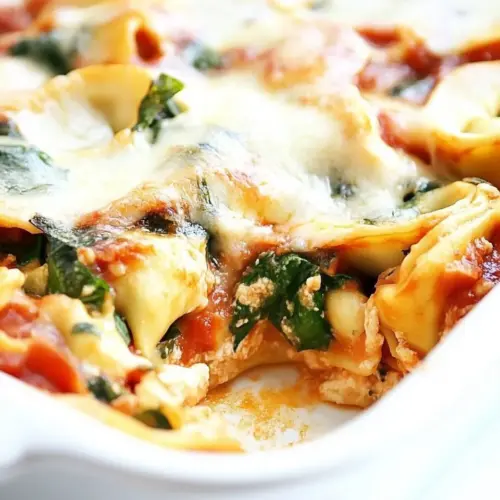
Cheesy Baked Tortellini
Cheesy Baked Tortellini is a creamy, cheesy oven baked pasta that combines pillowy tortellini, rich mozzarella and savory Parmesan with a bright tomato sauce and wilted greens. This easy weeknight dinner is comforting and family friendly, delivering bubbly golden cheese and savory tomato notes in every bite, making it a go to recipe when you want something satisfying and simple to prepare.
Equipment
- Large Pan
- 9 X 13 baking dish
- Oven
- Aluminum Foil
Ingredients
- 1 tablespoon olive oil Sauté in a skillet to build a flavorful base, releasing aromas and softening for about 5 minutes until translucent; pairs well with garlic and tomatoes to create the sauce foundation.
- 1 small onion, diced Cook gently until softened and sweet, providing body and savory depth to the sauce; dice fine to distribute flavor evenly throughout the baked tortellini.
- 3 cloves garlic, minced Mince and briefly sauté to infuse the dish with pungent, aromatic notes; combines with olive oil and onions to underpin the overall savory profile.
- 6 cups fresh spinach leaves Wilt down in the pan to add bright color, mild earthy flavor, and tender texture; stir into the sauce just until softened so it retains nutrients and balances the richness of cheese.
- 3 1/2 cups Marinara Sauce Pour over the assembled tortellini to provide a tangy, herbed tomato base; use evenly to coat pasta and meld flavors during baking for a cohesive casserole.
- 115 oz can diced tomatoes Combine with marinara and seasonings to add chunky tomato texture and extra moisture; drain slightly if too liquidy to prevent a soggy bake while maintaining bright tomato flavor.
- 1 teaspoon dried oregano Sprinkle into the sauce to introduce warm, slightly bitter herbal notes that complement tomato and cheese; measure carefully to avoid overpowering the dish.
- 1 teaspoon dried basil Add for sweet, aromatic herb character that rounds out the tomato sauce; mixes well with oregano and fresh basil to create layered herb flavors.
- Dash of crushed red pepper flakes Pinch into the sauce to introduce subtle heat and complexity; adjust amount to taste for a mild kick that enhances but does not dominate the casserole.
- 2 tablespoons freshly chopped basil Fold in at the end for a burst of fresh, aromatic basil that elevates the sauce; chop finely to distribute fragrant herb notes throughout the baked dish.
- Salt and black pepper, to taste Season generously to balance acidity and enhance all flavors; taste before baking and adjust so the final casserole has well-rounded seasoning.
- 2 (20 oz packages) refrigerated cheese tortellini Cook according to package instructions and layer into the baking dish as the main starch and cheese carrier; use refrigerated tortellini for tender, pillowy pockets that absorb sauce.
- 2 cups shredded mozzarella cheese, divided Sprinkle over the assembled dish and between layers to create gooey, melty pockets of cheesy texture; reserve part for a bubbly golden topping after baking.
- 1/2 cup shredded Parmesan cheese, divided Grate and mix into the filling and topping to add salty, nutty sharpness; reserve some to sprinkle on top for a savory crust after baking.
- Freshly chopped basil, for garnish, if desired Garnish over the finished bake to add fresh herbal aroma and visual contrast; scatter right before serving to maintain bright flavor and appearance.
Instructions
- Preheat oven to 350 degrees F. Lightly grease a 9 x 13 baking dish with cooking spray. Set aside.: The kitchen should smell faintly warm as the oven approaches 350 degrees F , creating an inviting baseline for what is to come. This step ensures a steady environment so the cheese melts evenly and the top browns without the edges burning. Greasing the 9 x 13 baking dish prevents sticking, making serving and cleanup easier. A common mistake is preheating too late, which can lengthen overall time and affect the melt; give the oven five to ten minutes to reach temperature, and check that the rack is centered so the heat circulates evenly.
- In a large pan, heat olive oil over medium-high heat. Add the onion and cook until tender, about 3-4 minutes. Add the garlic and cook an additional two minutes. Stir in the spinach and cook until spinach wilts and shrinks down. Stir in the pasta sauce and diced tomatoes. Add the oregano, dried basil, red pepper flakes, and fresh basil. Stir and season with salt and black pepper, to taste.: At this stage, you will smell the sweet aroma of softened onion and the instantly recognizable warmth of sautéed garlic , a soft sizzle under the rim of the pan. The olive oil should shimmer but not smoke, and the spinach will dramatically reduce as it wilts, releasing a vegetal perfume that blends with the tomato notes. Stirring in the Marinara Sauce and diced tomatoes introduces acidity and texture, while the dried oregano and dried basil deepen the aroma. Adding a dash of crushed red pepper flakes gives a whisper of heat that rounds the palate. Taste and adjust salt and black pepper , because proper seasoning is the difference between flat and lively sauce. One common misstep here is rushing the sauté, which leaves raw onion or unevenly cooked garlic; take the full time so the vegetables develop sweetness and the garlic becomes fragrant without burning.
- Pour 1/2 cup of the sauce on the bottom of the baking dish. Add half of the tortellini to the dish and spread out evenly. Top with more sauce, just to cover the tortellini. Sprinkle 1 cup of mozzarella cheese over tortellini and sauce. Next, sprinkle 1/4 cup of Parmesan cheese over the mozzarella cheese. Add the rest of the tortellini to the dish in an even layer. Top with remaining sauce. Sprinkle the rest of the mozzarella and Parmesan cheese over the top. Garnish with fresh basil, if desired.: When you pour the initial 1/2 cup of sauce, notice how it forms a glossy protective layer that keeps the bottom of the tortellini from sticking. The first layer of pasta should sit snugly so each piece gets saucy contact, and the next sauce application ensures pockets of tomato flavor throughout. The first layer of melted mozzarella creates a cohesive middle, while the Parmesan adds a slightly crystalline umami that contrasts with the soft cheese. As you add the second layer of tortellini and the remaining cheeses, aim for even distribution so every serving has the right balance. Freshly chopped basil on top brings aromatic brightness and a clean finish. A typical error here is uneven layering, which can lead to some bites being dry and others overly saucy; take a moment to spread ingredients evenly by hand or with a spoon.
- Spray a sheet of aluminum foil with cooking spray and cover baking dish. Bake for 30 minutes. Remove foil from pan and bake for an additional 10 minutes, or until cheese is completely melted and bubbly. Remove from oven and let sit for 5 minutes before serving.: As it bakes under the foil, you will hear a gentle hum from the oven and smell the sauce deepening; the foil traps steam so the tortellini heats through without the top drying out. After 30 minutes, removing the foil invites direct heat to brown the cheese, creating a golden, slightly blistered surface and those satisfying bubbling sounds. Letting the dish rest for 5 minutes allows the cheese to settle so the portions hold together when served. Avoid skipping the foil step, because baking uncovered from the start can dry out the pasta and lead to tough edges; conversely, leaving the foil on too long prevents the top from achieving that desirable browning.
Notes
- Double up on greens: Add extra spinach for a greener, more nutrient dense bake that still melts beautifully with the cheeses.
- Extra herb finish: Scatter more freshly chopped basil on top after baking for a bright contrast to the rich melted cheeses.
- Adjust the heat: Increase the amount of crushed red pepper flakes if you prefer a spicier profile, adding a lively kick to each bite.
- Sauce texture: If you like chunkier sauce, reduce how much you stir the canned diced tomatoes into the jar Marinara Sauce so you keep more tomato pieces intact.
- Cheese balance: Vary the ratio of mozzarella to Parmesan to emphasize either creamy melt or a slightly sharper savory finish.