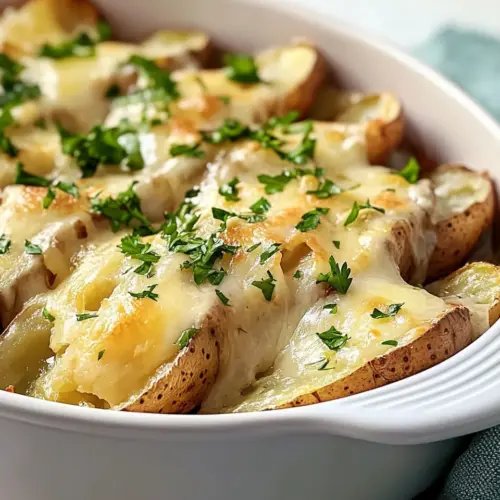
Cheesy Baked Potatoes
Cheesy Baked Potatoes deliver crispy golden edges, a pillowy interior, and gooey melted mozzarella, making them a creamy and crispy easy weeknight dinner. This no fuss side uses simple pantry staples to produce comforting texture and crowd pleasing flavor, perfect for busy evenings or casual gatherings. Try them when you want an effortless dish that feels indulgent and satisfying.
Equipment
- Baking Sheet
- Large Bowl
- Paper towel
Ingredients
- 3 medium red potatoes chopped into 1/2- to 3/4-inch pieces Chopped into 1/2- to 3/4-inch pieces to ensure even roasting and a tender interior; provides the starchy base and hearty texture for the dish. Offers a mildly sweet, earthy flavor that crisps at the edges and soaks up seasonings and melted cheese. Contributes bulk and comfort-food character while carrying the other flavors throughout each bite.
- 1 tablespoon coconut oil melted Melted to coat the potato pieces evenly, promoting browning and preventing sticking during baking. Adds a subtle, rich mouthfeel and helps the seasonings adhere to the potatoes. Enhances crisp exterior formation while lending a light toasted flavor.
- 1 teaspoon garlic flakes Used to impart concentrated garlic flavor in a dry form that disperses easily across the potatoes. Provides savory, aromatic notes without adding moisture, helping to create a flavorful crust. Intensifies the overall savory profile of the dish when toasted in the oven.
- 1 teaspoon dried parsley Sprinkled to introduce a mild herbaceous, slightly bitter-green flavor that brightens the potatoes. Helps balance the richness of oil and cheese while adding visual contrast. Complements the garlic and enhances the overall savory complexity.
- 1/2 teaspoon salt Added to season the potatoes and bring out their natural flavors; supports overall taste balance when combined with other seasonings. Helps control the perceived sweetness and can enhance browning. Use measured amount to avoid overpowering the dish.
- 1/2 teaspoon black pepper Ground to provide a warm, slightly sharp bite that lifts and sharpens the other flavors. Enhances the savory profile and contrasts the richness of cheese and oil. Disperses through the potatoes to give subtle heat and depth.
- 1 cup shredded mozzarella cheese Shredded to melt evenly over the hot potatoes, creating a gooey, cohesive topping that binds the pieces together. Delivers creamy, mild dairy flavor and a stretchy texture when baked. Forms a golden, cheesy crust that finishes the dish with richness.
Instructions
- Preheat the oven to 400°F. Lightly coat a baking sheet with nonstick spray.: When the oven reaches temperature you will notice a dry warmth that promotes immediate browning, which helps create a crisp exterior on the potatoes . A properly preheated oven ensures the heat penetrates from the start, giving you that desirable contrast between outside and inside. I often wait until the oven indicator cycles or use an oven thermometer if my oven runs cool. A common mistake is putting the tray into a cold oven, which yields dull, oily potatoes rather than crisp ones.
- Pat the chopped potatoes dry with a paper towel to remove excess moisture.: The sheet should glint lightly with oil so the pieces do not stick, allowing them to turn freely and brown evenly. I prefer a very thin coat, because pooling oil can cause uneven crisping. If the tray is not prepared, the potatoes can cling and tear when you try to flip them, so do this step carefully.
- In a large bowl, toss the potatoes with melted coconut oil and sprinkle with garlic, parsley, salt, and pepper.: Drying is crucial, because surface water creates steam and prevents browning, leaving the pieces limp rather than crisp. When I rub them gently with towels I can already see the difference in how they take on oil. If you skip this, expect much longer baking time and less crunch, so invest a minute in thorough drying.
- Spread the seasoned potatoes in a single layer on the prepared baking sheet, allowing space for even cooking.: The aroma of warm coconut oil pairing with dried garlic starts building flavor even before baking, and tossing ensures the seasonings cling evenly to each piece. Mix until every chunk has a thin sheen of oil, which is the visual cue that they are ready for the sheet. Overcrowding the bowl while tossing can cause uneven coating, so use a roomy vessel and take your time.
- Bake in the preheated oven for 25 minutes, stirring occasionally, until the potatoes are golden brown. For extra crispiness, broil for an additional 2-4 minutes, but keep a close eye to prevent burning.: When pieces touch too much they steam rather than roast, so leave a little breathing room to encourage crisp edges. The sound of hot oil beginning to sizzle when the tray hits the oven is your cue that the Maillard reaction is starting, producing rich toasted aromas. A common error is piling them, which yields soggy centers, so arrange them thoughtfully.
- Remove the potatoes from the oven, sprinkle with shredded mozzarella cheese, and return to the oven for 3-4 minutes, or until the cheese is melted and bubbly.: As they roast you will see them transform from pale to amber to deep golden, and the kitchen will fill with a toasty scent that signals flavor development. Stirring ensures all sides get exposure to heat, which leads to even browning. If they are still pale after the recommended time, your pieces may be too large or the oven may run cool, so adjust accordingly. For extra crispiness broil for an additional 2 to 4 minutes but keep a close eye to prevent burning.
- DEVOUR!: When the mozzarella cheese meets the warm potatoes it melts into glossy strands and little bubbles appear, offering both visual appeal and a silky mouthfeel. This finishing step softens the exterior slightly where the cheese seats, creating a luscious interplay of textures. Avoid leaving them too long under heat after adding cheese, because overbaking can make the cheese oily and rubbery rather than stretchy and melty.
- DEVOUR: At this stage the sound of a fork tugging through melted mozzarella cheese and the fragrant steam rising will be irresistible. I recommend letting them rest for a minute so the cheese settles but do not wait too long or the crisp pockets will soften. The main mistake here is letting them cool completely, which reduces the enjoyment of that contrast between crispy edges and molten cheese.
Notes
- Choose the right potato Medium red potatoes provide a creamy interior and thin skins that crisp beautifully, they are forgiving and hold their shape while roasting.
- Dry thoroughly After cutting, pat the pieces with a towel until they feel dry to the touch, this step dramatically boosts browning and crunch.
- Even coating Toss the potatoes in a large bowl with the oil so every surface glistens, this ensures uniform flavor and color across the tray.
- Single layer baking Arrange the pieces with small gaps between them, this avoids steaming and encourages that sought after golden crust.
- Quick broil finish If you want extra crispness, broil for a very short time while watching constantly, it adds beautiful blistered spots without drying the interior.
- Add cheese late Sprinkle the mozzarella cheese once the potatoes are mostly done, then return to oven just long enough to melt the cheese into glossy ribbons.