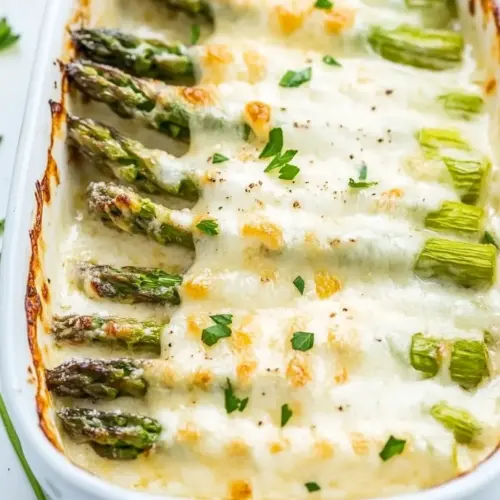
Cheesy Asparagus au Gratin
Cheesy Asparagus au Gratin is a creamy, crispy spring side featuring tender asparagus coated in a savory trio of cheeses. This easy weeknight dinner side offers a luscious cheese sauce and a broiled golden top for irresistible texture contrast. It comes together quickly and makes a comforting yet elegant addition to any meal, perfect for sharing and sure to impress.
Equipment
- Skillet
- Measuring Cup
- Whisk
- Baking Sheet
- Oven Broiler
Ingredients
- 2 pounds asparagus stalks rinsed with ends cut off Trimmed and rinsed to provide the main vegetable component, offering a tender-crisp texture and bright green color when roasted or steamed; supplies fiber, vitamins A and K, and a fresh vegetal flavor that pairs well with cheeses and butter.
- 3 cups water Used to steam or blanch asparagus, creating the proper tenderness before baking; helps control cooking time and prevents overcooking while contributing no additional flavor when drained.
- 2 tablespoons salted butter Melted to create a silky base for the sauce and to sauté any aromatics; adds richness and a subtle salty flavor that helps bind the flour when making a roux for the gratin.
- 2 tablespoons whole wheat flour Whisked into melted butter to form a roux that thickens the sauce so it clings to asparagus; provides body and a slightly nutty taste when cooked, helping stabilize the cheese sauce.
- 3/4 cups shredded mozzarella divided Sprinkled into the gratin to create gooey, melty strands and creamy pockets throughout the dish; contributes a mild milky flavor and stretchy texture when partially reserved for topping.
- 1/2 cups shredded asiago cheese Grated into the sauce and over the asparagus to deliver a sharp, tangy profile and granular melt that enhances overall savory depth; balances milder cheeses with a pronounced nutty-salty character.
- 1/2 cup grated parmesan cheese Sprinkled over the gratin and mixed into the cheese topping to add umami and a salty, savory finish; brings a granular texture and deepens the overall flavor with its concentrated dairy notes.
- Sea Salt to taste Seasoned to taste to enhance the natural flavors and balance the richness of cheeses and butter; used sparingly to avoid over-salting given the saltiness of aged cheeses.
- Garlic Pepper or regular pepper to taste Ground to taste to add a mild heat and aromatic sharpness that complements the creamy cheese mixture; used judiciously to brighten and season the dish without overpowering delicate asparagus.
- Fresh parsley for garnish optional Chopped and sprinkled over the finished gratin as an optional garnish to add a fresh, herbaceous contrast; provides a pop of color and light herbal aroma that lifts the rich, cheesy flavors.
Instructions
- Preheat the broiler on your oven. Place the rack on the top rung.: You will notice a dry, hot air building in the oven that is perfect for quick browning, and that intense heat is what gives the gratin its golden, bubbly finish. Preheating fully ensures the top crisps immediately under the broiler instead of lingering and drying out, which preserves the creamy sauce beneath. A common mistake is waiting to broil until the dish is already warm, which can cause the cheese to overbrown before bubbling; give the broiler a minute to reach full temperature. Be mindful of the oven door opening too often, because each peek bleeds heat and lengthens the time needed to achieve that attractive crust.
- In a large skillet, bring 3 cups water to a boil. Toss in asparagus and cook covered for 4 minutes or until fork tender. Remove asparagus and place on a nonstick baking sheet (or pre-sprayed baking sheet), in a long row. Season with sea salt and garlic pepper to taste. Set aside.: As the water steams, the kitchen fills with a fresh green scent, and the asparagus softens yet retains a satisfying snap when done correctly. Cooking covered traps steam so the stalks cook quickly and evenly, preventing the tips from becoming mushy. Laying them in a single long row on the baking sheet helps them brown uniformly under the broiler and makes saucing straightforward. A potential pitfall is over boiling; the visual cue for readiness is a bright color and a fork that meets gentle resistance, not total collapse. If you crowd the pan during boiling, the water temperature will drop and the stalks will cook inconsistently, so use a wide skillet.
- Pour 1 cup asparagus water from the skillet into a measuring cup and discard the rest.: That reserved cup holds concentrated, vegetal flavor and a touch of starch, which makes an ideal base for the sauce. You will notice the water turning faintly colored, carrying green aromatics that add depth without extra dairy. Discarding the remainder prevents the sauce from becoming overly diluted or too much liquid from lingering in the pan. A mistake to avoid is skipping this step and using plain water or milk, which changes the character of the sauce; the reserved water helps the roux marry to the vegetable essence for a connected flavor profile.
- In the same skillet, now empty, heat 2 tablespoons salted butter over medium heat. Add the flour and stir to combine, about 1 minute.: The butter-scent will lift as you start the roux, and stirring the flour in until it bubbles but does not brown removes raw flour taste. This step creates the foundation for a silky sauce that will thicken the reserved asparagus water. If you overcook the roux until dark, the sauce will taste toasty and darker; if you undercook it, you risk a pasty texture. Keep the heat moderate so the aroma is gentle and the texture remains creamy. Use a wooden spoon or whisk to ensure even cooking and a smooth base.
- Pour the asparagus water into the skillet and combine using a whisk until a thick sauce forms. About 4 minutes.: As you whisk, the mixture will evolve from thin to a velvety consistency, and you can hear a soft simmer as it thickens. This auditory cue tells you the flour has hydrated and the sauce is cooking through. A heavy whisking motion prevents lumps and helps the sauce cling to the back of a spoon. Under simmering results in a runny sauce, while boiling too hard can break the emulsion and separate fats; aim for a gentle bubble. If lumps appear, remove from heat briefly and whisk vigorously, or strain for a perfectly smooth finish.
- Turn off the heat and stir in the parmesan, asiago, and 1/2 cup mozzarella. Stir until creamy and fully melted.: Off heat melting prevents the cheeses from becoming stringy or grainy, and you will see the sauce turn glossy and thicker as cheeses fold in. The aroma intensifies, with sharp and milky notes blending into a unified, creamy scent. If you add cheeses to high heat, they can seize or release excess oil; removing the pan from the burner produces a silkier texture. Taste before adding salt since the cheeses contribute significant saltiness. One common misstep is overheating here, which causes a greasy separation; gentle folding keeps the sauce cohesive.
- Pour the cheese sauce over the center of the asparagus. Top with the remaining 1/4 cup mozzarella.: When the sauce pours, it should coat the asparagus like a glossy blanket, pooling slightly in the center while clinging to the stalks. The visual should show creamy coverage with visible green tips peeking through. Sprinkling the reserved mozzarella on top gives a softer, browning layer that will bubble distinctly under the broiler. An error to watch for is over saucing, which can drown the delicate texture of the asparagus ; aim for balance so each bite carries both vegetable and sauce.
- Broil for 4-6 minutes, or until the cheese is bubbly and golden brown. Watch this step carefully to not overcook.: Under the broiler the cheese will sizzle and form brown flecks, releasing a warm, toasty aroma and a faint bubbling sound as moisture escapes. The visual cue is a deepening golden color and small brown spots; at that point remove it promptly to preserve a creamy interior. Overbaking turns the sauce dry and the cheese tough, so keep the oven door peeks brief and deliberate. Use a timer and stand nearby to avoid scorching, because broilers operate quickly and the difference between perfect and overly browned can be minutes or seconds.
- Garnish with parsley if desired. Serve and enjoy!: Fresh parsley adds a cool, herbal perfume and a bright color contrast to the warm, golden gratin. The first bites should offer a pleasing mix of creamy sauce, stretchy cheese, and the slightly firm asparagus interior. Resting just a moment after broiling lets the sauce settle so servings hold together better. A common mistake is serving immediately right out of the oven without letting it cool slightly, which can cause the sauce to run and make plating messy; a two minute rest is all you need.
Notes
- Trim asparagus properly, snapping or cutting off the woody ends ensures each stalk cooks evenly and the texture is tender not fibrous.
- Reserve asparagus water, because that liquid brings natural flavor and starch that helps the sauce thicken and cling to the stalks beautifully.
- Cook the roux gently, keeping heat moderate prevents the flour from browning and imparting bitter notes while building a smooth base for the cheese.
- Stir cheeses off heat, melting them into warm sauce avoids a grainy texture and excessive oil release for a creamier finish.
- Use the broiler briefly, when the cheese just bubbles and spots brown you get perfect contrast; stay nearby and set a short timer to prevent burning.
- Let it rest, a minute or two after broiling helps the sauce set so slices plate neatly and flavors settle.