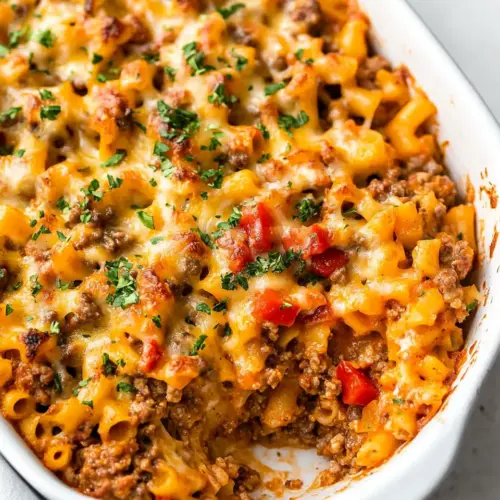
Cheeseburger Casserole
Cheeseburger Casserole is a creamy, cheesy, and easy weeknight dinner that layers browned hamburger meat, tender macaroni, and melty mozzarella and cheddar for a crowd pleasing bake. Rich tomato and savory bouillon infuse the pasta so each bite tastes like a classic cheeseburger in casserole form, making it perfect for family dinners and potlucks, and simple to throw together when you need comfort food quickly.
Equipment
- Large saucepan
- Medium Bowl
- 9×13 baking dish
- Oven
Ingredients
- 1 pound 92% lean hamburger meat Brown and crumble to develop rich savory flavor and provide the primary protein base for the casserole; drain excess fat if needed to control greasiness and ensure a balanced texture. Season while cooking to build depth and a hearty meaty foundation that complements the other ingredients. Works best when cooked until browned and slightly caramelized for maximum flavor.
- 1 onion (chopped) Chop finely and sauté until translucent to add a sweet, aromatic backbone that enhances the meat and sauces. Provide texture contrast and release natural sugars that help balance the acidity of tomatoes. Can be cooked longer for deeper caramelization depending on desired flavor intensity.
- 1 teaspoon salt Season generously to heighten and unify flavors throughout the dish, bringing out the savory notes of the beef and cheeses. Dissolve into sauces and liquids to ensure even seasoning across the casserole. Adjust to taste, keeping in mind cheeses and bouillon may add additional salt.
- 1/2 teaspoon black pepper Sprinkle to add mild heat and a subtle pungent edge that rounds out overall seasoning; helps to balance richer and creamier elements. Use sparingly and taste as you go to avoid overpowering the dish. Distributes evenly when mixed into sauces or browned meat.
- 2 teaspoons minced garlic Mince and add during cooking to provide bright, aromatic sharpness that enhances savory components and lifts heavier flavors. Release into hot oil or browned meat briefly to mellow raw pungency and develop a sweeter, more complex aroma. Complements Italian seasoning and tomato components well.
- 1 teaspoon italian seasoning Season to contribute an herby, slightly floral Mediterranean profile that pairs well with beef and tomatoes. Sprinkle early in cooking to let the dried herbs rehydrate and infuse the sauce. Balances garlic and cheese, creating a cohesive flavor profile.
- 1 teaspoon garlic powder Sprinkle to reinforce garlic flavor with a mild, toasted note that adds depth without extra moisture; ideal for steady, even seasoning. Blend with other spices to create layered savory taste. Use alongside fresh garlic for a robust garlic presence.
- 1/2 teaspoon chili powder Add for a touch of warmth and smoky heat that subtly enhances the savory profile without dominating the casserole. Incorporate into the seasoning mix to achieve mild chili complexity. Adjust quantity to control spice level for family-friendly palates.
- 1 tablespoon Worcestershire sauce Stir in to contribute a tangy, umami-rich boost that deepens the savory sauce and echoes beefy flavors. Dissolve into liquids to evenly distribute concentrated flavor. Complements Worcestershire and tomato components for a well-rounded backbone.
- 2 teaspoons tomato paste Mix in to provide concentrated tomato richness and body, strengthening the tomato flavor without adding extra liquid. Bloom in a little oil or with the meat to release deeper savory notes. Helps thicken the sauce and bind flavors together.
- 15 ounces can diced tomatoes Pour in to furnish fresh tomato chunks and bright acidity that balance richness and add texture to the casserole. Include with liquids so tomatoes break down slightly during baking, contributing to sauce volume. Choose drained or with juices depending on desired sauciness.
- 2 cups water Measure and add to supply necessary cooking liquid for the pasta and to create the casserole sauce base; controls final consistency. Combine with bouillon and tomato elements to form a cohesive simmering medium. Adjust slightly if you prefer a thicker or looser casserole.
- 3 beef bouillon cubes Dissolve to intensify beefy, savory taste in the cooking liquid, providing concentrated meatiness that complements ground beef. Crumble into hot water until fully dissolved to evenly season the pasta and sauce. Be mindful of salt level contributed by bouillon.
- 2 cups dried large elbow macaroni Add dry to cook in the sauce and absorb flavors while providing classic mac-and-cheese texture and structure to the casserole. Ensure pasta is submerged in liquid to cook through during baking. Choose large elbow shape for hearty bite and cheese adhesion.
- 1 cup sour cream Fold in to lend creamy tang and richness that lightens texture and enhances mouthfeel in the finished casserole. Blend with milk and cheeses to create a smooth, cohesive filling. Adds acidity that brightens overall flavor and balances richness.
- 1/4 cup whole milk Whisk in to thin and smooth the sour cream, aiding incorporation and creating a silkier sauce base for the cheeses. Contribute gentle richness and subtle dairy sweetness that harmonizes with the sour cream and melted cheeses. Adjust amount for desired creaminess.
- 1 1/2 cups shredded mozzarella cheese (shred from the block) Shred fresh to provide stretchy, milky meltiness that contributes to gooey texture and mild flavor in the casserole topping and interior. Sprinkle or layer as directed to achieve optimal melting and stringiness. Freshly shredding from the block ensures better melt than pre-shredded options.
- 1 1/2 cups shredded mild cheddar cheese (shred from the block) Shred fresh to deliver sharp, creamy cheesiness and color contrast that boosts savory depth and overall cheeseboard flavor profile. Layer into the casserole for melty coverage and pronounced cheddar taste. Freshly shredded yields superior melt and less anti-caking agents compared to packaged shreds.
Instructions
- In a medium bowl, add 2 cups water and 3 beef bouillon cubes. Microwave on high for 4-5 minutes, or until the beef bouillon cubes are dissolved. Set aside.: Warm broth gives the pasta its primary seasoning, and when the bouillon dissolves you should see a dark, fragrant liquid with savory steam rising. Stir so the cubes fully melt and the liquid looks even, then sniff to confirm a rich beef aroma. If you notice granules, continue stirring; undissolved bouillon can create pockets of intense saltiness. A common mistake here is using water that is too cool, which prolongs dissolving time, so use room temperature or warm water to speed the process. The dissolved bouillon should be fully integrated before you add it to the pan.
- In a large saucepan, cook ground beef over medium high heat until no longer pink. Drain grease and return beef to the pan.: As the hamburger meat sizzles, listen for the steady pop and watch the color shift from pink to golden brown bits; that browning builds flavor through Maillard reaction. After cooking, drain off most of the fat to prevent a greasy casserole, then return the beef so the browned fond can mingle with the aromatics. If you leave too much fat, the finished dish can feel oily, and a frequent error is overcrowding the pan which causes steaming instead of browning. Use a spatula to break the meat into evenly sized pieces so every bite has consistent texture.
- Turn heat down to medium and add chopped onion, salt, pepper, minced garlic, Italian seasonings, garlic powder, and chili powder. Stir well and let cook until onions are soft and translucent, about 5-7 minutes.: Once the onion hits the warm pan, you should hear a gentle hiss and smell the sweetening aroma as the sugars release. The seasonings mingle with the meat, creating a fragrant base; stir occasionally so nothing catches. When the onion becomes glossy and soft, its flavor will blend into the sauce rather than standing out. A common slip is rushing this step at too high heat, which can brown or burn the garlic , leaving a bitter note. Keep the heat steady and patient for the best flavor integration.
- Add Worcestershire sauce, tomato paste, and diced tomatoes (in their juices) and stir together.: The moment you add the tomato paste and tomatoes , the pan will release a deeper, earthy tomato scent and the mixture will darken slightly. Stir until the paste is incorporated; you may see it cling to the meat before dissolving into the juices. The Worcestershire sauce should add a savory umami lift you can smell. If the tomato paste sits dry on the bottom, scrape and mix it so it cooks out; raw paste can taste sharp. This step deepens the sauce’s complexity, which pays off in the finished casserole.
- Next, add the dried large elbow macaroni noodles and beef bouillon broth to the beef mixture and stir together.: Adding the dried macaroni and warm bouillon is where the pasta begins to absorb flavor, and you should see the liquid cover the noodles just enough to allow even cooking. Stir so the macaroni is submerged and the mixture looks cohesive. The noodles will swell as they cook and take on the savory broth flavor, which is key to an evenly seasoned casserole. Avoid adding cold broth, which can shock the pan and slow cooking; use the warm dissolved bouillon for consistent results.
- Cover and let simmer over medium-low heat for 5 minutes. Uncover and stir. Cover again and let cook for another 5 minutes, or until pasta is done.: As the casserole simmers, watch for gentle bubbling and a fragrant steam; those are signs the pasta is absorbing liquid correctly. After the first interval, stir to prevent sticking and check pasta texture. The second simmer completes the cook, and you should test a noodle for tenderness that still has bite. A frequent issue is leaving the dish uncovered the whole time, which can dry out the pasta or leave parts undercooked. Keep the lid on for even heat, and check so the center does not remain firm.
- Stir in sour cream and milk.: When you fold in the sour cream and milk , the filling will take on a silkier sheen and a gentle tang. The mixture should look creamy and slightly glossy, with no curdled bits. Stir just until combined, off heat if possible, to preserve the smooth texture. One pitfall is adding dairy to extremely hot liquid without tempering it, which can cause separation, so remove from direct heat and stir gently until homogenous.
- Pour 1/2 of the beef and pasta mixture into a 9×13 glass baking dish.: As you transfer half the filling, notice the steam and aroma that follow; the mixture should spread easily and hold shape. Use a spatula to scrape down the pan so none of the savory bits are left behind. An even layer helps the next cheese layer distribute consistently. A common error is crowding the pan unevenly, which can create dense pockets that heat differently during baking.
- Sprinkle 1/2 of the mozzarella and cheddar cheese over the casserole.: The first layer of shredded mozzarella cheese and shredded mild cheddar cheese should cover the filling in a uniform blanket, and you will notice the cheeses slightly settle into the warm surface. This layer begins the melty structure that holds the casserole together after baking. If you heap cheese in one spot, it may brown too quickly, so distribute evenly for consistent melting.
- Pour the remaining casserole into the dish and spread evenly.: Adding the remaining filling completes the assembly, and the contrast between the saucy layer below and the cheese above becomes apparent. Smooth the top for an even bake, and make sure edges are tidy so the casserole heats uniformly. If left lumpy, the casserole may bake unevenly and produce hot and cool pockets.
- Sprinkle the remaining 1/2 of mozzarella and cheddar cheese over the top of the casserole.: The final cheese top should look generous and even, promising a golden finish. As it melts in the oven, the edges will bubble and the center will turn glossy. For a golden crust, ensure the cheese is spread uniformly; clumps can lead to uneven browning. A misstep is overbaking in hopes of browning; this can dry the center while the edges crisp too much.
- Bake uncovered at 400°F for 10 minutes, or until the sides of the casserole are bubbling.: During baking, watch for a lively simmer along the sides and a slightly browned cheese surface, with a rich aroma of baked tomato and cheese . The bubbles indicate that the filling is hot all the way through, and the cheese should be melted and cohesive. Do not leave it so long that the center dries out; check at the minimum time and add a few minutes only if needed. A common mistake is opening the oven repeatedly, which reduces temperature and extends bake time unnecessarily.
Notes
- Increase cheese for extra gooeyness: Add an additional half cup of each shredded mozzarella cheese and shredded mild cheddar cheese for a richer, more indulgent topping that browns beautifully.
- Adjust seasoning balance: If you prefer a brighter profile, add a pinch more of the chili powder or a small extra half teaspoon of italian seasoning to lift the herbs.
- Make ahead for easier hosting: Assemble through the cheese layer, cover, and refrigerate. Bake from chilled, adding a few extra minutes, until bubbling and golden.
- Texture tweak: For firmer pasta, reduce the simmer time before baking by a couple of minutes; the casserole will finish cooking in the oven.
- Use fresh shredded cheese: Shredding mozzarella cheese and shredded mild cheddar cheese from blocks ensures smoother melting and better texture than pre shredded options.