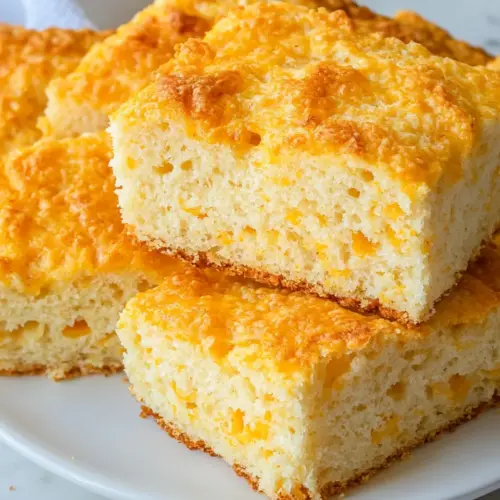
Cheddar Soda Bread
Cheddar Soda Bread is a rustic, savory loaf with a crisp golden crust and a tender, cheesy interior. This easy, no fuss bread uses sharp Cheddar and tangy buttermilk for bold flavor, perfect for an easy weeknight dinner or a cozy fall gathering. Make it to share, freeze for later, and enjoy the comforting aroma and flaky texture every time.
Equipment
- 8 inch square pan
- Large Mixing Bowl
- Whisk
- Pastry Cutter
- Spatula
Ingredients
- 21/2 cups all-purpose flour, spooned into measuring cup and leveled-off Provide structure and bulk to the dough, developing gluten when combined with wet ingredients; sifting or spooning into the cup ensures accurate measurement for proper texture.
- 2 teaspoons baking powder Leaven the bread gently by releasing carbon dioxide when activated with acid or heat; helps create a light crumb and slight rise without yeast.
- 1 teaspoon baking soda React with acidic buttermilk to produce immediate lift and tender crumb; use measured amount to avoid soapy or metallic taste from excess.
- 1 teaspoons salt Season the dough to enhance overall flavor balance and strengthen gluten slightly; measured precisely to prevent over-salting that would overwhelm the cheese.
- 4 tablespoons cold unsalted butter, cut into 1/2-in (13-mm) chunks, plus more for greasing the pan Add cold fat pockets that create flaky layers and tender crumbs when cut into the flour; keep chilled and cut into small chunks to avoid melting into the dough.
- 8 oz extra sharp Cheddar cheese, shredded (about 2 cups) Provide savory, sharp flavor and moisture while contributing to density and richness; shredding allows even distribution so each bite contains cheesy pockets.
- 11/4 cups low fat buttermilk (see note) Activate with baking soda to produce lift and add tangy flavor that brightens the dough; measure carefully for proper acidity balance and tender texture.
- 1 large egg Bind ingredients together and add richness, promoting a tender crumb and helping with browning on the crust when brushed or mixed in.
Instructions
- Preheat the oven to 375°F (190°C). Grease an 8-in (20-cm) square pan with butter or nonstick cooking spray.: As the oven warms to 375°F , you will notice a faint dry heat smell, signaling readiness. Greasing the pan ensures the loaf releases cleanly and the edges brown evenly. I like to use a bit of softened butter pressed into the corners for a more pronounced crust there. If the pan is not greased well, corners can stick and tear the crumb when you turn it out, so be thorough but avoid excess grease pooling in the center.
- In a large bowl, whisk together the flour, baking powder, baking soda and salt.: As you whisk, the dry ingredients blend into a pale, sandy mixture with the slight scent of flour and mineral salt. This step ensures even distribution of leavening agents so the loaf rises uniformly. I take a moment to scrape the bowl sides to verify there are no pockets of baking soda or powder left unblended. A common error is skipping this step, which can cause uneven pockets of rising or a soapy taste if too much baking soda remains unmixed.
- Toss in the cold butter. Using a pastry cutter, two butter knives, or your fingers, cut or rub the butter into the flour mixture until the mixture is crumbly, with some pea-size clumps of butter within. Mix in the cheese.: When you cut in the cold butter , the texture should become coarse and crumbly, with visible pea sized bits of fat. Those pockets are essential for small flaky layers after baking. Stir in the shredded Cheddar cheese so that it is distributed among the crumbs, giving the dough a flecked, savory appearance. Work quickly to keep the butter cold, because warm fat will meld and make the dough greasy rather than flaky. Overworking here will produce a tougher loaf.
- In a separate bowl, whisk together the buttermilk and the egg. Add to the dry ingredients and stir until everything is just moistened. Do not overmix.: Pouring the tangy buttermilk and beaten egg into the dry mix introduces moisture that brings the dough together. Use a spatula to fold gently until you see no dry streaks, the batter will be sticky and slightly shaggy. The smell of cultured milk will be noticeable and pleasant. The reason you avoid overmixing is to preserve the tender crumb; overworked gluten yields a dense, chewy loaf. If you stir too long, the texture will tighten and you will lose the delicate results this recipe promises.
- Transfer the sticky dough to the prepared pan. Dust your hands with flour and press the dough to the edges of the pan. Bake the bread for about 35 minutes, until golden brown, set, and a cake tester comes out clean. Let the bread cool in the pan for about 5 minutes, then turn out onto a rack to cool. Cut into squares and serve warm.: The dough will cling slightly, so dusting your hands with flour makes it manageable. Pressing the dough to the pan edges creates even thickness and promotes uniform baking. You should see the surface smooth out, with cheese bits peeking through. If you press unevenly, the loaf may bake with a dome or thin edges, resulting in uneven texture and baking times.
- Bake the bread for about 35 minutes, until golden brown, set, and a cake tester comes out clean: During baking, the kitchen fills with the aroma of browned Cheddar cheese and baked butter . The crust should turn a deep golden brown, and the loaf will feel set and firm to the touch. A cake tester or skewer inserted into the center should come out clean or with a few moist crumbs, not wet batter. If the top browns too quickly before the interior is set, tent a piece of foil loosely over the pan to prevent burning and allow the center to finish baking.
- Let the bread cool in the pan for about 5 minutes, then turn out onto a rack to cool. Cut into squares and serve warm: After removing from the oven, the loaf will still be finishing internally, so a brief rest in the pan helps it stabilize. You will notice a comforting steam as you turn it out, carrying the scent of melted Cheddar cheese . Cooling on a rack prevents the bottom from sweating and keeps the crust crisp. Slice while warm for the best eating experience, but be mindful that very fresh slices may be slightly crumbly. If the loaf is underbaked, the center will be gummy, so allow that brief cooling time.
Notes
- Use a different cheese, try a milder or sharper variety to alter the intensity, but keep the quantity the same to maintain balance.
- Adjust butter size, cutting the butter into slightly smaller or larger chunks will change flakiness, smaller for more uniform richness, larger for pronounced pockets.
- Make your own buttermilk, if needed whisk together low fat milk and an acid to mimic the tang and activate the baking soda, maintaining the same volume.
- Pan shape matters, use an 8 inch square pan as directed for even baking, but a round pan will change surface area and may shift bake time slightly.
- Freeze and reheat, cool completely then wrap tightly for up to three months, reheat at 350°F wrapped in foil until warmed through to retain moisture.