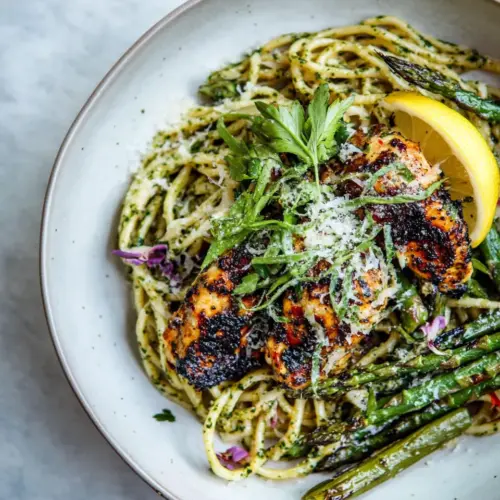
Charred Asparagus Cream Pasta with Blackened Lemon Chicken
Charred Asparagus Cream Pasta with Blackened Lemon Chicken is a creamy, herb bright pasta with smoky char and tangy crumbled goat cheese, perfect for an easy weeknight dinner. The sunflower seed pesto and a splash of coconut milk or heavy cream make the sauce silky, while blackened lemon seasoned chicken adds a vibrant punch that makes it worth cooking tonight.
Equipment
- Large Skillet
- Grill or Grill Pan
- Blender or food processor
- Large Pot
Ingredients
- 1 pound boneless skinless chicken breast or tenders Season and cook to provide the main protein; slice or pound thin for quick, even searing and to absorb spices for blackened lemon chicken.
- 1 tablespoon brown sugar Sweeten and help create a caramelized crust; sprinkle into the spice rub to balance heat and deepen color during searing.
- 1 tablespoon paprika Add smoky, warm color and flavor; mix into the rub to build the characteristic blackened seasoning for the chicken.
- 1/2 teaspoon cayenne pepper Bring heat and bright, lingering spice; use sparingly in the rub to add a controlled kick to the chicken.
- 1/2 teaspoon garlic powder Impart savory garlic aroma and mellow depth; incorporate into the chicken rub to layer umami without fresh garlic's moisture.
- 1/2 teaspoon dried thyme Introduce earthy herbal notes; fold into the spice mix to echo Mediterranean flavors and complement the lemon and basil.
- zest + juice of 1 lemon Provide bright citrus acidity and aromatic oils; use both zest and juice to brighten the chicken and enliven the cream sauce.
- 1/2 teaspoons salt + pepper Season and balance flavors; sprinkle evenly over chicken and adjust to taste to enhance overall seasoning profile.
- 3 tablespoons olive oil divided Moisten and help form the spice paste; reserve divided amounts for cooking chicken and dressing the asparagus or pasta.
- 1 bunch asparagus ends trimmed Offer a crisp, green vegetable element; char or roast to add smoky sweetness and a tender-crisp texture to the pasta.
- 1/3 cups sunflower seeds toasted (any nut/seed will work great) Contribute toasted nutty crunch and richness; pulse into the pesto or sprinkle over the finished dish for texture contrast.
- 1 cup fresh basil Provide fresh, sweet-herb brightness; blend into the pesto to lift the sauce with aromatic basil flavor.
- 1 cups spring greens (arugula baby kale, kale or another cup of fresh basil) Add peppery, leafy body and additional greens; incorporate into the sauce for extra nutrients and a balanced, bitter note.
- 1 clove garlic Give pungent, aromatic bite; mince or press into the pesto to enhance depth and savory complexity.
- 1/2 cup olive oil Bind and emulsify the pesto; drizzle in slowly while blending to create a silky, cohesive sauce.
- pinch of crushed red pepper flakes Introduce a touch of heat and complexity; sprinkle into the pesto or finishing oil for subtle background warmth.
- salt to taste Adjust seasoning for the pesto and pasta; taste and add a pinch to pull flavors together harmoniously.
- 1 pound long cut pasta use gluten free if needed Supply the carbohydrate base and structure; cook al dente to hold the cream sauce and tossed asparagus without becoming mushy.
- 1/3 cup full-fat canned coconut milk or heavy cream Lend creamy body and a subtle tropical or rich dairy note; stir into the sauce to create a luscious texture that coats the pasta.
- 4 -6 ounces goat cheese crumbed Add tangy, creamy saltiness and a crumbly texture; crumble over the finished pasta for bright, savory contrast.
- radish flowers for garnish (optional) Provide an optional decorative and peppery finish; thinly slice into flowers to garnish the plate for visual and flavor lift.
Instructions
- In a large gallon size zip-top bag or bowl, combine the chicken, brown sugar, paprika, cayenne, garlic powder, thyme, lemon zest + juice, salt and pepper and 2 tablespoons olive oil. Toss to evenly combine.: When you mix these ingredients, you should smell the citrus and smoke from the paprika almost immediately; that aroma tells you the seasoning is active. Make sure every piece of chicken is thoroughly coated, pressing the bag to distribute the marinade. This step matters because it builds surface flavor that chars nicely on the grill, creating a deep crust that seals juices inside. A common mistake is undercoating the chicken , which results in bland spots, so take an extra moment to massage the mixture into the meat. If your chicken pieces are uneven in thickness, pound them slightly to ensure even cooking and avoid dry centers.
- Place the asparagus in a large baking dish and toss with 1 tablespoon olive oil, salt + pepper.: Once the asparagus is dressed, you should see a sheen of oil and hear a faint rustle as you toss the stalks, signaling they are lightly coated. This oil and salt are essential because they encourage quick charring while protecting the fibers from drying out. Properly oiled asparagus will develop attractive grill marks and an intensified vegetal sweetness. Don’t overload the pan; overcrowding prevents proper sear and leads to steaming rather than charring. If you skip the oil, the stalks can stick and lose their glossy finish.
- In a blender or food processor, combine the sunflower seeds, basil, spring greens, garlic, 1/2 cup olive oil, pinch of crushed red pepper and salt. Pulse until combined and the sauce looks like pesto. Taste and add more salt if desired.: As the mixture whirls, watch it transform into a bright green paste, and breathe in the fresh herby scent that signals freshness. The toasted sunflower seeds should give tiny flecks and a nutty aroma, helping the pesto gain structure without being greasy. The olive oil binds everything into a silky emulsion that will coat the pasta; if it seems too thick, add a splash more oil or a little water. One pitfall is over-processing into a glue like paste, which can feel heavy; pulse gently to keep some texture and retain airiness. Stop and taste, adjusting salt so the pesto reads lively rather than flat.
- Bring a large pot of salted water to a boil.: This water should smell faintly of the sea once salted properly, which ensures the pasta itself is seasoned from within. Use plenty of water so the pasta can move freely and cook evenly. Rapid bubbling will signal it is ready; drop the pasta in with a gentle flick to avoid sticking. A frequent error is under-salting the water, which yields a bland final dish even when the sauce is flavorful, so be bold with salt here. Watch the pot so it does not boil over when you add the pasta.
- Heat a large skillet, grill or grill pan to medium high heat. Once hot, add the chicken and grill until char marks appear and the chicken is cooked through, about 5-8 minutes per side. Cooking times will vary depending on the size of your chicken. Remove the chicken from the grill and tent with foil.: You want a pronounced sizzle when the chicken hits the surface, a sound that foreshadows good browning. Look for deep, even char marks and juices that run clear; that’s your sign of doneness. Resting under foil lets the juices redistribute, keeping the meat moist. Avoid moving the chicken too often, which prevents proper crust formation. If you rush and cut immediately, the juices will spill onto the cutting board and the meat will dry out.
- Add the asparagus to the grill and grill until charred, about 5 -8 minutes. Remove and keep warm.: As the asparagus chars, you’ll notice a sweet vegetal scent and an audible sizzle that becomes more gentle as moisture leaves the stalks. Proper charring adds smoky complexity and slightly sweetens the vegetable. Keep an eye so they become blistered but not blackened to the point of bitterness. A common mistake is leaving them too long which makes them limp and dull in flavor. Transfer to a warm plate so they stay bright while you finish the pasta.
- Boil the pasta according to package directions until al dente. Drain and add pasta right back to the hot pot. Add the sunflower seed pesto, 1/3 cup of coconut milk or heavy cream and half of the goat cheese. Toss well to combine. Cut the asparagus into thirds and the chicken into bite size pieces. Add to the hot pasta and toss gently to combine.: The pasta should still have a slight chew, not soft or mushy, and the pot should carry the steam of warmth when you fold in the pesto. The aroma will shift toward herbaceous and creamy notes as the pesto and cream meld with the hot pasta. Tossing while hot helps the sauce coat each strand, with the goat cheese melting into pockets of tang. A key failure point is adding cold ingredients that shock the pasta, so ensure the pesto and any additions are room temperature or warmer. If the sauce looks too thick, reserve some pasta water to loosen it gently.
- Serve pasta hot with the remaining goat cheese. EAT!: At the table, the first serving should show glossy, well coated pasta with specks of charred asparagus and shredded, bright chicken . The remaining crumbled goat cheese on top will add creamy bursts and a pleasing tang as it softens. Serve immediately for best texture contrast. Avoid letting the pasta sit too long, because the sauce can congeal and the dish loses its fresh quality. If you must hold it briefly, warm gently with a splash of reserved pasta water and stir to re-emulsify.
Notes
- Swap the cream base Use full fat canned coconut milk for a dairy free version, which keeps the sauce silky while adding a gentle coconut sweetness that complements the lemon and basil.
- Adjust the heat Reduce the cayenne and omit the crushed red pepper if you prefer milder flavors, or increase them slightly for guests who like a pronounced kick.
- Seed and nut options Substitute toasted walnuts or almonds for the sunflower seeds if you have no nut restrictions, each bringing its own texture and flavor profile.
- Pasta choices Use gluten free long cut pasta if needed, ensuring cooking time is monitored closely to reach the perfect al dente texture.
- Make it vegetarian Omit the chicken and bulk up with extra grilled asparagus or additional roasted vegetables while keeping the same pesto and cream balance.