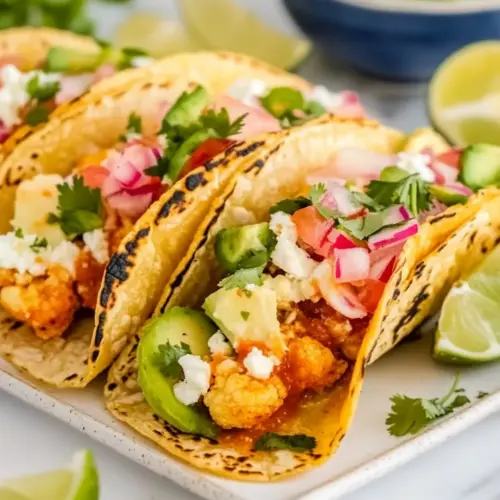
Cauliflower Tinga Tacos
Cauliflower Tinga Tacos bring smoky, spicy, and creamy elements together for an easy weeknight dinner that's crispy, saucy, and full of texture. Tender cauliflower simmers in a chipotle tomato sauce, while avocado crema and fresh mint brighten each bite. Perfect for casual gatherings or a quick family meal, this recipe is flavorful, vegetable forward, and a persuasive reason to cook more veg-forward tacos.
Equipment
- Blender
- Medium Saucepan
- Dutch oven or large saucepan
- Large Skillet
- Tongs
Ingredients
- 2 avocados halved, pitted, and peeled Halved, pitted, and peeled to create a creamy base for guacamole-style toppings or a cooling crema; provides rich texture and healthy fats that balance the spicy tinga flavors. Mash or slice as specified to add body and mellow heat in the tacos, and adjust seasoning to taste for brightness.
- 1 serrano chile roasted (see note 1) Roasted to deepen smoky heat and add a bright, sharp chile flavor to salsas or blended sauces; contributes moderate to high heat depending on size and preparation. Remove seeds for less intensity or keep them to maintain a lively, peppery kick in the sauce.
- 2 tablespoons lime juice Squeezed to add bright acidity that lifts rich and spicy components; stabilizes avocado mixtures and balances the smoky chipotle notes. Add gradually and taste to achieve the desired tang without overpowering other flavors.
- Salt and freshly ground black pepper Seasoned to bring out natural flavors and enhance overall taste balance; used sparingly at first and adjusted to preference. Grind fresh black pepper for aromatic heat and finish, ensuring layers of flavor across the dish.
- 3 Roma tomatoes Blanched or roasted to form the tomato base for the tinga sauce, contributing natural sweetness, umami, and body when pureed or chopped. Adjust cooking time to concentrate flavors, and remove skins if a smoother sauce consistency is desired.
- 1 cup water (reserved from boiling tomatoes if desired) Reserved liquid that can be used to thin sauces or adjust consistency; provides subtle tomato flavor and helps blend ingredients smoothly. Add gradually to avoid watering down the sauce while maintaining cohesive texture.
- 1/4 medium onion peeled Peeled and used to add a mild aromatic sweetness and foundation to the sauce when sautéed or blended; helps build depth and balances acidity from tomatoes and lime. Chop or quarter as needed to integrate evenly into blends or sautés.
- 1 clove garlic Crushed or minced to impart pungent, savory aromatics and depth to cooked sauces; mellows with heat and blends into the tinga for complexity. Adjust quantity to control garlic intensity and avoid overpowering delicate ingredients.
- 4 chipotle chiles in adobo sauce or more to taste (see note 2) Blended or chopped in adobo to give the tinga a deep smoky, spicy, and slightly sweet backbone; contributes heat and a characteristic chipotle flavor. Taste carefully and add more as desired because these chiles vary in spiciness and intensity.
- Salt and freshly ground black pepper Added to taste to round and enhance flavors while balancing acidity and heat; used at multiple stages to ensure proper seasoning. Pair with fresh ground pepper for a finished, well-seasoned taco filling and toppings.
- 1 large head cauliflower cut into 1/2-inch pieces (about 4 cups) Cut into 1/2-inch pieces to hold crisp-tender texture when cooked and coated in the tinga sauce; serves as the main vegetable component replacing meat. Roast or sauté until golden and tender so florets absorb sauce without becoming mushy.
- vegetable oil to fry the tortillas Heated to crisp and flavor tortillas when frying; contributes to traditional texture and mouthfeel by creating pliable yet slightly crunchy shells. Use a neutral vegetable oil with a high smoke point and monitor temperature to avoid excessive oiliness.
- 8 (8-inch) corn tortillas (see note 3) Warmed and lightly charred to serve as the taco vessel; corn tortillas provide authentic flavor and structure for fillings. Heat through or fry briefly until flexible, keeping them warm under a cloth to prevent drying out.
- shredded lettuce for serving Shredded to add fresh crunch, mild flavor, and a cooling contrast to the warm, spicy cauliflower tinga; also contributes color and volume to plated tacos. Use as a bed or garnish to lighten each bite and add a refreshing mouthfeel.
- 6 ounces radishes thinly sliced, for serving Thinly sliced to provide peppery crunch and a colorful, crisp garnish that cuts through richer components; radishes add texture and subtle heat. Arrange on tacos just before serving to preserve their crispness.
- 2 avocados pitted, peeled, and thinly sliced, for serving Pitted, peeled, and thinly sliced to provide fresh creaminess and a cool contrast as a finishing garnish; complements the spicier elements and enhances mouthfeel. Layer slices on top of assembled tacos for visual appeal and balance.
- 1/4 cup chopped fresh mint for serving (see note 4) Chopped to add an unexpected bright, cool herbal note that complements cilantro or other herbs; mint brings freshness and lifts the overall flavor profile. Sprinkle over tacos just before serving to preserve aroma and color.
Instructions
- To a blender, add avocados, roasted serrano chile, and lime juice. Blend until smooth (add water as needed to blend smoothly). Season to taste with salt and pepper.: The moment you start blending you'll notice the avocados turn into a glossy, pale green emulsion that smells fresh from the lime juice and fragrant from the charred serrano chile . Use short pulses at first, then blend steadily, adding a tablespoon of reserved cup water if necessary to keep the blades moving. This silky sauce should coat the back of a spoon, showing it is thick but pourable. The reason this technique matters is the avocado's texture: overblending can heat it and change the flavor, and underblending leaves lumps. A common mistake is adding too much water at once, which thins the sauce; avoid that by adding liquid gradually. If the sauce tastes flat, a pinch more salt and a squeeze more lime juice will brighten it instantly.
- In a medium saucepan bring 4 cups water to boil. Add tomatoes and boil until cooked through, about 5 minutes. Reserving 1 cup of cooking water, remove tomatoes and transfer to a blender.: As the Roma tomatoes hit the boiling water you'll hear a gentle pop and see their skins soften and darken, indicating they are breaking down and releasing juices. Boiling concentrates their sweetness and mellows the raw tang, which is crucial for a balanced tinga sauce. When you lift them out, the reserved tomato water will be aromatic and slightly cloudy, perfect for adjusting the sauce consistency. If you skip reserving the water you might have trouble achieving the ideal texture later. A tip: do not overboil the tomatoes, or they will become mealy and lose brightness.
- To the blender with the tomatoes, add 1 cup water (reserved from boiling tomatoes if desired), onion, garlic, and chipotle chiles in adobo. Blend until smooth, about 2 minutes. Season to taste with salt and pepper.: When you blend these ingredients the sauce will deepen in color to a smoky reddish brown while emitting a warm, smoky aroma from the chipotle chiles in adobo . The blended onion and garlic round out the flavor and knit the sauce together. Blending thoroughly ensures no fibrous bits remain, giving a luxurious mouthfeel. This technique is important because a smooth sauce clings better to the cauliflower . Avoid the mistake of adding too many chipotles at once; their heat can escalate quickly, so taste and adjust in small increments.
- In a Dutch oven or large saucepan over medium-high heat, add sauce and cauliflower florets and bring to boil. Reduce heat and simmer until florets are tender, about 10 to 15 minutes. Season to taste with salt and pepper and keep warm.: The first few minutes after adding the sauce you'll hear a steady simmer and see the sauce bubble gently around the cauliflower , which helps the florets absorb smoky tomato flavors. As they soften the aroma fills the kitchen with a warm, roasted tomato and chipotle scent. Simmering until tender ensures each piece is fork tender yet intact, allowing a satisfying bite. This step matters because cooking the cauliflower in the sauce lets it soak up flavor rather than just being tossed with it. A common error is boiling too hard, which can break the florets apart; keep the heat to a gentle simmer for best results.
- In a large skillet over medium-high heat, add about 1/2 inch vegetable oil and heat to 350 degrees. Add one tortilla to the skillet and cook until it is blistering but still soft, 10 to 15 seconds. Using tongs, turn tortilla over and then immediately fold to form a taco shell.: When the oil is at the right temperature you'll see small bubbles form around the tortilla edge and hear a faint sizzle as it blisters, an instant sign that the corn is toasting and becoming pliable. Folding it quickly while hot locks the shape and creates a pocket for fillings. Getting the timing right matters, because a too-cool pan yields greasy, limp tortillas, while oil that is too hot will burn them in seconds. A typical mistake is overcrowding the pan, which drops the oil temperature and prevents consistent blistering.
- Once the tortilla is holding its shape, turn until crisp and golden all over, 15 to 30 seconds longer. Transfer to a plate loosely tented with aluminum foil to keep warm while repeating with remaining tortillas.: As you continue frying, the folded shells will begin to take on an even golden color and a satisfying crunch that contrasts nicely with the soft filling. Transfer them to a warm plate covered loosely with foil to retain crispness without steaming them. Keeping the shells warm is important so the filling does not cool the entire taco. Avoid stacking the shells too tightly or they will lose crispness from trapped steam. If you notice oil pooling on the plate, line it with paper towels to absorb excess oil.
- To assemble the tacos, line the bottom of a shell with lettuce. Top with cauliflower tinga, sliced radishes, avocado sauce, and fresh mint.: As you build each taco you will appreciate the layers: the crisp shredded lettuce first creates a cool base, the warm cauliflower adds saucy, smoky richness, and the thin radishes provide a peppery crunch. Dollop the creamy avocado sauce and finish with chopped mint for a bright contrast. The order matters because the lettuce protects the shell from sogginess and the cream balances the heat. A common mistake is overfilling the shell, which makes the taco hard to handle; keep portions moderate for the best eating experience.
Notes
- Avocado sauce consistency Adjust with the reserved tomato water sparingly to reach a pourable yet creamy texture, adding a tablespoon at a time so you do not overthin the sauce.
- Chipotle heat level Add the chipotle chiles in adobo gradually while tasting, since canned chiles vary widely in heat; you can always add more but cannot remove it.
- Tortilla handling Warm the corn tortillas briefly before frying if they feel brittle, this increases pliability and reduces cracking when you fold them into shells.
- Cauliflower texture Check doneness with a fork rather than timing strictly, the size of your florets affects cooking time and you want a tender but intact piece.
- Keeping shells crisp Place finished shells on a rack or a plate loosely tented with foil to maintain crispness, avoid stacking them tightly which causes steam buildup and sogginess.
- Advance prep Make the tomato chipotle sauce a day ahead to deepen flavor, then rewarm gently and add the cauliflower to finish when ready to serve.