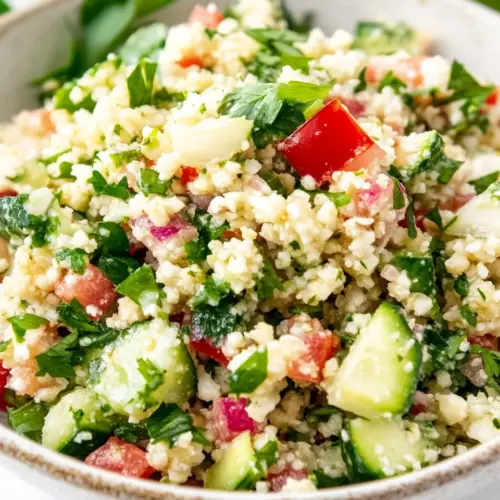
Cauliflower Tabbouleh Salad
Cauliflower Tabbouleh Salad is a bright, herb forward low carb twist on classic tabbouleh. With tender riced cauliflower, crisp cucumber, juicy cherry tomatoes, and a lemony olive oil dressing, this easy weeknight salad delivers fresh textures and vibrant flavor. It is light, satisfying, and perfect for meal prep or summer gatherings, making it a recipe you'll return to again and again.
Equipment
- Food Processor
- Non-stick frying pan
- Mixing Bowl
- Small Bowl
Ingredients
- 10 oz 280 g cauliflower florets 1 medium cauliflower head Provide a firm, slightly nutty base by pulsing into rice-sized pieces that mimic bulgur for a grain-free tabbouleh alternative; helps absorb dressing and carries flavors throughout the salad.
- 1 1/2 cup 160 g large cucumber chopped Add a crisp, hydrating crunch when chopped into small cubes, balancing richness and adding fresh texture against the cauliflower base.
- 1 cup 150 g cherry tomatoes quartered or equivalent weight in medium vine tomatoes, diced Contribute bright acidity and juicy sweetness when quartered or diced, enhancing color and offering bursts of flavor that contrast the herbs and oil.
- 1/3 cup 20 g parsley finely chopped Bring a fragrant, herbaceous lift when finely chopped, delivering classic tabbouleh flavor and freshness that ties the salad components together.
- 1/4 cup 10 g fresh mint finely chopped Offer a cool, aromatic note when finely chopped, complementing parsley and providing a refreshing counterpoint to lemon and garlic.
- 2 tbsp 20 g red onion finely diced Introduce a sharp, pungent bite when finely diced, providing aromatic depth and a subtle crunch that punctuates each forkful.
- 1/3 cup extra virgin olive oil Introduce smooth, fruity richness that emulsifies the dressing, coats the vegetables evenly, and adds healthy fats for mouthfeel.
- 2 tablespoon lemon juice to taste Provide vibrant acidity to brighten flavors and balance oil and richness; adjust quantity to personal taste for tartness.
- 1 garlic clove minced Infuse pungent, savory aromatics when minced; helps deepen overall flavor and pairs well with lemon and herbs in the dressing.
- 1/2 - 1 teaspoon flaked sea salt, to taste Season to taste with coarse, crunchy salt flakes that enhance and elevate all flavors without overpowering the salad.
- 1/3 teaspoon black pepper or to taste Add a warm, slightly sharp finish when ground into the dressing, rounding out flavors and providing subtle heat to the dish.
Instructions
- Prepare the cauliflower rice by placing the florets in a food processor and blitzing until it resembles a rice consistency.: When you pulse the florets the sound is important, you will hear quick chopping instead of a steady hum, and you should stop as soon as separate grains appear, not creamy. The visual cue is tiny, irregular pieces similar to couscous, some slightly larger, which will give pleasant texture. If you overprocess, the mixture becomes pasty and soggy once cooked, so use short bursts and check often. A common error here is running the processor too long which yields a puree, avoid that by pulsing in batches to maintain even texture. Properly riced cauliflower will smell fresh and slightly vegetal, not bitter, and it should hold together loosely when scooped.
- Make the dressing by mixing the olive oil, lemon juice, garlic, a pinch of salt and pepper in a small bowl.: Whisk the olive oil and lemon juice until a silky emulsion forms and the surface takes on a glossy sheen, this signals the dressing will cling to the salad. Smell the mixture, you should detect a bright citrus top note with a warm, faint garlic undercurrent. Adjust salt cautiously, because it concentrates flavors as the salad sits. If the dressing separates, whisk vigorously or add the lemon slowly while whisking to re emulsify. Avoid adding too much garlic at once; raw garlic can dominate, so taste and let the dressing sit for a few minutes to mellow.
- Add 1 tablespoon of dressing to a non-stick frying pan. Sauté the cauliflower rice for about 5 - 6 minutes on a medium heat until tender. Allow to fully cool.: As the cauliflower hits the warm pan you should hear a light sizzle, and a faint nutty aroma will develop as moisture evaporates. Stir gently and frequently so small pieces brown lightly and evenly, looking for a tender yet slightly toothsome result with a few flecks of light golden color. The why here is simple, brief sauté removes raw vegetal edge and concentrates flavor without making the grains mushy. A frequent mistake is overcrowding the pan which steams the cauliflower ; work in batches if needed to preserve texture. Once cooked, spread it on a tray to cool quickly, residual heat can continue softening the grains if not cooled, which may alter final texture.
- Meanwhile, slice the cucumber in half and remove the seeds using a teaspoon. Dice.: When seeding, scrape with the concave side of a spoon to lift out watery seed strands, keeping the flesh firm and crisp. Dice into uniform cubes so they blend visually and texturally with the riced cauliflower . The sound of a crisp cube is a faint crunch when pressed between fork and palate, which contrasts nicely with tender grains. Avoid leaving big seeded cavities, as they add excess juice that wets the salad. If your cucumber feels soft, choose a firmer specimen at the market for the best textural contrast.
- Add the tomato and cucumber to a mixing bowl. I chose not to take all the tomato seeds as this can make the cauliflower tabbouleh too wet.: By withholding most tomato seeds you preserve the salad balance, keeping the mix bright rather than watery. Toss gently so the pieces remain intact and juices stay minimal, noticing how the bowl remains pleasantly structured rather than pooling liquid. The aroma here is vegetal and slightly sweet from the tomato , and you should avoid vigorous smashing which releases more juice. A common slip is adding overly ripe tomatoes that collapse into the bowl, so pick ones that are ripe but still slightly firm to touch.
- Add cooled cauliflower, parsley, mint and dressing to the bowl. Toss to combine, season to taste and serve.: As you combine, the glossy dressing should coat the cauliflower and herbs, releasing a fresh citrus herb fragrance that signals proper seasoning. Gently toss so the herbs distribute uniformly and the dressing clings without pooling. Taste and adjust the salt , lemon juice , or black pepper only after resting a few minutes, because flavors settle and may need a small final tweak. Avoid over tossing which bruises herbs and can release excess water from vegetables. Serve slightly chilled or at room temperature depending on preference; the salad should present an uplifting aroma with clear herb notes and a balanced, slightly tangy finish.
Notes
- Boost herb intensity by increasing the ratio of parsley to mint if you want a greener, more classic tabbouleh flavor.
- Mellow raw onion by soaking diced red onion in cold water for 10 minutes, then drain well to soften sharpness.
- Make it ahead by cooking and cooling the riced cauliflower fully, storing dressing separately, then tossing just before serving to maintain crispness.
- Adjust acidity by adding lemon juice gradually and tasting, since lemons vary in strength and you want a balanced tang.
- Keep it dry by seeding tomatoes carefully and patting cucumber pieces dry if they seem wet after chopping.