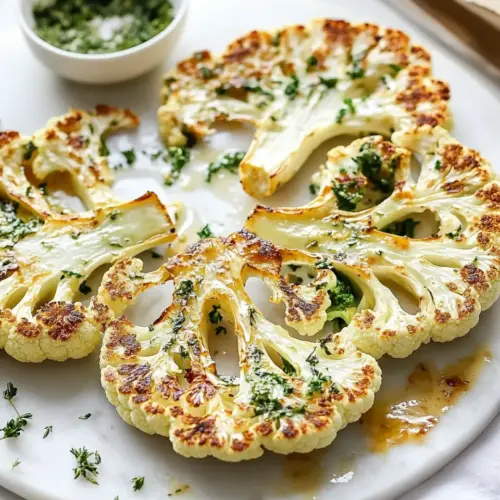
Cauliflower Steaks
Cauliflower Steaks offer crispy caramelized edges and a tender center, delivering savory notes from garlic powder, onion powder, and paprika. This easy weeknight dinner is perfect for a vegetarian main or an impressive side, combining simple ingredients and straightforward oven roasting for a flavorful result you will want to make again.
Equipment
- Baking Sheet
- Knife
- Spatula
- Mixing Bowl
- Brush
Ingredients
- 1 large head cauliflower (about 2 pounds) Trim and slice into thick, even steaks from the center to create sturdy pieces for roasting; use the core to hold the florets together and keep steaks intact. Provide the primary vegetable base and substantial texture, delivering a mild, slightly nutty flavor that caramelizes when roasted to golden brown.
- extra-virgin olive oil, as needed for greasing the pan Lightly coat the pan surface to prevent sticking and help conductive browning; apply sparingly to avoid sogginess while promoting crisp edges. Contribute healthy fats that enhance flavor and enable seasoning adherence during cooking.
- 1/2 teaspoon garlic powder Sprinkle evenly to impart a concentrated garlic aroma and savory depth; distribute across both sides of each steak before roasting for consistent flavor. Act as a ready, shelf-stable seasoning that complements the roasted cauliflower’s natural sweetness.
- 1/2 teaspoon onion powder Dust evenly to add a subtle savory-sweet onion note and rounded umami; use in combination with other powdered seasonings for balanced flavor without adding moisture. Function as a complementary aromatic that enhances overall taste complexity.
- 1/2 teaspoon paprika Season lightly to introduce warm, smoky-sweet heat and color; apply to the surface prior to roasting to deepen the crust and visual appeal. Provide a subtle spice character that pairs well with roasted vegetables and enhances savory notes.
- 1/2 teaspoon fine sea salt Sprinkle modestly to elevate all flavors and manage overall seasoning levels; dissolve slightly with residual moisture to season through the steaks during roasting. Serve as the primary salty element that balances sweetness and enhances aroma.
Instructions
- Preheat the oven to 450ºF and grease a baking sheet with olive oil.: When you put the sheet into a blazing hot oven the air circulates and encourages even browning, creating those crisp margins that define a good steak. You should hear a faint hiss as the oil warms, and the pan will shimmer slightly, signaling readiness. Using a well oiled sheet prevents sticking and helps the oil do the work of carrying heat into the vegetable surface. A common misstep is underheating the pan, which yields pale, steamed edges rather than caramelized ones. Make sure your oven is fully up to temperature before sliding the steaks in.
- Remove the green leaves from the head of cauliflower and cut off any excess stem. Slice off one side of the cauliflower, right at the edge of the stem in the center. (Reserve the extra cauliflower scraps for another use.): Trimming the outer leaves and any knobby stem bits creates a clean, flat surface for slicing, and it exposes the true core so you can cut uniform steaks. You will notice a dense, slightly sweet scent when you trim, and the stem should feel firm to the touch; if it is spongy the head may be past its prime. Proper trimming ensures your slices stay intact during handling. The usual mistake here is leaving too much of the stem which can make slices uneven and prone to breaking when turned.
- Cut the cauliflower into slabs, right through the center of the stem, that are roughly 3/4- to 1-inch thick. You should be able to get 2 to 3 steaks per large head of cauliflower. Be careful not to cut the steaks too thin, or they could fall apart.: This initial cut stabilizes the head so you can make straight slabs, and it gives a flat base so the next cuts are clean. The exposed cross section should display tight florets radiating from the core. When you slice, use a steady, downward motion to avoid cracking the head and creating ragged edges. Avoid sawing back and forth, which crushes the florets and increases the chance of uneven thickness.
- Place the 3 cauliflower steaks on the baking sheet and drizzle them lightly with olive oil on both sides. Season evenly with the garlic powder, onion powder, paprika, and salt on both sides. (I like to use a brush, or rub the seasoning in with my hands, to make sure every nook and cranny of the cauliflower is well seasoned.) You can mix the seasonings in a small bowl first to make a seasoning mix, or just sprinkle each one over the cauliflower individually to avoid having an extra dish to clean later.: Thickness matters because it determines how the heat penetrates the core while the outside caramelizes. At around 3/4 to 1 inch the center cooks through without the edges overbrowning, yielding a tender interior and a crisp rim. You should feel moderate resistance as the knife passes through the stem, and the slices should hold their shape when lifted. A typical error is slicing them too thin which causes them to fall apart during flipping, so aim for a confident, single smooth cut.
- Place the pan in the oven for the cauliflower to roast for 15 minutes. When the timer goes off, use a spatula to flip over each steak, and then return the oven to roast until fork-tender, about 10 to 15 minutes more. The steaks should be golden on both sides, and the center stem should be easily pierced by a fork.: Lightly oiling both faces ensures an even golden finish and helps the seasonings adhere. The oil should bead on the surface and make the steaks glisten, not pool. As the oven heat hits them, you will detect a warm, toasty aroma where the oil meets the vegetable. Using too much oil can make the edges limp and reduce crispness, so brush or drizzle modestly for best results.
- Serve warm, with your favorite sauce and side dish. I especially love this with chimichurri sauce, but it also makes a great holiday meal with vegan gravy. I think this is best served warm right away, but you can store any leftovers in the fridge in an airtight container for up to 4 days.: Seasoning every nook and cranny allows the flavors to build in layers rather than concentrating in one area. As the spices toast they release a savory perfume that accentuates the natural sweetness of the cauliflower . I either mix the powders in a bowl first or sprinkle carefully to avoid clumps, because uneven seasoning creates hot spots. Over seasoning is the main pitfall here, so use measured amounts and taste an edge after roasting to refine later batches.
- Place the pan in the oven to roast for 15 minutes: This initial roasting step begins the browning process and firms the outer surface while the core slowly softens. Expect a faint roasting scent and the edges to start showing golden freckles after this period. The high heat drives caramelization, which is what gives the steaks their savory complexity. A common mistake is opening the oven door too often, which drops temperature and prolongs cooking, so resist peeking until the time is up.
- Use a spatula to flip over each steak: Flipping develops even color on both sides and ensures the center cooks through uniformly. When you flip, the underside should have a caramelized appearance with browned edges, and you might hear a soft sizzle as it exposes the fresh face to heat. Use a wide spatula to support the steak fully to avoid tearing. Rushing the flip or using a flimsy tool often causes breakage, so lift carefully with support under the stem.
- Return the oven to roast until fork tender, about 10 to 15 minutes more: During this final roast phase the center should yield easily to a fork while the exterior deepens to a rich amber. You want the stem to be pierced without resistance but not mushy, and the edges to offer a slight tooth when bitten. If the steaks are still resistant after the time window, continue roasting in short intervals while checking texture; undercooking leaves a fibrous core. Overcooking, on the other hand, can make the steaks too soft and less visually appealing.
- Serve warm, with your favorite sauce and side dish: Warmth amplifies the aroma and texture, so I plate the steaks straight from the oven to preserve contrast between the golden edges and the tender center. You will notice the scent of toasted spices and the natural nutty sweetness of the cauliflower when the plate is set down. A common serving mistake is waiting too long which cools the crust and flattens the experience, so plan your accompaniments so everything hits the table hot.
- Store any leftovers in the fridge in an airtight container for up to 4 days: Proper storage keeps the steaks stable for future meals, though reheating gently is key to preserving texture. When you reheat, use a low oven or a skillet to revive some crispness rather than the microwave which makes them soft. The typical error is tossing them into a container while still warm, which traps steam and leads to sogginess, so cool briefly before sealing.
Notes
- Preheat properly — Always wait until the oven reaches the full 450ºF before roasting, because starting in a hot oven ensures immediate caramelization on contact and prevents a steamed appearance.
- Choose the right head — Pick a firm cauliflower with compact florets and a solid stem so the slices hold their shape through flipping and roasting.
- Consistent thickness — Keep steaks between 3/4 and 1 inch thick for even cooking; thinner pieces tend to fall apart, thicker ones may not cook through properly within the suggested time.
- Light oil application — Use just enough extra-virgin olive oil to coat surfaces evenly; too much oil can make the edges limp and heavy rather than crisp and golden.
- Mix spices first — Combining the garlic powder, onion powder, paprika, and fine sea salt in a small bowl helps ensure even distribution and avoids concentrated pockets of flavor.
- Support when flipping — Use a wide metal spatula to fully support each steak when turning to reduce the chance of breakage, and work slowly to preserve shape.
- Reheat smart — To revive leftover steaks, reheat in a warm oven or skillet to encourage crisping rather than microwaving which yields a softer texture.
- Don’t overcrowd the pan — Give each steak space on the baking sheet so hot air can circulate and promote even browning on all sides.
- Adjust seasoning after tasting — Taste an edge once roasted and tweak salt levels for future batches; cauliflower flavor intensity can vary with the head.
- Reserve scraps — Save trimmed cauliflower bits for soups or salads instead of wasting them; they cook faster and absorb flavor well.