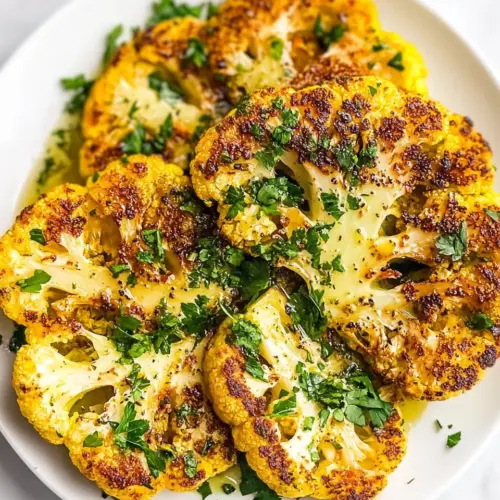
Cauliflower Steaks
Cauliflower Steaks offer a crispy caramelized exterior and tender, savory interior, making them a satisfying easy weeknight dinner or impressive vegetarian main. Bright smoked paprika and a drizzle of olive oil create a warm roasted flavor that pairs beautifully with lemon or pesto. This simple recipe transforms humble cauliflower into a centerpiece you will want to serve again and again.
Equipment
- Sheet Pan
Ingredients
- 2 medium heads cauliflower Provide a sturdy base and substantial texture by slicing into thick steaks; offers a mild, slightly nutty flavor that soaks up seasonings well. Roast or grill steaks until tender and golden, allowing exterior caramelization to add depth and contrast. Serve as a vegetarian main or hearty side, pairing nicely with sauces and herbs.
- 1/2 teaspoons smoked paprika Impart a warm, smoky depth that enhances the overall flavor profile without overpowering other spices. Sprinkle evenly over surfaces before roasting to create subtle complexity and a barbecue-like aroma. Use sparingly to maintain balance and avoid masking delicate vegetable notes.
- 1/2 teaspoons salt Enhance natural flavors and assist in seasoning throughout the cooking process to bring out sweetness and savory elements. Distribute evenly to ensure each bite is properly seasoned, and adjust to taste depending on dietary sodium needs. Combine with oil to help form a flavorful crust during roasting.
- 1/4 teaspoon ground black pepper Add a mild heat and aromatic bite that brightens the dish when freshly ground and applied lightly. Use to balance richness from oil and roasted vegetables, and adjust quantity to personal spice preference. Grind directly over steaks for fresher, more pronounced flavor.
- 2 -3 tablespoons olive oil Provide fat for cooking that promotes even browning and helps spices adhere while contributing a fruity, slightly peppery note. Brush or drizzle over cauliflower steaks before roasting or grilling to encourage caramelization and crisp edges. Use measured amounts to control oiliness while ensuring proper texture.
Instructions
- Preheat the oven to 400°F/200°C, and line a baking pan with parchment paper.: As the oven warms you will notice a dry, hot air that helps the surface of the cauliflower brown rather than steam. The preheated environment is crucial because starting in a cold oven can delay caramelization, leaving the exterior pale. Lining the sheet pan with parchment prevents sticking and makes it easy to transfer the steaks. A common mistake is not preheating long enough, which can yield uneven color. Listen for the quiet hum of the oven stabilizing and aim for a steady heat so the first few minutes create the Maillard reactions we want.
- To slice the cauliflower steaks, remove the outer leaves from the head of cauliflower, then cut 1/2 inch thick steaks from the center. From two small/medium heads or 1 large head you will have 4 steaks in total. Save the rest for a different recipe.: You will feel the firmness of the head as you slice, and a clean stroke produces wide, uniform slabs that hold together. Consistent thickness ensures each steak cooks at the same rate, producing uniform golden edges and a tender core. If your knife feels like it is tearing rather than slicing, chill the head briefly to firm it up. A common error is cutting too thin or too thick, which causes some pieces to overcook while others remain underdone. If some slices crumble, reserve those florets for roasting alongside the steaks.
- Place cauliflower steaks on the sheet pan, and season with paprika, salt, pepper. Drizzle with olive oil, and distribute the seasonings evenly with your hands.: As you season, smell the paprika blooming and the pepper lending a faint bite. Rubbing the seasoning and oil into the surface helps it adhere and ensures even coverage across the florets and stem. Use your hands to press the spices into the grooves where flavors can collect. If the oil pools you used too much, which can prevent the edges from crisping; dab excess with a paper towel. Watch for an even sheen across each steak so the color develops uniformly in the oven.
- Roast for 10 minutes, then flip and roast for 15 more minutes or until the cauliflower is cooked through and golden brown on the outside.: During the first roasting phase the oven will coax moisture out, and you will start to smell a rich, toasty scent. After flipping, the previously flat side will show those caramelized spots, and the edges will firm with a slightly crisp texture while the centers stay tender. The flip is important for even browning; skipping it can leave one side pale. Avoid overcrowding the pan because steam build up will prevent browning. Look for deep golden brown on the surface and a fork that pierces with gentle resistance as the visual cues of doneness.
- Serve with lemon wedges, and fresh pesto sauce.: The bright citrus from the lemon will cut through the roasted richness, releasing a fragrant, zesty perfume when squeezed. Fresh pesto adds herbaceous lift and a silky finish that clings to the ridges of the cauliflower . Spoon a little sauce and then finish with a quick squeeze of lemon to amplify those contrasts. A misstep here is to apply heavy sauce that masks the roasted flavor, so use it sparingly and let the contrasts sing. The final plate should show glossy sauce highlights, vibrant green from the pesto, and warm amber edges from roasting.
Notes
- Match thickness Keep each slab close to 1/2 inch to ensure even cooking. Thin slices will crisp quickly and can burn, while very thick slices take longer and risk becoming mushy before developing a golden exterior.
- Oil coverage Make sure the olive oil lightly coats the surface rather than pooling. An even film helps the edges brown and the interior remain moist, whereas excess oil can prevent crisping.
- Season inside and out Season both sides of the steaks so the flavor penetrates the stem and the florets, giving a balanced bite in every mouthful rather than just on the surface.
- Reserve trimmings If slices break apart, roast the loose florets as they develop the same delicious caramelized flavor and make a great accompaniment or salad topper.
- Storage Keep leftovers in an airtight container in the fridge for 3 to 4 days. Reheat gently in the oven or on a sheet pan to revive the edges, avoid microwaving which makes them limp.