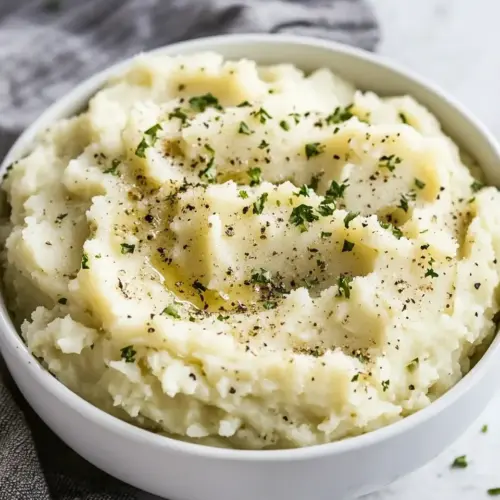
Cauliflower Mashed Potatoes
Cauliflower Mashed Potatoes delivers a creamy, silky alternative to classic mash, with a nutty cauliflower base, rich butter, and a hint of fresh thyme. Perfect for an easy weeknight dinner or a lighter holiday side, this recipe is comforting, quick, and crowd friendly. Try it when you want indulgence without heaviness.
Equipment
- Potato Masher
Ingredients
- 3 pounds cauliflower about two medium heads, cut into florets (see note 1) Break into florets and steam or simmer until very tender to provide the creamy base and potato-like texture for the mash; use about three pounds, roughly two medium heads, for a substantial yield. Retain some cooking water if needed to adjust consistency and ensure even blending; cutting into uniform pieces speeds cooking and yields smoother results.
- 3 cups water Tenderize in the cooking liquid to help soften cauliflower and create a poaching medium that prevents scorching; three cups of water provides enough volume to simmer the florets evenly without diluting flavor excessively. Reserve a little of the cooking liquid to loosen the mash if it becomes too thick, improving overall mouthfeel.
- Salt and freshly ground black pepper Season generously during and after cooking to enhance natural flavors and balance creaminess; use salt and freshly ground black pepper to bring out the cauliflower’s subtle sweetness and to finish the dish with a bright, savory note. Add salt early enough to help the florets season through and finish with black pepper to maintain aromatic freshness.
- 1/4 cup heavy cream Enrich the mash with a silky, luscious texture and add a subtle dairy flavor; a quarter cup of heavy cream helps replicate the richness of traditional mashed potatoes while keeping the mixture smooth. Warm slightly before folding in to prevent cooling the mash and to incorporate more easily for a velvety finish.
- 1/4 cup butter cut into 1/2" cubes (1/2 stick) Introduce concentrated butterfat and a silky mouthfeel by cutting a quarter cup into half-inch cubes and whisking into the hot mash until melted; this yields a glossy, rich finish and rounded flavor. Use high-quality butter for optimal taste and distribute cubes throughout to melt evenly and integrate fully.
- 1 tablespoon minced fresh thyme (or 2 teaspoons dried) Infuse fresh herbal aroma and a bright savory note by mincing about one tablespoon of fresh thyme (or two teaspoons dried) and stirring into the mash near the end of cooking. Add gradually and taste to achieve balance, as thyme complements the cauliflower without overpowering the delicate creamy base.
Instructions
- In a large saucepan, add cauliflower florets, water, and 1 tablespoon salt. Bring to a boil, reduce heat, cover, and simmer until easily pierced with a knife, about 15 minutes.: As the pot warms, you will hear a gentle rising bubble, and the kitchen will take on a light vegetal aroma. Adding salt to the cooking water seasons the cauliflower from the inside out, which keeps the final mash flavorful. A common mistake here is using an oversized amount of water which dilutes the taste and increases boiling time. Cook over medium high heat so the water reaches a steady simmer without aggressively splashing, this keeps the florets intact and prevents water loss through evaporation that can concentrate flavors unevenly.
- Drain well and return cauliflower pot. Mash well, then stir in heavy cream, butter, thyme, and salt and pepper to taste (I like 1/2 teaspoon salt and 1/4 teaspoon pepper).: You will notice the sound change from active rolling bubbles to a gentler simmer once you reduce the heat, and the edges of the florets will look translucent where they soften first. The knife should slide through with minimal resistance, indicating the cauliflower is tender. If you undercook, the mash will be grainy; if you overcook, the pieces will absorb too much water and become soggy. Stirring midway helps ensure even cooking, and keeping the lid slightly ajar prevents foaming over while conserving heat.
- Drain well and return cauliflower pot: After draining, the florets should release a little steam and the pot will feel warm to the touch. Returning them to the hot pot lets residual heat evaporate excess moisture, which helps the mash maintain a thick, fluffy texture. A common oversight is insufficient draining, which leads to a watery mash. Letting the drained florets sit in the pot for a minute or two helps any trapped liquid dissipate before mashing.
- Mash well: As you press the florets with the potato masher , listen for the soft shredding sound and watch the pieces transform from distinct bits into a cohesive mass. The aroma will become richer and more concentrated as cell walls break down. Proper mashing brings out natural starches and gives body. Avoid overworking the vegetable into a paste, which creates a gummy mouthfeel. Stop when there are no large chunks but the texture still reads airy.
- Stir in heavy cream: The moment you add the warm heavy cream , you should see the mixture take on a silkier sheen and hear a gentle plop as the liquid incorporates. Warm the cream slightly before adding if possible, because cold cream can cool the mash and make it less cohesive. If the mash seems too stiff, a touch more warmed cream loosens it without losing structure. A frequent error is adding cold dairy directly, which can cause separation and a less inviting texture.
- Stir in butter: As you fold in the cubed butter , the mash will develop a glossy finish and a richer aroma. The butter melts into small pockets, giving bursts of savory flavor as you eat. Stir gently to distribute the butter evenly so you don’t deflate the airy texture. Overzealous stirring can make the mash dense rather than light, so take your time and fold until just combined.
- Stir in thyme: Adding the minced thyme releases an herbaceous perfume that complements the cauliflower . The small green flecks add visual interest and a layered flavor profile. If using dried thyme, mix it earlier to allow it to rehydrate and release flavor. Be cautious not to add too much, because the herb can overwhelm the delicate base, a mistake I’ve made more than once when going heavy handed with aromatics.
- Season with salt and pepper to taste: Tasting at this stage is crucial, because the seasoning will balance the creamy and buttery notes. Start with modest amounts and adjust gradually, noting how the flavors open up after resting for a minute. A good rule is to add seasoning, stir, then taste again when warm; flavors often mellow or intensify upon standing. Watch out for over seasoning, which is hard to reverse without diluting the mash.
- Serve warm: When plated, the mash should feel pillowy and warm to the touch, releasing a gentle steam and a mild creamy aroma. Serve immediately so you enjoy the ideal texture and temperature. If you must hold it, keep the pot over very low heat and stir occasionally to maintain consistency. Reheating too vigorously is a common error, as high heat can break the emulsion and make the mash grainy.
- Adjust texture if needed: If the mash is thicker than you prefer, a splash of warmed heavy cream or a tiny knob of butter will restore silkiness, and gently folding keeps the texture airy. If it feels too loose, let it sit uncovered briefly in the warm pot to evaporate excess moisture. Overcorrecting by adding too much liquid is a frequent misstep, so add sparingly and adjust gradually.
Notes
- Warm your dairy before adding it to the mash to maintain a cohesive, silky texture and to avoid cooling the mixture which can make it less smooth.
- Drain thoroughly after boiling the cauliflower, then return to the hot pot to let residual steam evaporate, which prevents a watery final result.
- Use fresh thyme when possible for a brighter herbal note, but if using dried, allow it to rehydrate in the warm mash to release flavor evenly.
- Mash by hand with a potato masher for the best balance of texture and control; electric tools can overwork the vegetable and create a gluey consistency.
- Adjust consistency slowly, adding small amounts of warmed heavy cream until you reach the desired silkiness, rather than pouring too much at once.
- Store and reheat gently by covering leftovers and reheating on low with a splash of warmed cream to restore creaminess, avoiding high heat that can separate the emulsion.